Facebook Pixel

Blog

grillfleisch
Which meat cuts are suitable for grilling?
Why Organic?
Why Organic?
dry aged beef
Why Dry Aged Beef?
The Chianina beef
Small tree or big cattle?
The world of truffles, the passion of Giuliano Tartufi
The caviar
The black gold
weisswurst
Oktoberfest in Switzerland, what does it actually include?
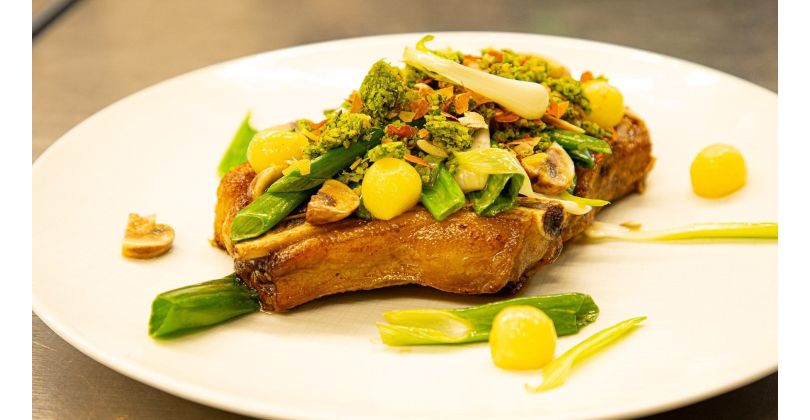
Roast Côte de Boeuf with Herb and Nut Crumble on Onion and Potato Vegetables
Loading...
173 view(s) 4 min read

Roast Côte de Boeuf with Herb and Nut Crumble on Onion and Potato Vegetables

The côte de boeuf, also known as ribeye or ribeye on the bone, is a classic cut of beef from the rib section of the cow. Its history is deeply intertwined with European meat culture, where this particularly juicy and flavorful cut has been prized for centuries. Traditionally served in France and other parts of Europe, the côte de boeuf is a premium steak, offering an intense flavor experience thanks to its bone structure and marbling. Polish Wołowina, or Polish beef, has a long tradition in Polish agriculture.

Cattle breeding in Poland is characterized by regional breeds and sustainable husbandry practices based on natural grazing lands. In recent decades, the quality of Polish beef has significantly improved, leading to international recognition for Wołowina.

The côte de boeuf from Polish Wołowina thus combines traditional European meat culture with regional expertise and the natural conditions of Poland. The combination of careful breeding, species-appropriate husbandry and modern processing makes Polish Cote de Boeuf a particularly high-quality product that is appreciated both in local kitchens and on international tables.

Working as a food scout and meat sommelier at meat4you
Loading...
189 view(s) 5 min read

Working as a food scout and meat sommelier at meat4you

My name is Christian Welti, but most people just call me Chris. As a certified meat sommelier and food scout at meat4you, I combine expertise, trends, and enjoyment.

My job is to discover, develop, and bring to life the very best that the world of meat has to offer our customers.

But what exactly does a meat sommelier do?

A meat sommelier is far more than just an expert on different cuts. They are a consultant, sensory analyst, trend observer, and storyteller all in one. The goal is not just to sell meat, but to connect it with background knowledge, quality, and inspiration.

The diploma course for meat sommeliers covered topics such as: 

  • Cultural history of meat consumption
  • Forms of animal husbandry and their influence on meat quality
  • Animal health and breed characteristics
  • Legal regulations in Switzerland
  • Sensory analysis with practical exercises
  • Quality management such as HACCP and good hygiene practices
  • Butchering and naming of cuts nationally and internationally
  • Production and tasting of meat products
  • Presentation and sales conversations
  • Grilling and cooking seminars
  • Nutrition, trends, and consumer behavior

This knowledge forms the basis of my daily work at meat4you.


Roast Beef Ribeye on a Potato Nest with Mediterranean Grilled Vegetables and Hollandaise Sauce
Loading...
263 view(s) 5 min read

Roast Beef Ribeye on a Potato Nest with Mediterranean Grilled Vegetables and Hollandaise Sauce

The ribeye steak originates from the traditional preparation of beef, which has evolved over centuries in various cultures. The ribeye comes from the rib section of the cow, more precisely from the fore rib, where the meat is particularly well-marbled, resulting in exceptional juiciness and flavor. Even in ancient times, meat from this area was prized for its taste and tenderness. Over time, the ribeye steak became especially popular in American and European cuisine, where it is considered a premium steak. The name "ribeye" refers to the "rib" and the "eye," which describes the round, meaty center of the steak.

History of Ireland: Ireland has a long and eventful history dating back to prehistoric times. The island was originally settled by Celtic tribes who developed their own culture and language. During the Middle Ages, Ireland was influenced and partially controlled by the Normans and later by England, leading to numerous political and social conflicts. In the 20th century, after a long struggle for independence, most of Ireland gained its autonomy as the Republic of Ireland, while Northern Ireland remained part of the United Kingdom. Ireland is known for its verdant landscape, fertile soils, and mild climate, which provide ideal conditions for cattle farming. Irish agriculture, particularly cattle farming, has developed over centuries and is now a major economic sector. Irish beef enjoys an excellent reputation worldwide for its quality and sustainability.

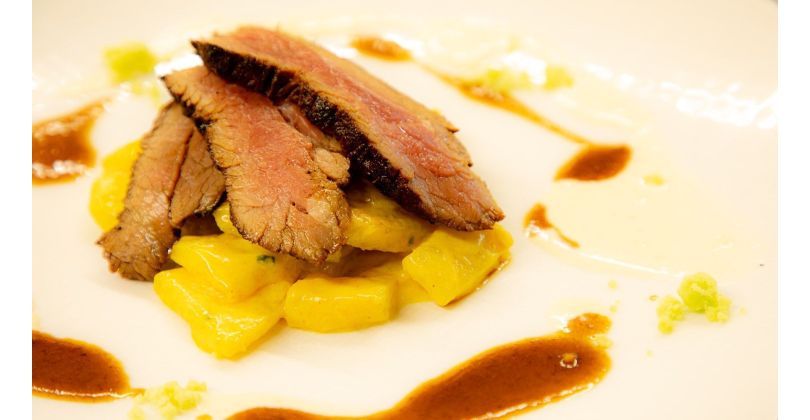
Sous Vide Tri-Tip in Soy–Honey Marinade
Loading...
436 view(s) 5 min read

Sous Vide Tri-Tip in Soy–Honey Marinade

Nice to know: Tri-tip has a long and evolving culinary history and is valued in both European and international cuisine.

Anatomically, tri-tip comes from the lower part of the beef sirloin. For a long time, it was considered a secondary cut and was often used for slow-cooked dishes. Over time, butchers and chefs discovered that, when properly trimmed and cooked, tri-tip is exceptionally flavorful and tender.

Traditionally, tri-tip benefits from gentle cooking methods such as braising or slow roasting. Today, it is especially popular within modern and nose-to-tail–inspired cooking and is enjoyed sous vide, pan-seared, or grilled.

Tri-tip thus represents the shift in meat culture—from an underrated cut to a versatile and highly regarded centerpiece with strong culinary character.

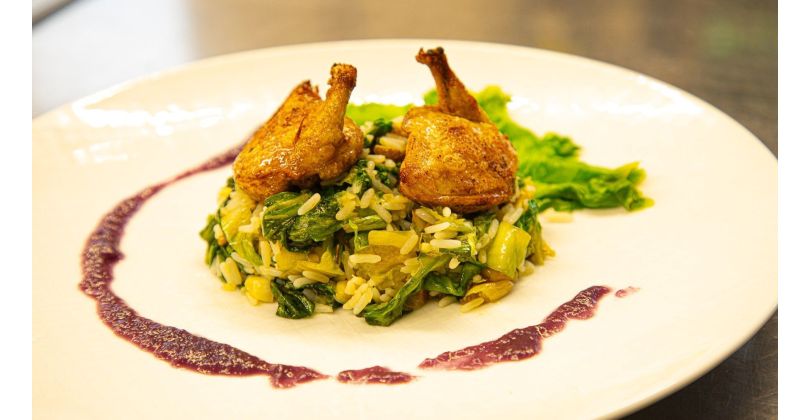
Supreme Quail Breast on Chard Rice with Red Cabbage Purée
Loading...
250 view(s) 4 min read

Supreme Quail Breast on Chard Rice with Red Cabbage Purée

Nice to know: The quail is one of the smallest gallinaceous birds in the world, yet it has been a valued domestic and wild bird for millennia. It combines remarkable biology with culinary significance.

Small birds with a great tradition: The European quail (Coturnix coturnix) is a classic migratory bird, whereas the Japanese quail (Coturnix japonica) has been domesticated and is now found worldwide in breeding lines. Archaeological finds show that humans kept quail and used their eggs as early as 4,000 years ago.

Quail in the culinary world: Its meat is delicate, aromatic, and exceptionally tender, and is frequently used in fine dining. Quail eggs are considered a delicacy – they have a more intense flavor than chicken eggs and a favorable yolk-to-white ratio. Because of their size, quail are ideal for individual portions, appetizers, or festive menus.

Special considerations for keeping quail: Quail grow very quickly: They often start laying eggs as early as 6–8 weeks old. They are prone to stress, which necessitates a calm environment for breeding.

Despite their small size, they are very productive: A laying quail can lay 250–300 eggs per year.

Animals with remarkable characteristics: Quail are ground dwellers and can take flight abruptly upwards when threatened – the so-called "steep takeoff." They have very sensitive hearing and are easily alert to loud noises and sudden movements. Wild quail can travel up to 4,000 km on their migratory routes.

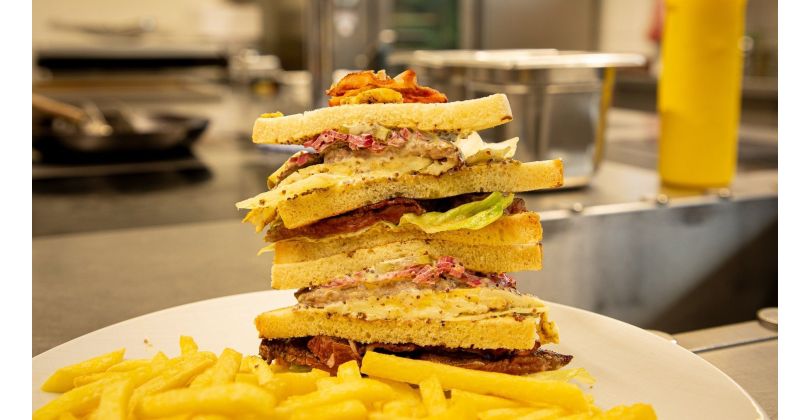
Fresh Club Sandwich with Beef Fillet, Bacon, Fried Egg, and French Fries
Loading...
286 view(s) 6 min read

Fresh Club Sandwich with Beef Fillet, Bacon, Fried Egg, and French Fries

Nice to know:  A beef club sandwich is a truly exciting variation of the classic club sandwich – and it has a few surprising stories and special features:

Origin – a sandwich with legendary status
The classic club sandwich appeared in the USA at the end of the 19th century, presumably in a New York gentlemen's club. It was originally made with turkey or chicken. The fact that it's often found today with tender roast beef or pastrami-like beef is a modern twist – and one of the most popular.

Why beef?

Beef is a perfect fit because it:

• has a more robust flavor and therefore doesn't get lost in the typical triple toast
• harmonizes with smoky and roasted aromas (toast, bacon, grill)
• can be ideally layered whether cooked pink, thinly sliced, or as pulled beef.

The “stack effect”: With a club sandwich, the height determines the experience. With beef, you get:

• different textures (crispy toast, juicy meat, crunchy lettuce)
• a more pronounced umami profile than the original
• even more flavor when you add mustard mayonnaise or a light pepper sauce

Fun fact: In some US steakhouses, the beef club sandwich is called a “mini-steak in sandwich form”—because the portion of meat is sometimes so large that you essentially have a whole steak between slices of toast.

Christmas business at meat4you.ch - A look behind the scenes
Loading...
237 view(s) 4 min read

Christmas business at meat4you.ch - A look behind the scenes

The pre-Christmas season is the busiest time of year for many companies – especially in the food sector. For us at meat4you, this period is also characterized by high demand, long working days, and a clear focus on quality and reliability. In our latest YouTube video about the Christmas season, we impressively demonstrate the amount of organization, teamwork, and genuine butchery craftsmanship that goes into every single order. For us, Christmas is not just a peak in sales, but a time when our standards for quality and service are particularly high. Huge pre-Christmas rush – the video clearly shows the sharp increase in demand for high-quality meat around the holidays. Our customers plan their Christmas menus well in advance and place great value on quality, regional sourcing, and on-time delivery. For us, this means precise planning weeks in advance, clearly defined processes, and a well-coordinated team that maintains consistently high standards even under intense time pressure. Every step of the process is meticulously coordinated to ensure reliable delivery even during peak season, without compromising on freshness or quality. Handcraft meets modern processes – The footage from our production facility provides an authentic glimpse into our daily work during the Christmas season. Our employees portion, package, and inspect the products with great care and expertise. Hygiene, freshness, and complete traceability are always our top priorities. The video also demonstrates how we strategically utilize modern technology and effectively combine it with our traditional craftsmanship. Machines support us in standardized processes, while the butcher's craft comes into play where experience, intuition, and a commitment to quality are crucial. This allows us to efficiently handle even large orders without losing sight of our artisanal values. Transparency and trust – A key element of the video is our openness. We deliberately show how we work and who is behind our products. For us, transparency is not a marketing promise, but an integral part of our company culture. Our customers should be able to trace the origin of their meat and how it is processed. This trust clearly sets us apart from anonymous large-scale suppliers. Especially during the Christmas season, when our products are part of special family moments, this trust is of paramount importance to us. Proximity to our customers – The video also makes it clear that at meat4you, we don't just sell meat, we create moments of enjoyment. Whether it's fondue chinoise, a festive roast, or special cuts for special occasions – every order is part of a unique Christmas celebration. We understand the diverse needs of our customers and tailor our product range and processes accordingly. This close relationship with our customers and an understanding of their expectations are crucial success factors for us in the highly competitive online food market.

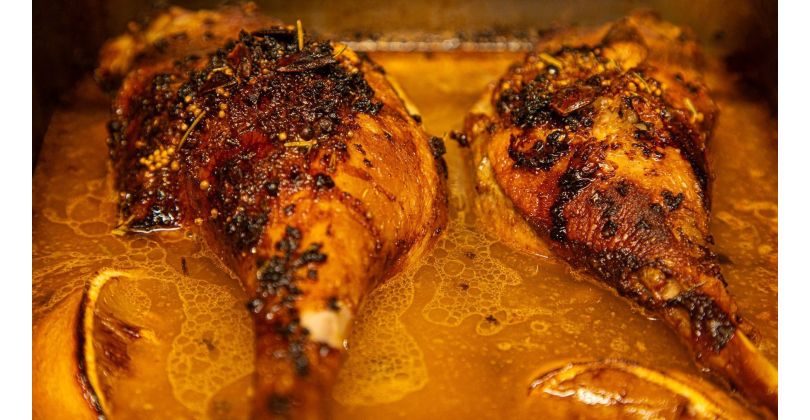
Braised goose leg marinated with white wine, spices, and citrus, served with pickled pumpkin, reduced marinade, and steamed endive with radishes
Loading...
380 view(s) 5 min read

Braised goose leg marinated with white wine, spices, and citrus, served with pickled pumpkin, reduced marinade, and steamed endive with radishes

Nice to know:  The Goose in Culinary History – A Historical Journey.

Antiquity: Egyptians, Greeks, and Romans kept geese as domestic animals. The Romans, in particular, valued geese both as guard animals (famous for the "cackling geese of the Capitol") and as food. Goose liver was considered a delicacy even in antiquity – the roots of modern foie gras lie in ancient Egypt and Rome.

Middle Ages: In medieval Europe, the goose became a typical holiday roast. This was because many farmers kept geese – they are hardy and provide meat, fat, and down. With the Catholic Lent and St. Martin's Day (November 11), the goose acquired strong cultural significance:

The "St. Martin's goose" symbolically marked the end of the agricultural season and the beginning of winter.

Modern Era: Especially in German-speaking countries, Austria, and Eastern Europe, the goose became a Christmas roast.

The reason: Wealthier households could more easily afford geese than other animals during the winter. Goose fat was used as an important cooking fat for centuries.
It was a staple product of peasant cuisine for a long time.

Jewish cuisine: In Ashkenazi cuisine, the goose played a central role, as goose fat (schmalz) is kosher and was used as a butter substitute.
Dishes such as roast goose, goose giblets, or stuffed neck (helzel) have a long tradition there.

Modern times: Today, roast goose is considered a classic holiday dish in parts of Europe – especially at Christmas and St. Martin's Day.

Raising geese is more expensive and labor-intensive than raising chickens, so goose meat is often considered a high-quality delicacy.

Stuffed Quail with Endive, Spinach, and Candied Oranges
Loading...
369 view(s) 5 min read

Stuffed Quail with Endive, Spinach, and Candied Oranges

Nice to know: Quail in Culinary Art – A Historical Overview.

Antiquity: Quail were already prized in Egyptian, Greek, and Roman cuisine. In Egypt, depictions of quail catching and preparation are over 4,000 years old.The Japanese quail was domesticated early on – both for its eggs and its tender meat. In Greek and Roman cuisine, quail were considered a delicacy; they were grilled, roasted, or used in pies.

Biblical Significance: Quail play a remarkable role in the Judeo-Christian tradition: The Old Testament states that the Israelites in the desert were fed by "quail flying down." As a result, quail were often regarded as a divine gift in the Middle Ages.

Middle Ages: In Europe, quail were reserved for aristocratic tables. They were considered a fine game bird, served primarily at banquets. Quail hunting was strictly regulated, sometimes even reserved for nobility or monasteries.

Renaissance and Baroque: With the flourishing of courtly cuisine in France, Italy, and Germany, quail experienced a culinary golden age. It was served in elaborately stuffed dishes, pies, ragouts, or in combination with truffles. In France, it became a symbol of haute cuisine, from which many classic recipes originate.

19th & early 20th centuries: With the advent of modern agriculture and the spread of the Japanese quail, breeding became easier. Quail appeared more frequently on middle-class tables but remained a premium product compared to chicken or duck.

Modern cuisine: Today, quail is considered a delicate, refined poultry, used primarily in fine dining. Particularly popular:

Quail breast/quail legs in haute cuisine
Quail eggs as a delicacy, e.g. B. as an amuse-bouche or for decorative dishes
Regional focus in Europe: France, Italy, Spain and Eastern Europe.

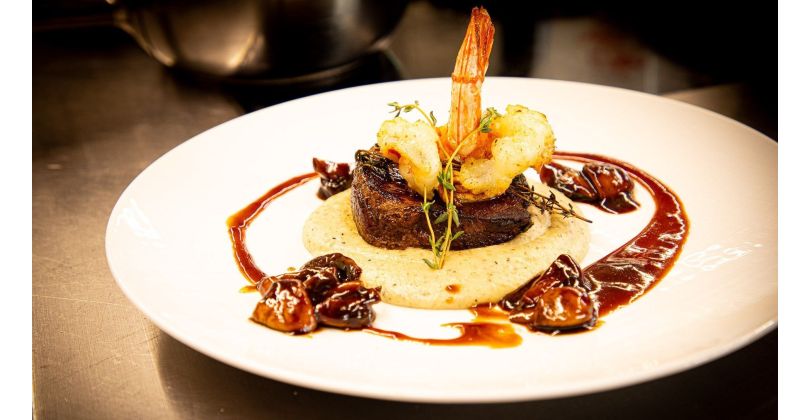
Surf and Turf with Beef Fillet and Prawns on Truffle Mashed Potatoes, Balsamic Mushrooms & Red Wine Reduction with Cognac
Loading...
623 view(s) 5 min read

Surf and Turf with Beef Fillet and Prawns on Truffle Mashed Potatoes, Balsamic Mushrooms & Red Wine Reduction with Cognac

Surf and turf is a dish that combines seafood ("surf") and red meat ("turf") on one plate—classically lobster, shrimp, or other seafood alongside beef, usually steak.

The origins of this dish lie in North America, particularly in the USA and Canada, and it became especially popular in the 1960s and 1970s. The combination symbolized luxury and affluence, as both high-quality beef and fresh seafood were traditionally considered expensive and exclusive ingredients.

Historical Background: In the USA, surf and turf emerged as a status symbol in upscale restaurants and hotels that wanted to offer their guests something special. The combination of land and sea produce was unusual at the time and considered innovative. The dish gained particular popularity in regions like California, where both fresh seafood and prime beef were readily available.

Culinary Significance: Surf and turf represents the fusion of two culinary worlds: the freshness and lightness of seafood and the hearty, robust flavor of red meat.
It is a symbol of opulent dining and is often served on special occasions.

Today, surf and turf can be found on the menus of upscale restaurants worldwide, with combinations varying depending on the region and the creativity of the chefs.


Copyright © 2026 meat4you. All rights reserved.