Facebook Pixel

Posts tagged 'ribeye'

grillfleisch
Which meat cuts are suitable for grilling?
Why Organic?
Why Organic?
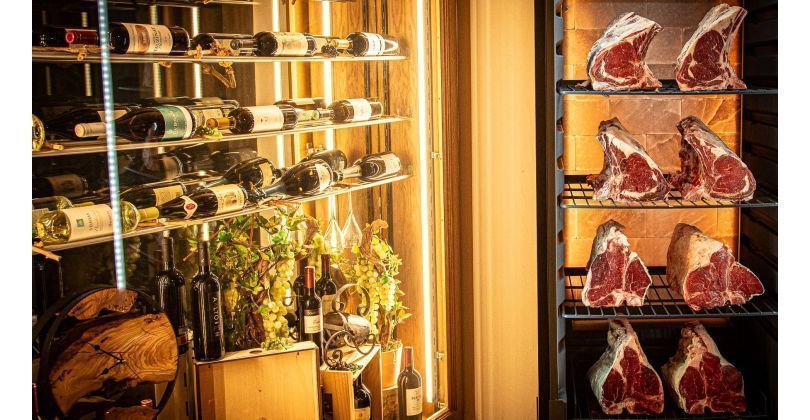
dry aged beef
Why Dry Aged Beef?
The Chianina beef
Small tree or big cattle?
The world of truffles, the passion of Giuliano Tartufi
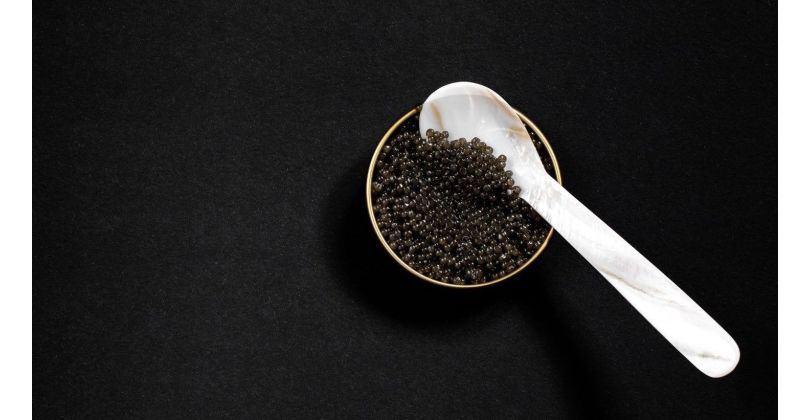
The caviar
The black gold
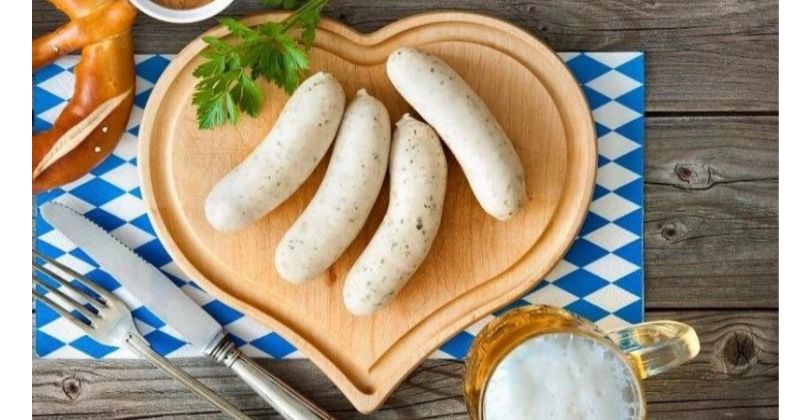
weisswurst
Oktoberfest in Switzerland, what does it actually include?
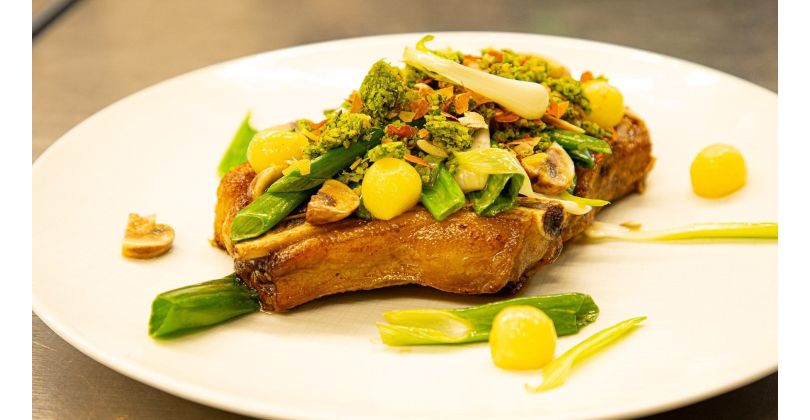
Roast Côte de Boeuf with Herb and Nut Crumble on Onion and Potato Vegetables
Loading...
141 view(s) 4 min read

Roast Côte de Boeuf with Herb and Nut Crumble on Onion and Potato Vegetables

The côte de boeuf, also known as ribeye or ribeye on the bone, is a classic cut of beef from the rib section of the cow. Its history is deeply intertwined with European meat culture, where this particularly juicy and flavorful cut has been prized for centuries. Traditionally served in France and other parts of Europe, the côte de boeuf is a premium steak, offering an intense flavor experience thanks to its bone structure and marbling. Polish Wołowina, or Polish beef, has a long tradition in Polish agriculture.

Cattle breeding in Poland is characterized by regional breeds and sustainable husbandry practices based on natural grazing lands. In recent decades, the quality of Polish beef has significantly improved, leading to international recognition for Wołowina.

The côte de boeuf from Polish Wołowina thus combines traditional European meat culture with regional expertise and the natural conditions of Poland. The combination of careful breeding, species-appropriate husbandry and modern processing makes Polish Cote de Boeuf a particularly high-quality product that is appreciated both in local kitchens and on international tables.

Roast Beef Ribeye on a Potato Nest with Mediterranean Grilled Vegetables and Hollandaise Sauce
Loading...
188 view(s) 5 min read

Roast Beef Ribeye on a Potato Nest with Mediterranean Grilled Vegetables and Hollandaise Sauce

The ribeye steak originates from the traditional preparation of beef, which has evolved over centuries in various cultures. The ribeye comes from the rib section of the cow, more precisely from the fore rib, where the meat is particularly well-marbled, resulting in exceptional juiciness and flavor. Even in ancient times, meat from this area was prized for its taste and tenderness. Over time, the ribeye steak became especially popular in American and European cuisine, where it is considered a premium steak. The name "ribeye" refers to the "rib" and the "eye," which describes the round, meaty center of the steak.

History of Ireland: Ireland has a long and eventful history dating back to prehistoric times. The island was originally settled by Celtic tribes who developed their own culture and language. During the Middle Ages, Ireland was influenced and partially controlled by the Normans and later by England, leading to numerous political and social conflicts. In the 20th century, after a long struggle for independence, most of Ireland gained its autonomy as the Republic of Ireland, while Northern Ireland remained part of the United Kingdom. Ireland is known for its verdant landscape, fertile soils, and mild climate, which provide ideal conditions for cattle farming. Irish agriculture, particularly cattle farming, has developed over centuries and is now a major economic sector. Irish beef enjoys an excellent reputation worldwide for its quality and sustainability.

Grilled Sashi or Choco Côte de Boeuf with Caramelized Cherry Tomatoes, Gorgonzola, Garlic, and Sage
Loading...
228 view(s) 4 min read

Grilled Sashi or Choco Côte de Boeuf with Caramelized Cherry Tomatoes, Gorgonzola, Garlic, and Sage

The Rib Eye Bone-In, also known as Côte de boeuf, is a coveted cut among discerning steak gourmets due to its pronounced marbling and tender texture with an intense meaty flavor. The fact that this taste experience has also made its way onto international palates is once again thanks to the innovative mind of John "Sashi" Nielsen. The Dane and founder of the renowned meat producer JN Meat is a true "maniac" when it comes to excellent meat.

His unerring nose for the best quality led him to Finland. Everything there convinced the expert. Particularly protein-rich grass, clear air, and absolutely clean water provide the best conditions for a species-appropriate, natural, and healthy diet for the cattle. Nielsen focuses on ensuring that his animals can live and grow up as stress-free as possible – ultimately, this should have a positive effect on the quality of the meat.

In Finland, he finds exactly the right conditions: Vast landscapes with fresh grass and clear air provide ideal living conditions for cattle. These exceptional living conditions are noticeable with every bite of the hearty steak: The meat is particularly tender and flavorful.

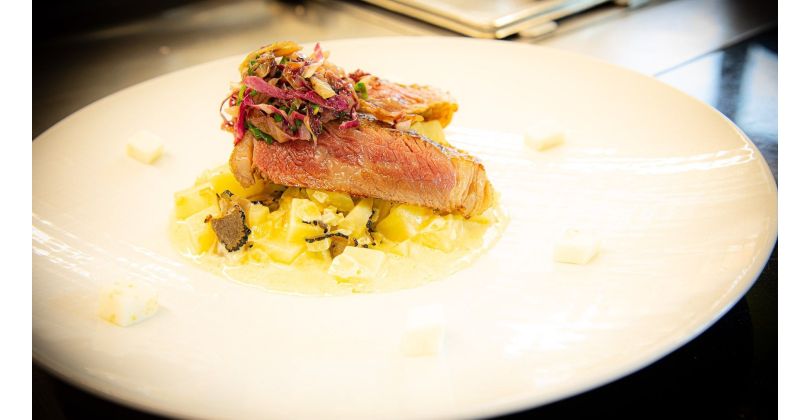
Grilled US Wagyu Beef ribeye on Creamed Celery with Black Truffle Slices and Sautéed Radicchio
Loading...
200 view(s) 4 min read

Grilled US Wagyu Beef ribeye on Creamed Celery with Black Truffle Slices and Sautéed Radicchio

Wagyu beef is known worldwide for its exceptional quality and exquisite flavor. Here are some interesting facts and information about Wagyu that illustrate what makes this meat special:

Origin: Wagyu originated in Japan. The term "Wagyu" means "Japanese cattle" (wa = Japanese, gyu = cattle).

Breeding: Wagyu breeding dates back to ancient Japanese cattle breeds first documented in the 2nd century AD. These cattle were originally used as working animals and were subject to special breeding and care conditions.

Breed:

Main lines: The most well-known Wagyu breeds are the Japanese Black, Japanese Brown, Japanese Shorthorn, and Japanese Polled. The Japanese Black breed is the most widespread.

Marbling:

Fat distribution: Wagyu is famous for its high fat marbling, meaning that intramuscular fat is evenly distributed throughout the meat. This marbling ensures a tender texture and rich flavor.

Health benefits:

Fat composition: Wagyu beef contains a higher proportion of unsaturated fatty acids, which are considered healthier, and is thus rich in omega-3 and omega-6 fatty acids, which are important for health.

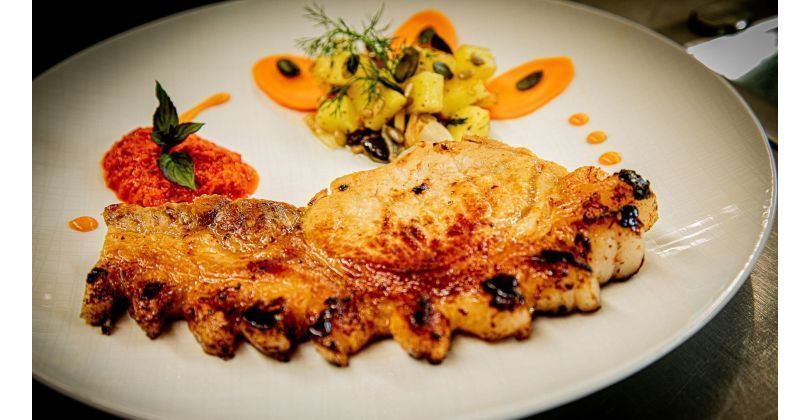
Menapian pork chop Tomapunk perfectly grilled and roasted
Loading...
373 view(s) 5 min read

Menapian pork chop Tomapunk perfectly grilled and roasted

Menapian pork chop Tomapunk perfectly grilled and roasted
Ingredients for 2 people


1 pork chop (approx. 500 g per piece)
1 tbsp olive oil or butter
Salt and pepper to taste
1 lemon


Preparation:


Prepare the meat: Rinse the pork chop with cold water and pat dry with kitchen paper. Season both sides with salt and pepper.

Grill: Heat the olive oil or butter in a pan at medium to high temperature. Grill the chop for about 3-4 minutes on one side until golden brown.
Turn over and fry the other side for 3-4 minutes and cook in the oven until the desired core temperature (internal temperature of at least 63 °C).

Let rest: After frying, take the chop out of the oven and place on a plate. Cover with aluminum foil and let rest for about 5 minutes so that the juices distribute throughout the meat.


Freshly made ajvar goes well with this, it's simple and super tasty.


Ingredients:
3-4 red peppers
2-3 cloves of garlic
1-2 tablespoons of olive oil
1 teaspoon of vinegar (e.g. wine vinegar)
Salt to taste
Pepper to taste
Chili
Peppermint


Preparation:


Roast the peppers: Roast the peppers in the oven at 200 °C until the skin blisters and burns slightly (approx. 20-30 minutes).
Alternatively, you can roast the peppers over an open flame if you have a grill or a gas stove.

Remove the skin: Take the roasted peppers out of the oven and place them in a bowl. Cover with cling film so that they steam and the skin can be removed more easily. After about 10 minutes, peel off the skin and remove the seeds.

Puree the ingredients: Put the flesh of the peppers in a food processor. Puree together with the garlic, olive oil, vinegar, salt, pepper, chili and a little peppermint until a homogeneous mass is formed.

meat4you Swiss Beef Selection Dry Aged by restaurant and bucher shop zum Ochsen from Lupfig 
Loading...
1063 view(s) 8 min read

meat4you Swiss Beef Selection Dry Aged by restaurant and bucher shop zum Ochsen from Lupfig

"meat4you Swiss Beef Selection Dry Aged" by restaurant and bucher shop zum Ochsen from Lupfig 

Discover the high-quality cuts from selected Swiss cattle - exclusively from female animals - The "meat4you Swiss Beef Selection"

The "meat4you Swiss Beef Selection Dry Aged" is an exclusive product line that reaches a new level of meat quality through the selective selection of beef kidney pieces. A high level of fullness and perfect fat coverage guarantee this quality standard. Selected small farms that pass on all their skills over generations also lead to this exceptional quality. In the in-house butcher's shop of the Gasthof und Metzgerei zum Ochsen in Lupfig, these pieces are refined to perfection.

The cuts: Tomahawk, Côte de boeuf, Clubsteak (entrecôte with bone and T-bone are matured on the bone for 30 days, then cut, vacuum packed and frozen for you. This is how we guarantee optimal storage, which allows you to purchase this perfect, bone-matured meat all year round. Pure enjoyment! Nice to know: Dry aging, also called dry aging, is a meat aging process that is used especially for beef to improve the taste and texture of the meat. Here are the main steps and processes that take place during dry aging: Storage: The meat, typically in one piece, is stored in a controlled environment, often in a special aging cabinet or chamber. This environment must have a precise temperature (between 1 and 4 degrees Celsius) as well as high air circulation and a certain humidity. Water loss: During the aging process, the meat loses some of its moisture, which leads to a concentration of the flavor. The water content can drop by up to 20%.

Enzymatic processes: Natural enzymes in the meat start to work and break down the connective tissue in the meat. This leads to tenderness and improves the texture of the meat.

Aroma formation: The breakdown of proteins and fats creates more intense aromas. The combination of these processes gives the meat a characteristic, nutty taste and a deeper color nuance.

Development of a crust: During the maturation process, a hard, dry crust forms on the surface of the meat, which protects against external influences. This crust is removed after the maturation process before the meat is prepared.

Duration: A dry aging process can last from a few weeks to several months, with the most common periods being between 21 and 60 days. Longer maturation times usually result in more intense flavors and a more pronounced texture, but can also lead to a greater loss of weight and moisture.

Overall, dry aging results in a particularly flavorful and tender piece of meat that is highly valued by gourmets.

The perfect dry aged ribeye steak from Dierendonck
Loading...
783 view(s) 4 min read

The perfect dry aged ribeye steak from Dierendonck

History and tradition: The name Dierendonck has stood for high-quality meat since 1942. This indicates a long tradition and experience in meat processing.

Values: Dierendonck attaches importance to three core values: craftsmanship, soil and passion. This shows that the company pays attention to traditional production methods, quality of ingredients and the love of meat processing.

Own breeding and exclusive cattle breeds: Dierendonck runs its own breeding and searches throughout Europe for exclusive cattle breeds. This underlines the commitment to the origin and quality of the animals.

Copyright © 2026 meat4you. All rights reserved.