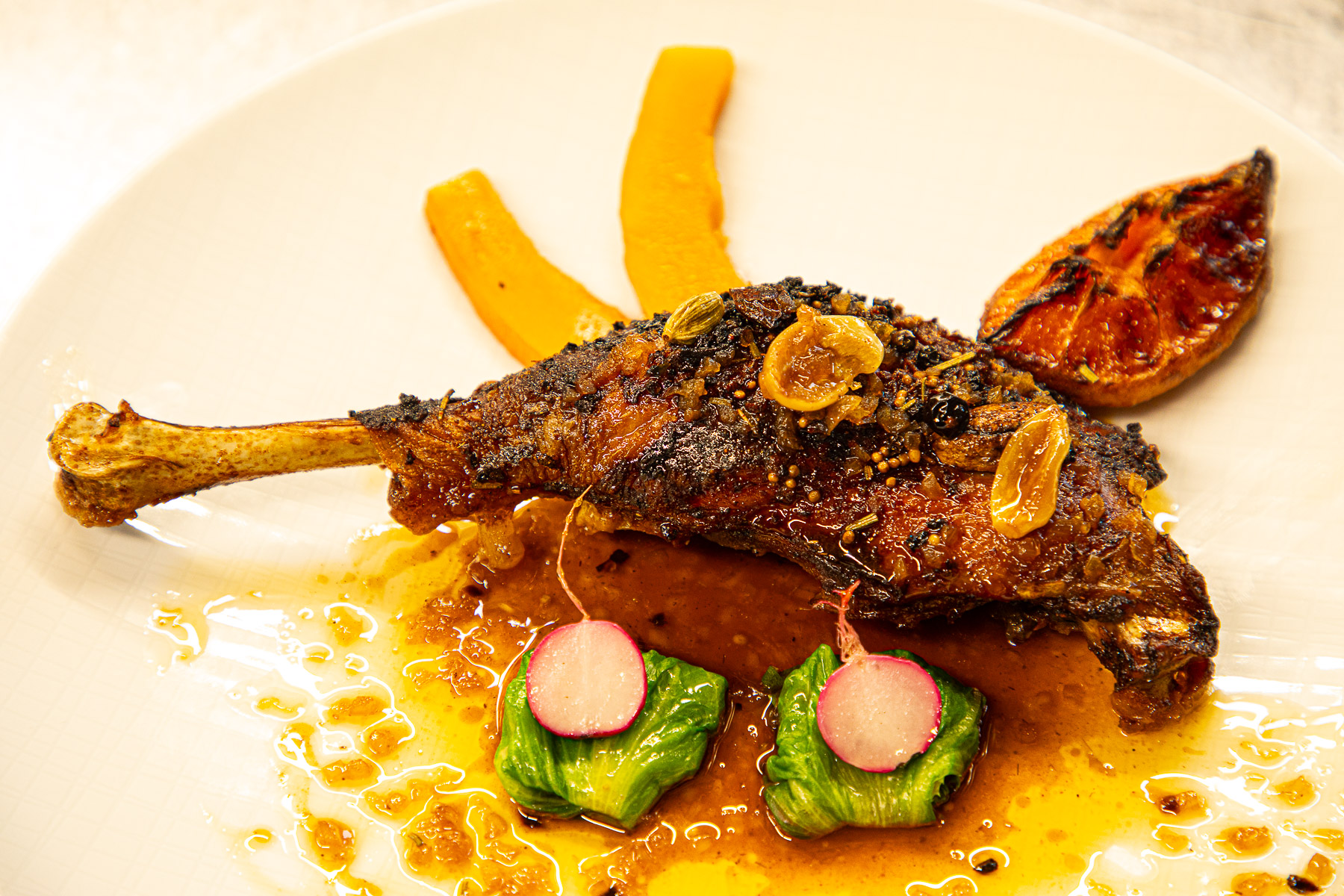
Ingredients for 4 people
For the goose legs:
4 goose legs
300 ml dry white wine
2 onions, roughly chopped
4 cardamom pods, lightly crushed
2 star anise
1 tsp black peppercorns
2 garlic cloves, finely chopped
1 tbsp mustard seeds
2 tbsp honey
1 blood orange, finely chopped with peel
1 lemon, finely chopped with peel
Salt, pepper
Vegetable oil or goose fat for frying
For the pickled pumpkin:
300 g pumpkin, cut into wedges
100 ml white wine vinegar
100 ml water
1 tsp sugar
1/2 tsp salt
1 bay leaf
3 peppercorns
To serve:
1 small head of endive, roughly chopped
10 radishes, trimmed and Halved
Preparation
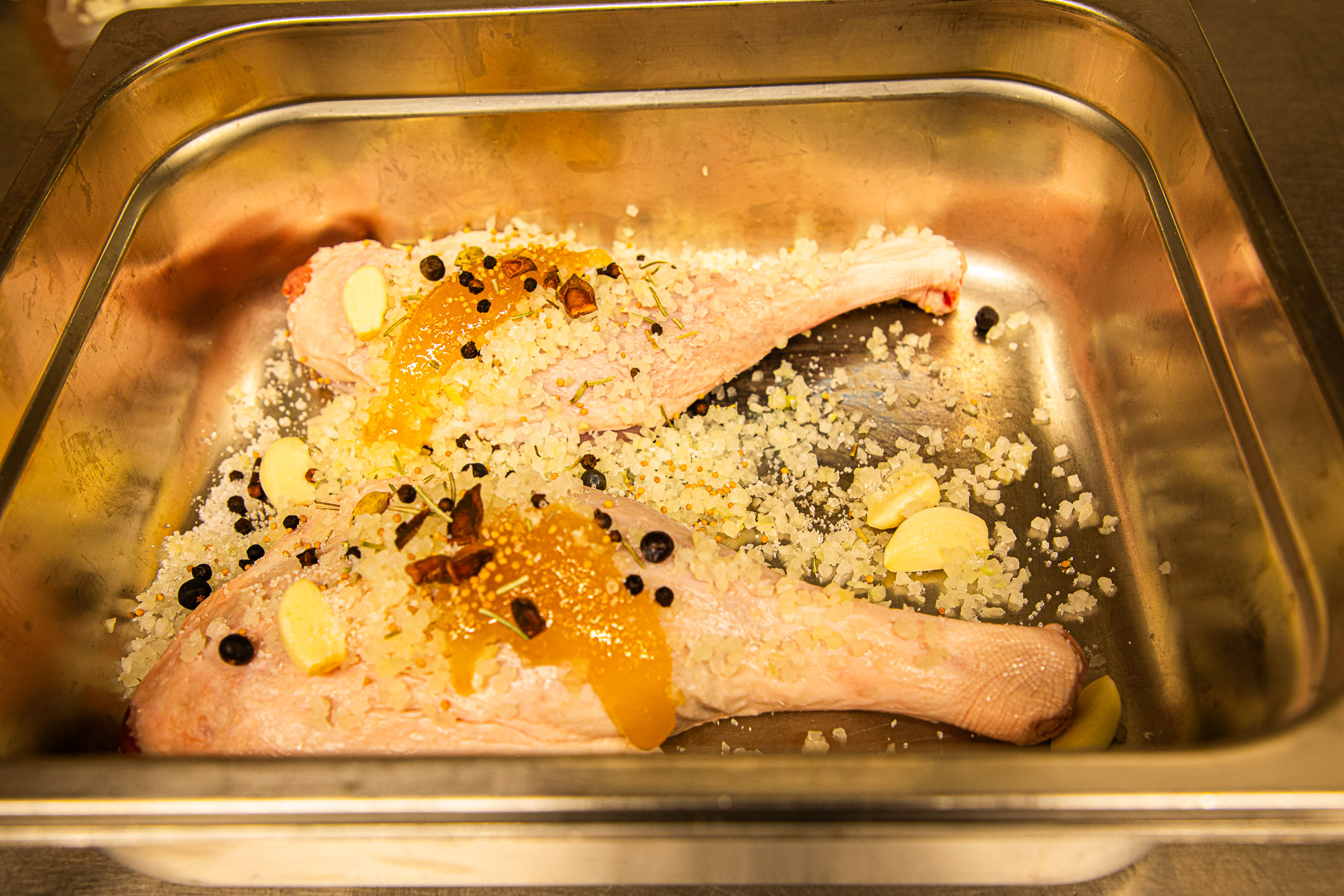
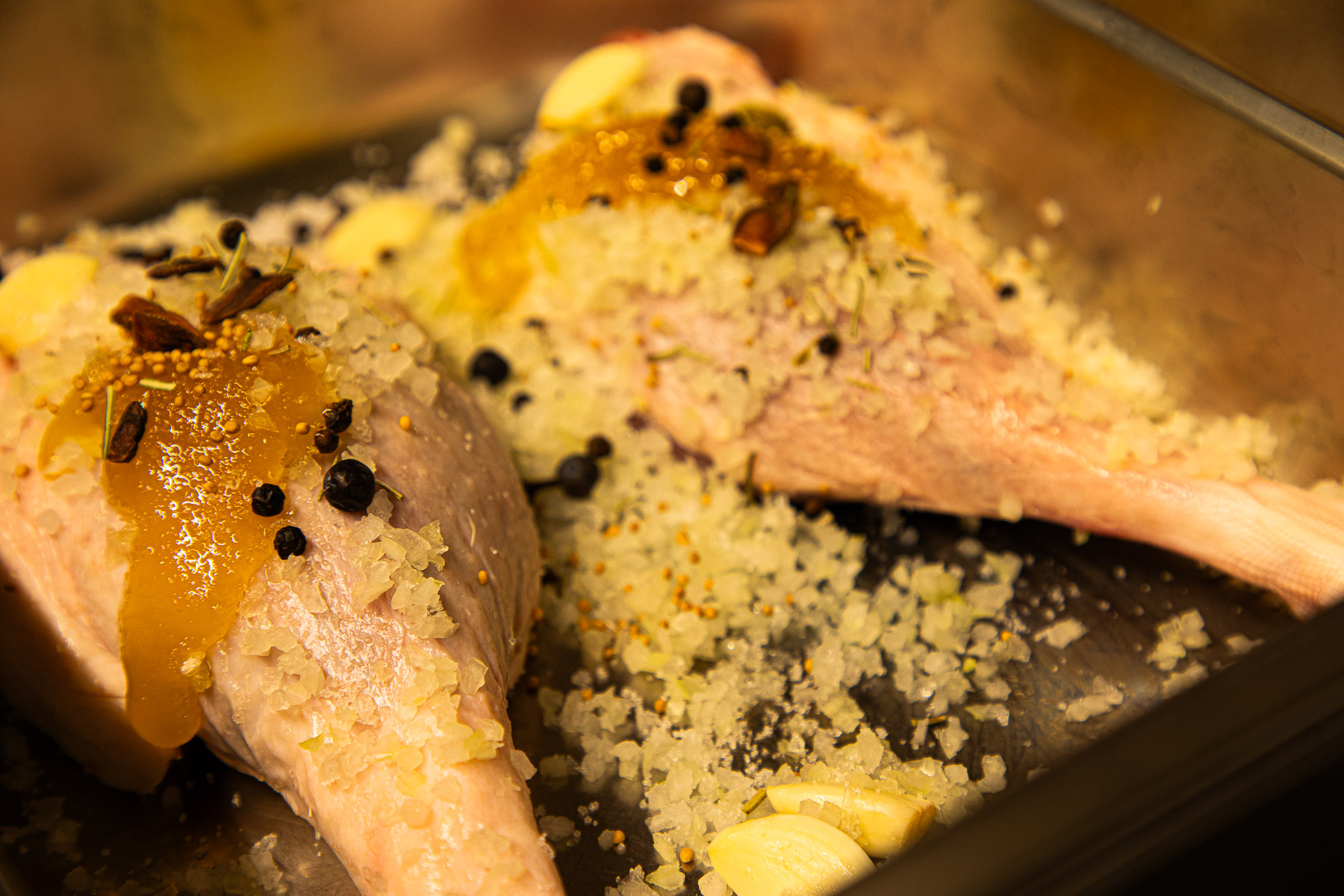
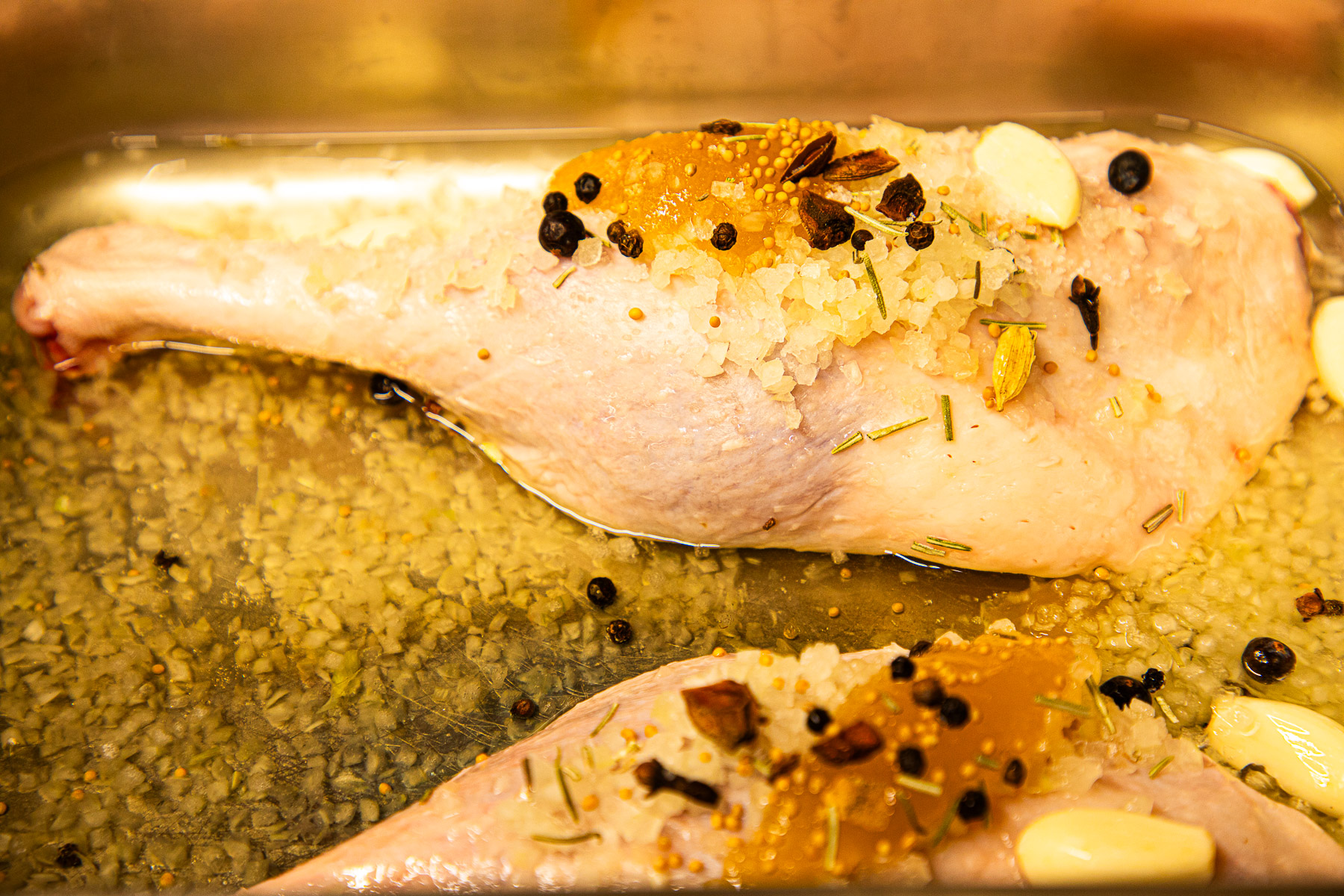
Prepare the marinade: In a bowl, thoroughly mix white wine, honey, mustard seeds, cardamom, star anise, peppercorns, chopped onions, garlic, blood orange and lemon juice, and zest. Season with salt and pepper.
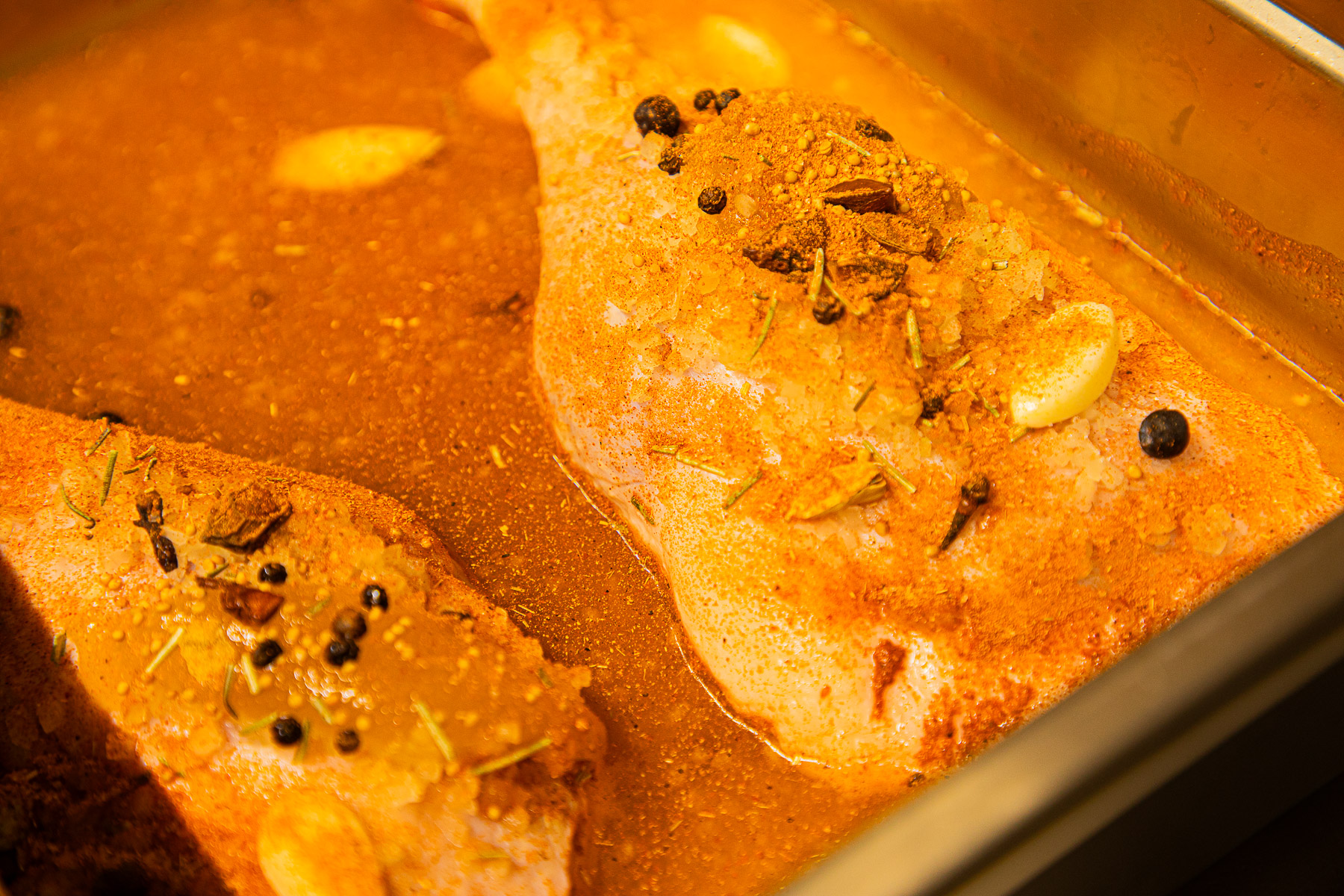
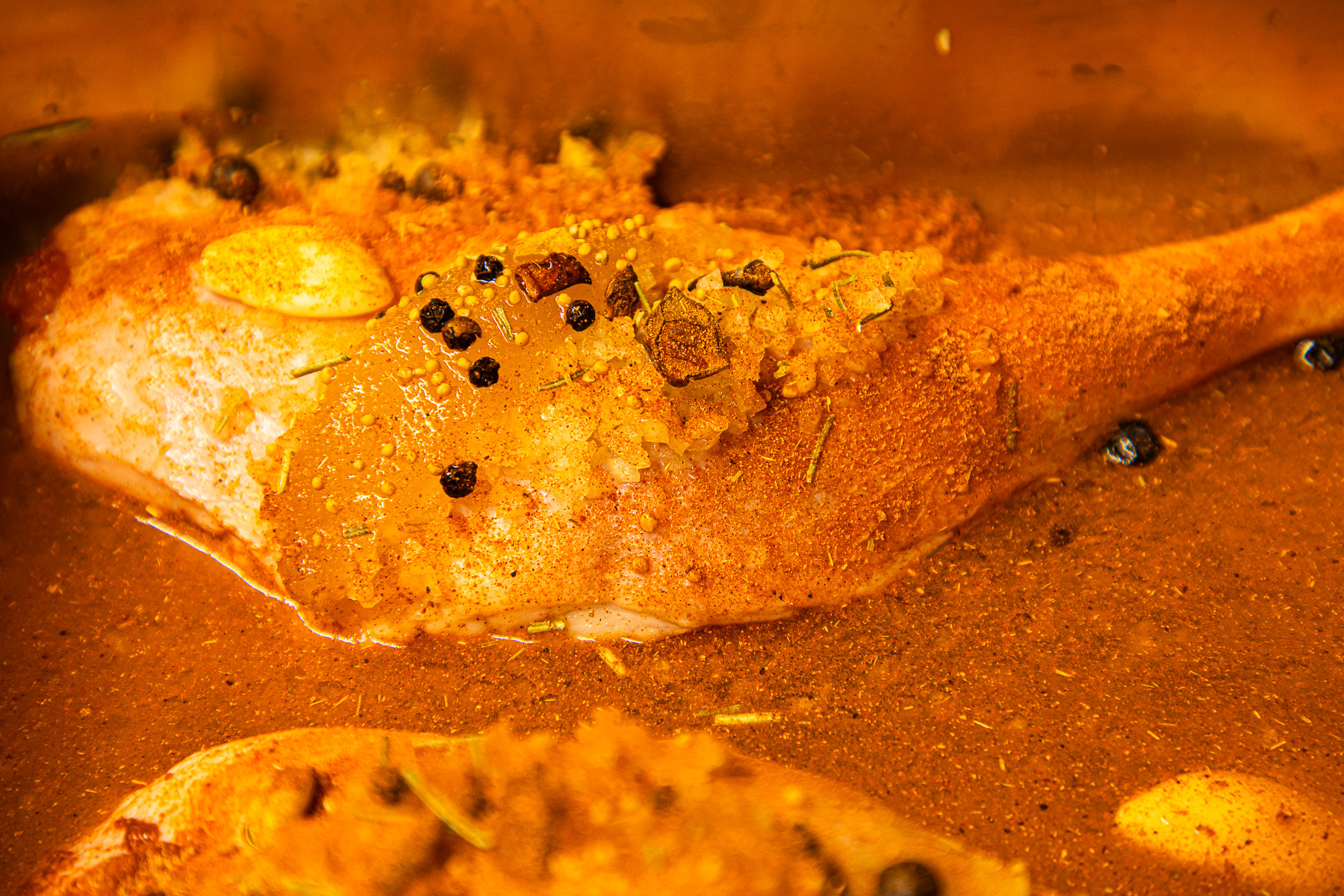
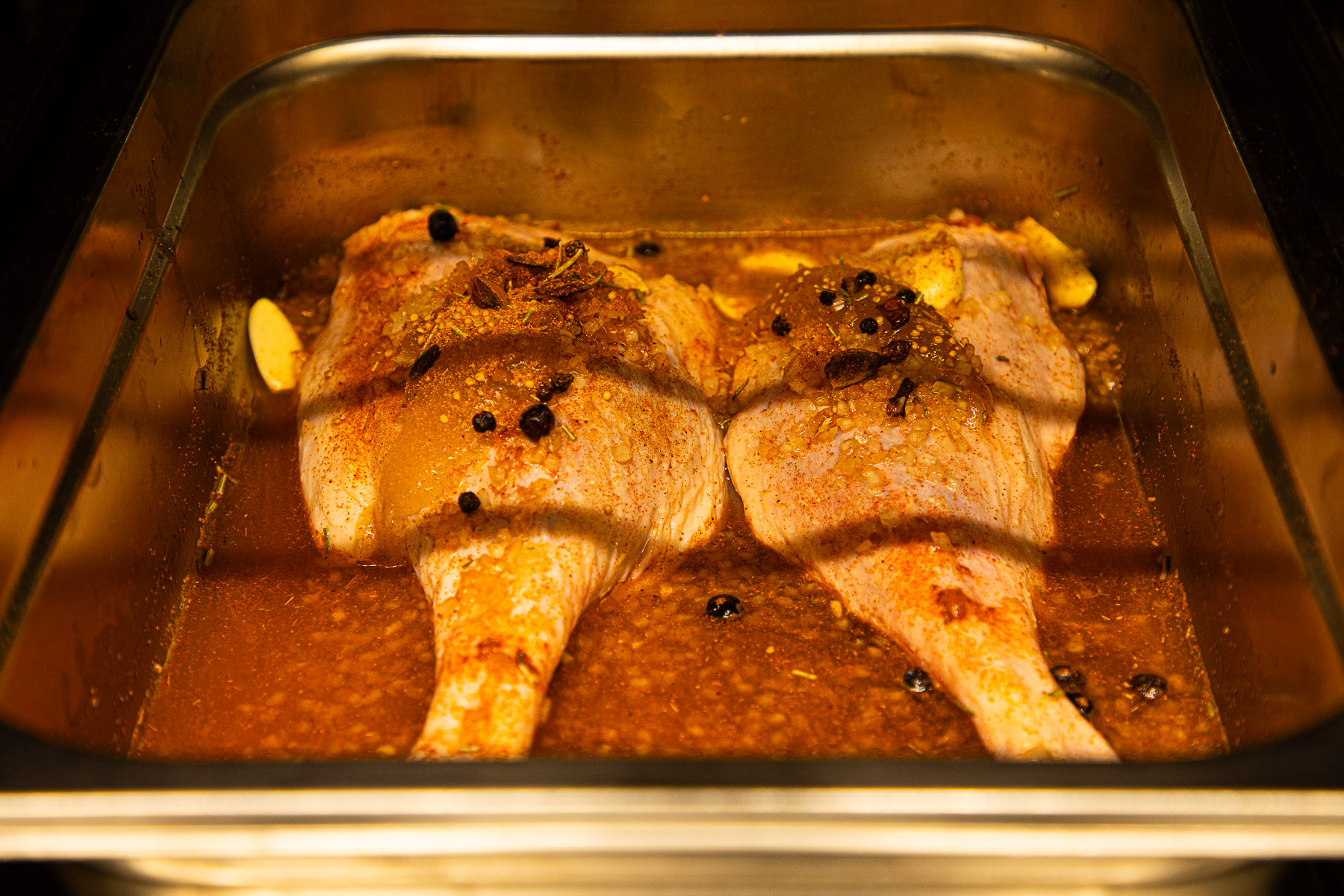
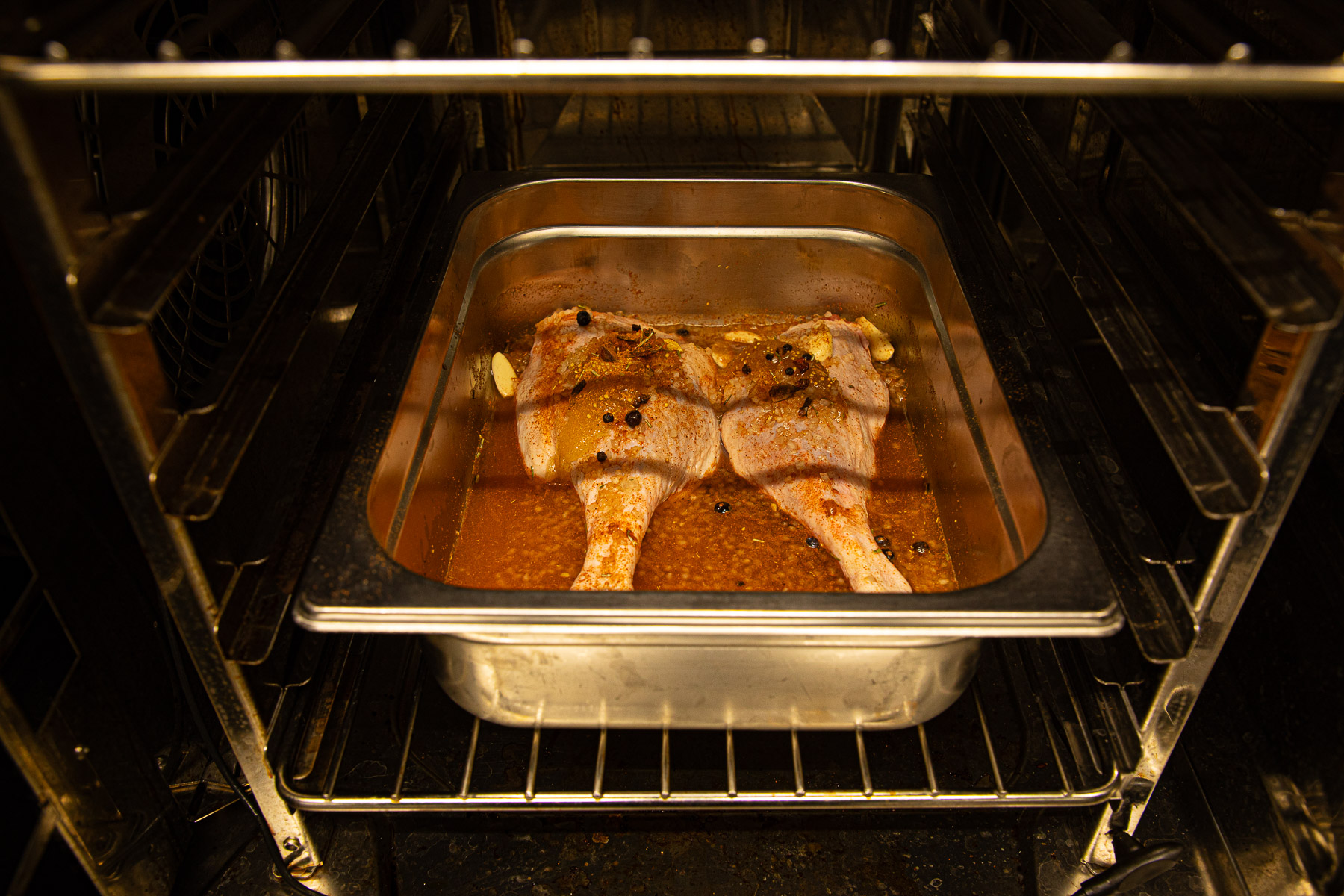
Marinate the goose legs: Place the goose legs in a large container and pour the marinade over them. Let them marinate in the refrigerator for at least 4 hours, or preferably overnight.
Prepare the pickled pumpkin: Briefly bring white wine vinegar, water, sugar, salt, bay leaf, and peppercorns to a boil in a small saucepan. Place the pumpkin in a screw-top jar and pour the hot marinade over it. Let it cool and then refrigerate.
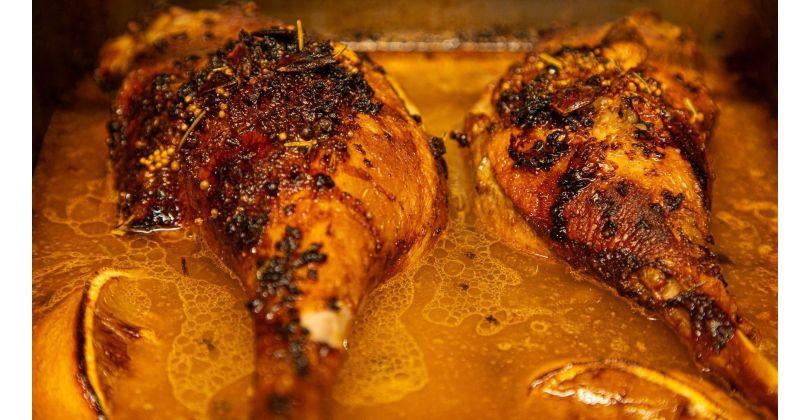
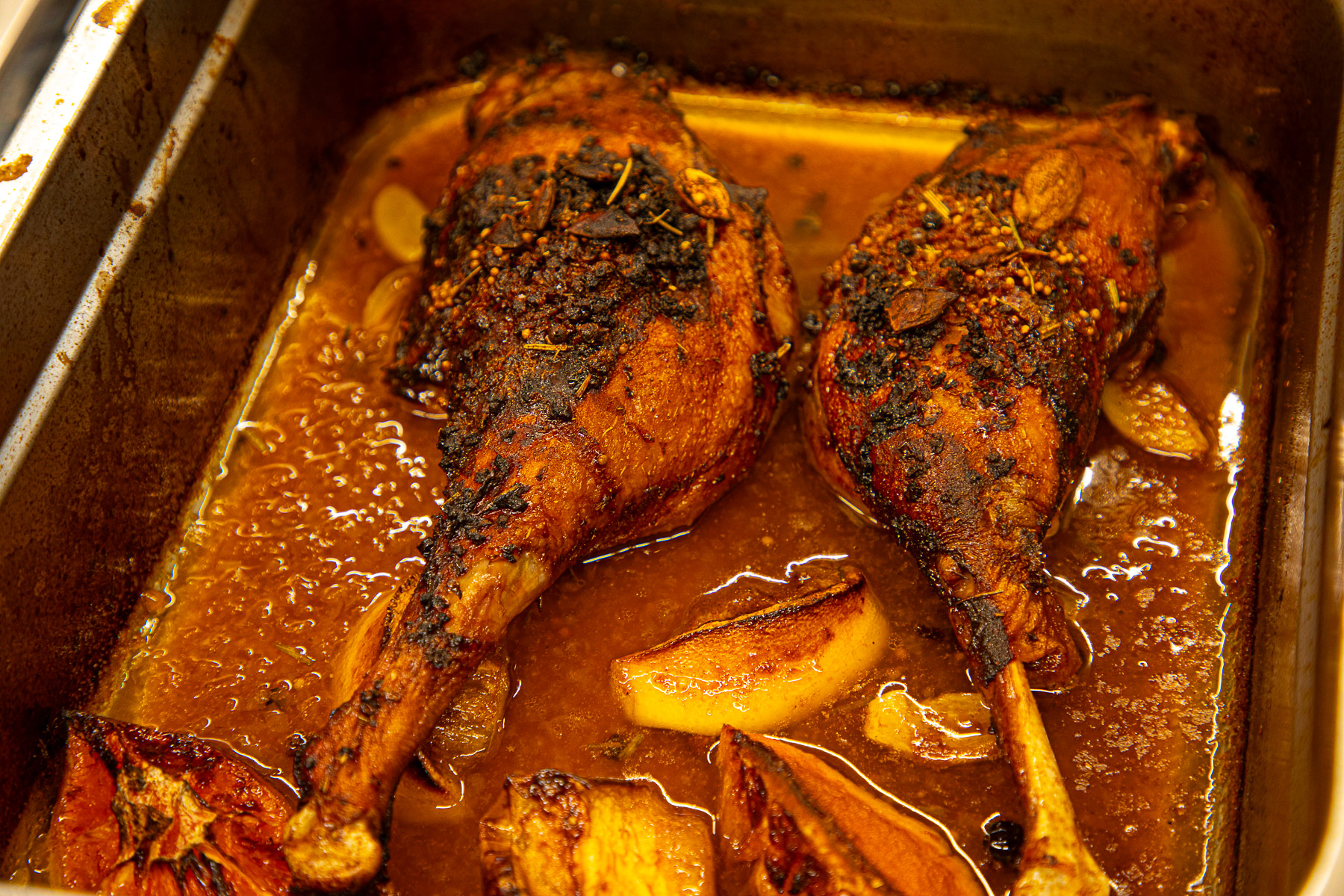
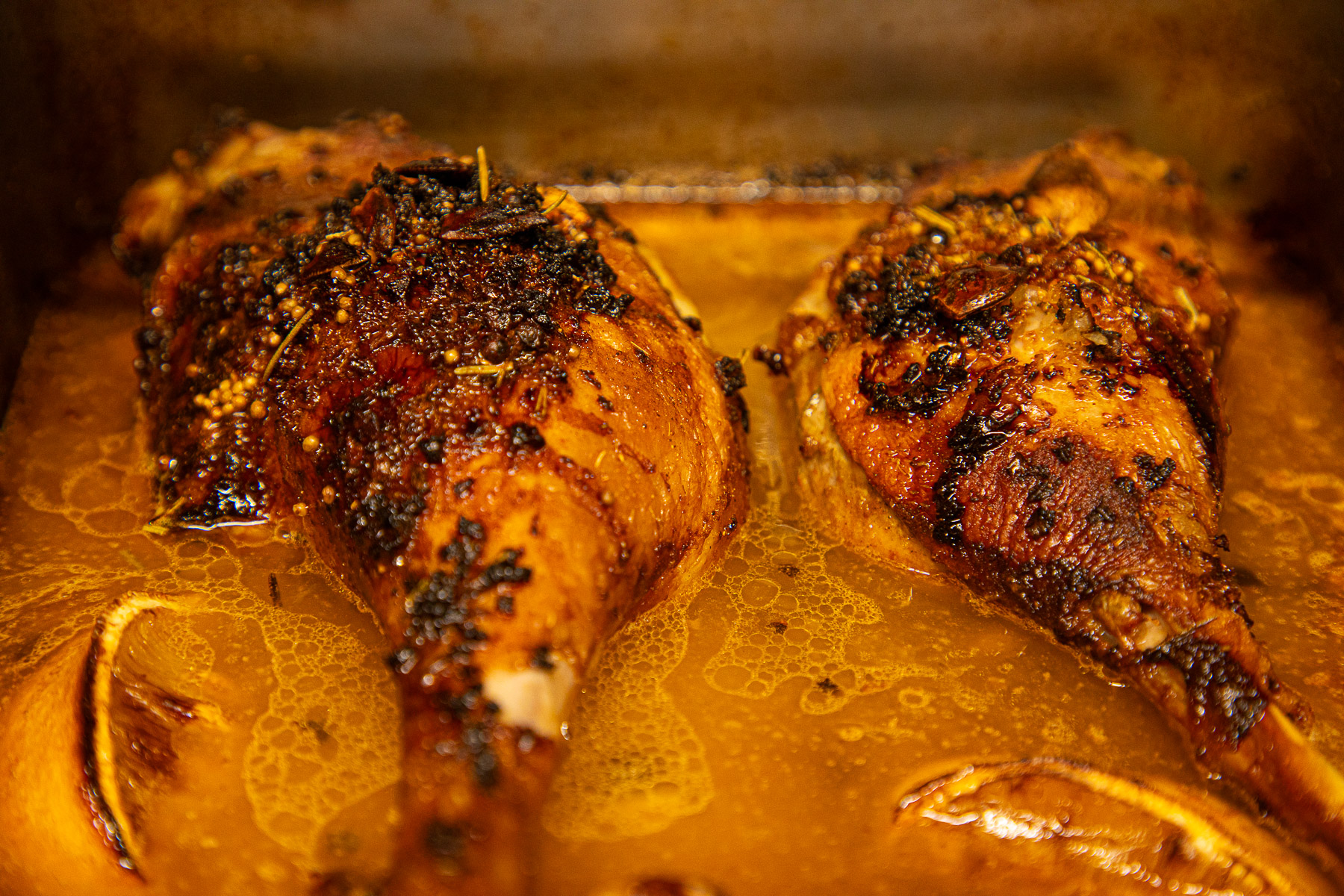
Braising the goose legs: Preheat the oven to 180°C (350°F). Remove the goose legs from the marinade (reserve the marinade!) and sear them in a pan/GN container with a little oil or goose fat until golden brown on all sides. Return the goose legs to the pan, pour in the remaining marinade, and cover them lightly (with a lid or aluminum foil). Braise in the oven for approximately 1.5 to 2 hours, or until the meat is tender.
Reduce the sauce: After braising, remove the goose legs and keep them warm. Reduce the remaining marinade in the roasting pan over medium heat until thickened. Season with salt and honey to taste.
Endive and radishes: Briefly sauté the endive and radishes in a pan with a small piece of butter or oil; they should remain crisp. Season lightly with salt.
Reduce the sauce: After braising, remove the goose legs and keep them warm.
Nice to know: The Goose in Culinary History – A Historical Journey.
Antiquity: Egyptians, Greeks, and Romans kept geese as domestic animals. The Romans, in particular, valued geese both as guard animals (famous for the "cackling geese of the Capitol") and as food. Goose liver was considered a delicacy even in antiquity – the roots of modern foie gras lie in ancient Egypt and Rome.
Middle Ages: In medieval Europe, the goose became a typical holiday roast. This was because many farmers kept geese – they are hardy and provide meat, fat, and down. With the Catholic Lent and St. Martin's Day (November 11), the goose acquired strong cultural significance:
The "St. Martin's goose" symbolically marked the end of the agricultural season and the beginning of winter.
Modern Era: Especially in German-speaking countries, Austria, and Eastern Europe, the goose became a Christmas roast.
The reason: Wealthier households could more easily afford geese than other animals during the winter. Goose fat was used as an important cooking fat for centuries.
It was a staple product of peasant cuisine for a long time.
Jewish cuisine: In Ashkenazi cuisine, the goose played a central role, as goose fat (schmalz) is kosher and was used as a butter substitute.
Dishes such as roast goose, goose giblets, or stuffed neck (helzel) have a long tradition there.
Modern times: Today, roast goose is considered a classic holiday dish in parts of Europe – especially at Christmas and St. Martin's Day.
Raising geese is more expensive and labor-intensive than raising chickens, so goose meat is often considered a high-quality delicacy.