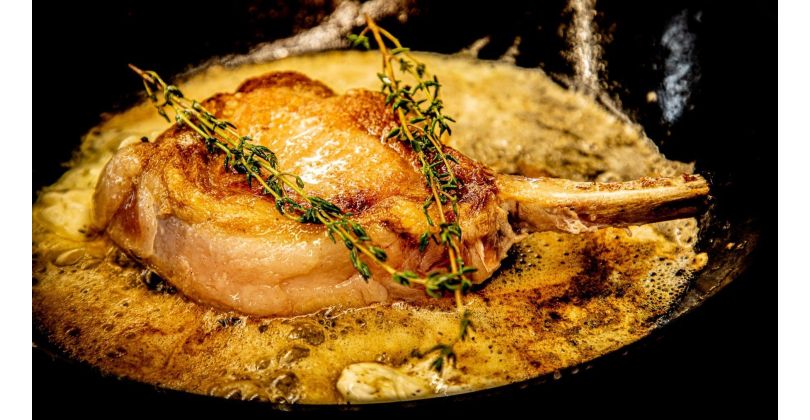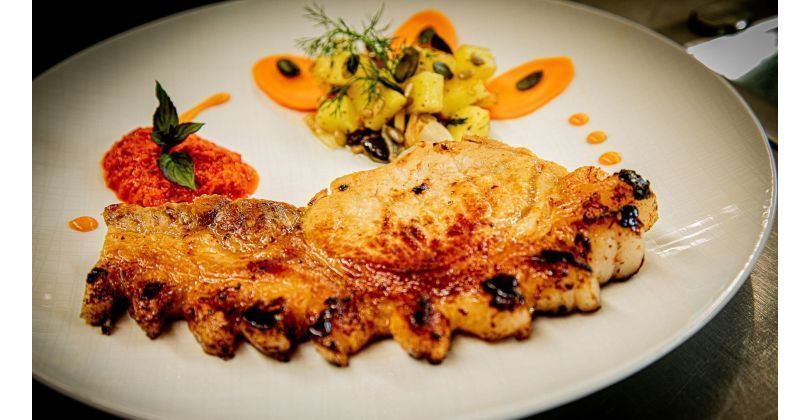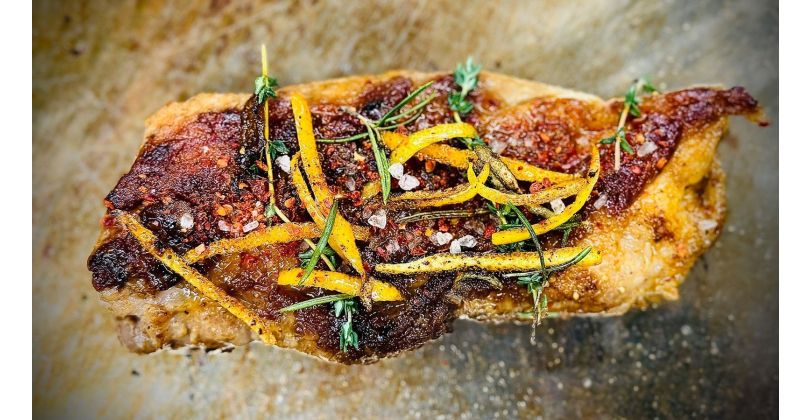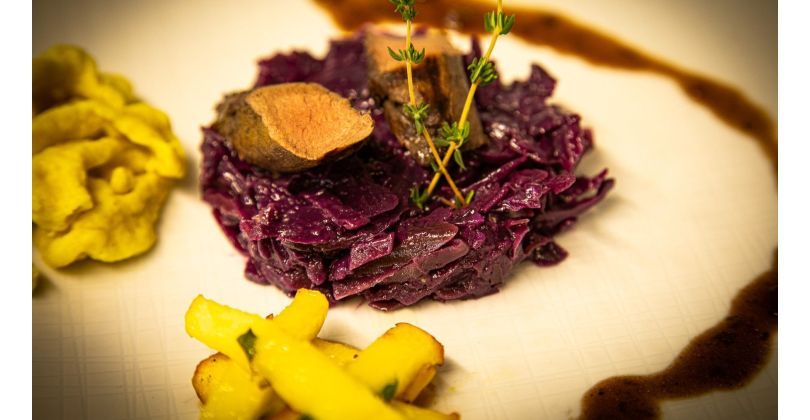



Crispy Porchetta with Tomato Risotto, Purslane, Onion and Zucchini Vegetables, and Red Wine Reduction
Porchetta is one of Italy's most traditional pork dishes and much more than just a roast; it's a celebration, street food, and a craft all in one.
Origin in Central Italy: Its roots lie in Central Italy, especially in the Lazio region around Ariccia. There, porchetta is considered a culinary symbol, and the town remains famous for its version, Porchetta di Ariccia. Historians believe that even in ancient times, pigs were stuffed with herbs on spit, possibly as early as the Roman Empire. Pork was a staple food in rural Italy, and processing an entire animal was a sign of prosperity and community.
The principle: Whole animal, lots of patience: Traditionally, a whole, boneless pig is used. It is heavily seasoned inside, usually with:
Fennel, rosemary, garlic, pepper, and salt.
Then it is tightly rolled, tied, and slowly roasted over a wood fire. An extremely crispy rind develops on the outside, while the meat inside remains juicy and flavorful. This contrast is the very essence of porchetta.
A feast and street food in one: Porchetta was originally a festive dish at:
• Village festivals
• Weddings
• Religious celebrations
• Fairs
Over time, it became a legendary street food. Throughout Italy, you'll see stalls selling enormous porchetta rolls at markets. It is sliced thickly and often simply served in bread, without any fuss. The meat itself is the star.
Craftsmanship with pride: The preparation is traditionally a craft, often passed down through generations by specialized porchetta makers. Every family, every region has its own blend of spices; the exact recipe is often a secret.
Why porchetta is so special: Porchetta stands for:
• Nose-to-tail cuisine
• Respect for the animal
• Sharing a meal
• Patience instead of haste
• Rustic perfection