
Ingredients (for 1 person)
1 ribeye steak (about 300-400g, thickly sliced)
Salt (coarse sea salt or fleur de sel)
Freshly ground black pepper
1-2 tbsp olive oil or vegetable oil
2-3 garlic cloves (optional, with skin on)
2-3 sprigs fresh rosemary or thyme (optional)
Butter (optional, for more flavor)
Method:
Prepare the steak: Take the ribeye steak out of the fridge at least 30-60 minutes before cooking to allow it to reach room temperature. This will ensure more even cooking.
Season: Season the steak generously with coarse salt and freshly ground pepper.
Heat the pan: In a heavy pan (cast iron is ideal), heat some oil until it is hot and just starting to smoke.
Season the steak: Carefully place the ribeye steak in the hot pan. Fry it for 3-4 minutes on the first side without moving it so that a nice crust can form. If desired, you can add the garlic cloves and herbs to the pan. Fry the other side: Turn the steak over and fry the other side for another 3-4 minutes, depending on the desired degree of doneness:
Rare: 50-52 °C core temperature
Medium Rare: 55-57 °C core temperature
Medium: 60-63 °C core temperature
Medium Well: 65-67 °C core temperature
Well Done: 70 °C and more
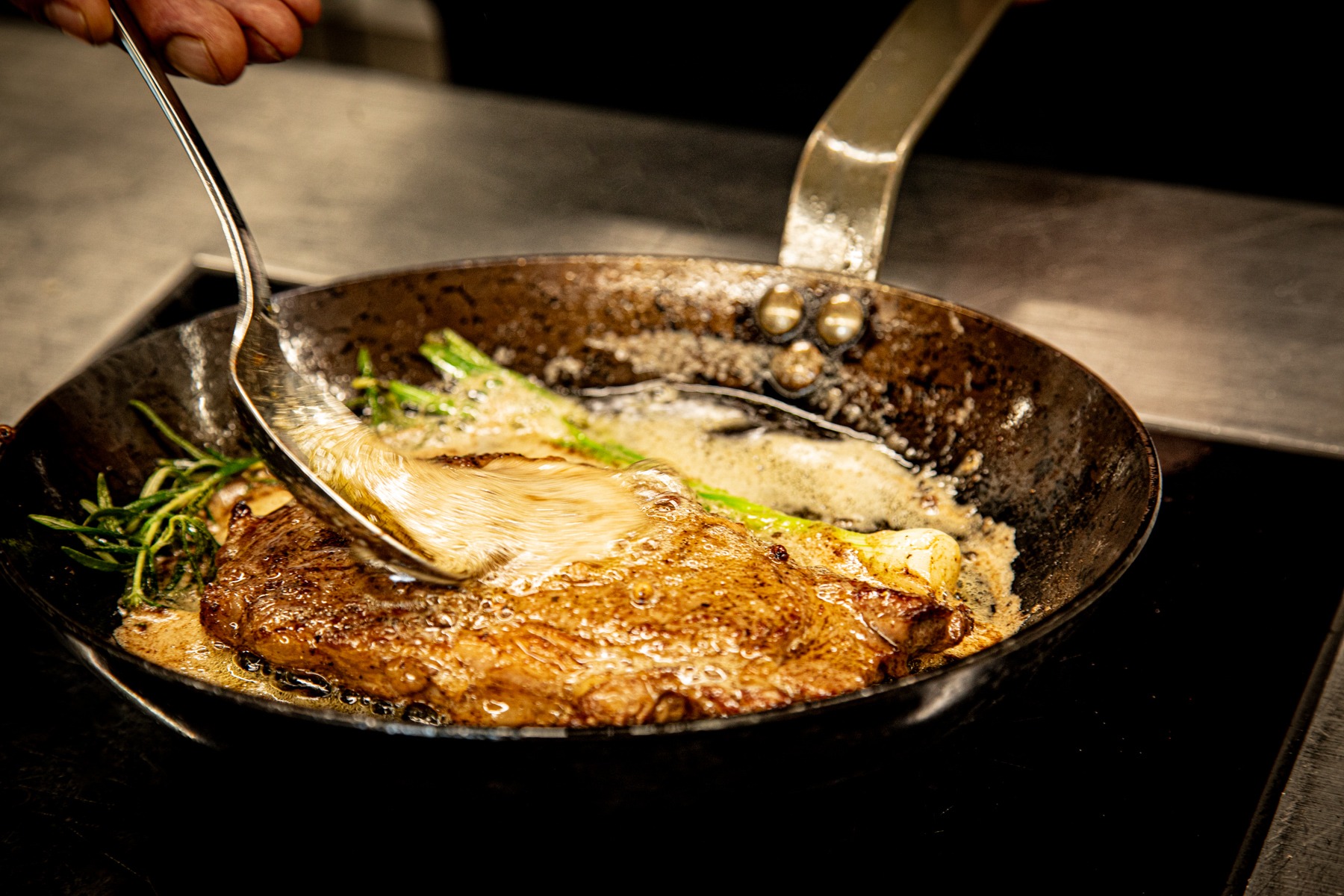
Add butter: In the last few minutes of cooking, you can add a piece of butter to the pan, let it melt and baste the steak with it (arosing) to add extra flavor.
Let it rest: Remove the steak from the pan and let it rest for about 5-10 minutes. This helps to distribute the meat juices and makes the steak more tender.
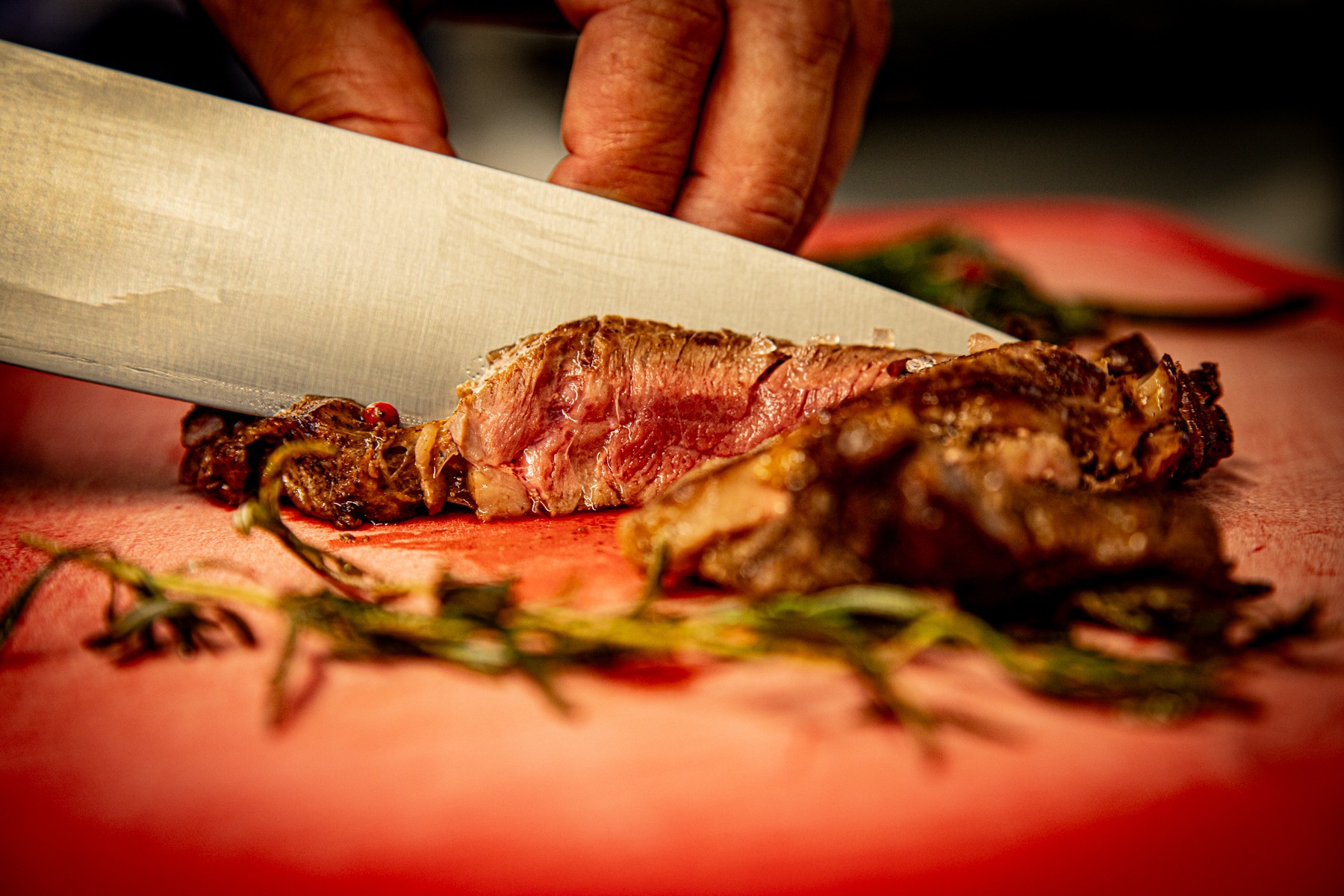
Serving: Cut the ribeye steak against the grain into thick slices and serve with side dishes of your choice
Facts about Dierendonck
Dierendonck history and tradition: The name Dierendonck has stood for high-quality meat since 1942. This indicates a long tradition and experience in meat processing.
Values: Dierendonck attaches importance to three central values: craftsmanship, soil and passion. This shows that the company pays attention to traditional production methods, quality of ingredients and the love of meat processing.
Own breeding and exclusive cattle breeds: Dierendonck runs its own breeding and searches for exclusive cattle breeds throughout Europe. This underlines the commitment to the origin and quality of the animals.
Control and monitoring: The company monitors and accompanies its products "from the pasture to delivery", which indicates comprehensive quality control. The close contact with the breeders shows that the origin of the animals is important.
Selection, maturing and cutting: The rigorous selection of animals, the optimal maturing and cutting of the meat are crucial to ensure the quality and distinctive character of each piece of meat.
The designation "meat sommelier" indicates that the Dierendonck family is proud of its expertise and knowledge in meat processing.
Dry aged from Dierendonck's maturing rooms, delivered directly to your door. Craftsmanship, terroir and passion are key values at Dierendonck.

History of the Holstein breed
The Holstein breed is known worldwide for its high milk yield.
The Holstein cow has been bred for decades, with particular attention being paid to characteristics such as milk production, quality of the udder structure, limb structure and feed conversion. The versatility of this breed allows it to adapt to different environments and production methods, be it pasture farming, dry feed-based systems for cheese production or silage-based rations. The Holstein breed dominates the dairy herd in most countries, often representing more than 90% of dairy cattle. In Switzerland, it has developed strongly since the 1970s and now accounts for around 45% of the cattle population. Despite this spread, it is noted that the breed's development potential has not yet been fully exploited. The Holstein breed originates from the Netherlands, particularly the former province of Holland and West Friesland. The diet originally focused on the characteristics of milk and meat.