Facebook Pixel

Posts tagged 'sauce'

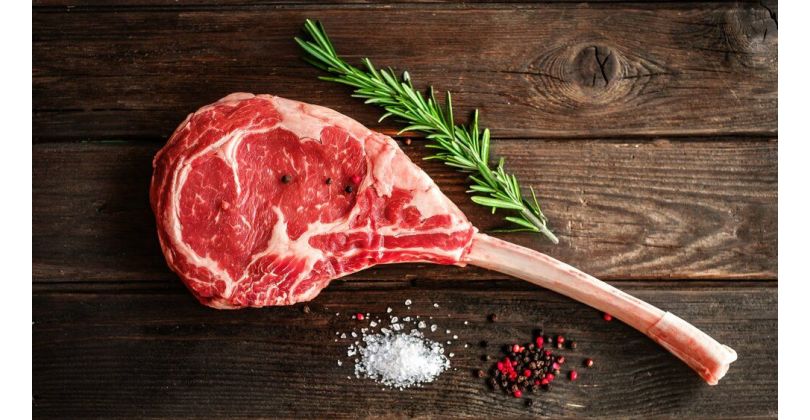
grillfleisch
Which meat cuts are suitable for grilling?
Why Organic?
Why Organic?
dry aged beef
Why Dry Aged Beef?
The Chianina beef
Small tree or big cattle?
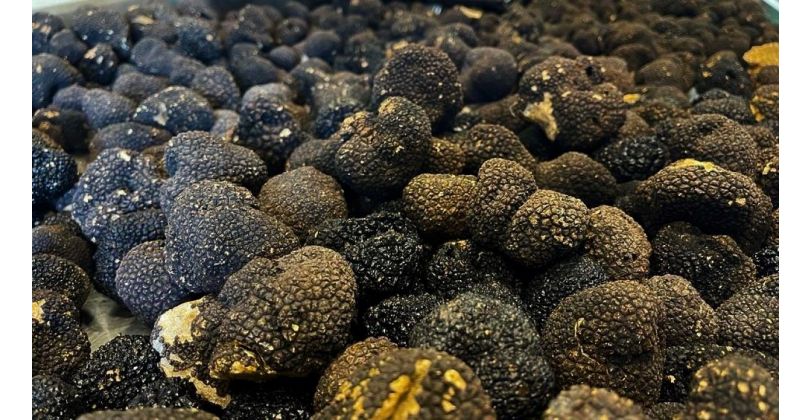
The world of truffles, the passion of Giuliano Tartufi
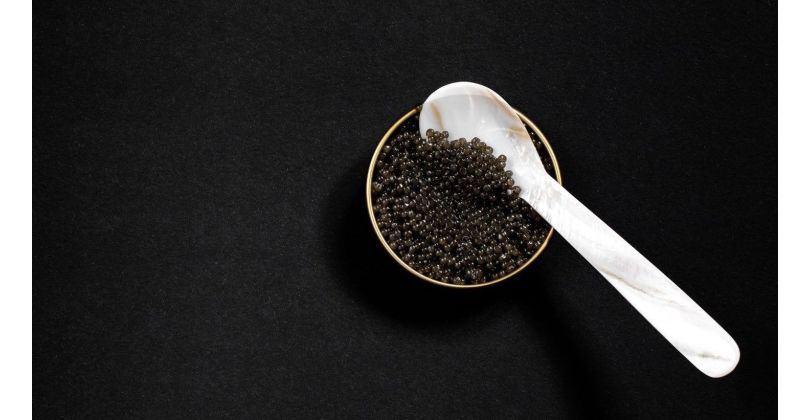
The caviar
The black gold
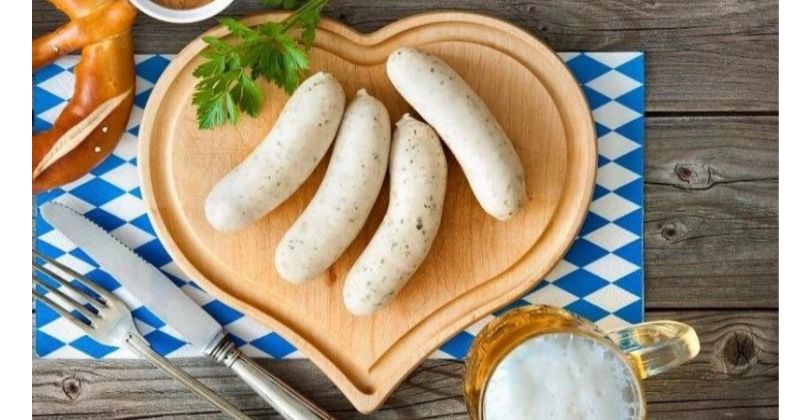
weisswurst
Oktoberfest in Switzerland, what does it actually include?
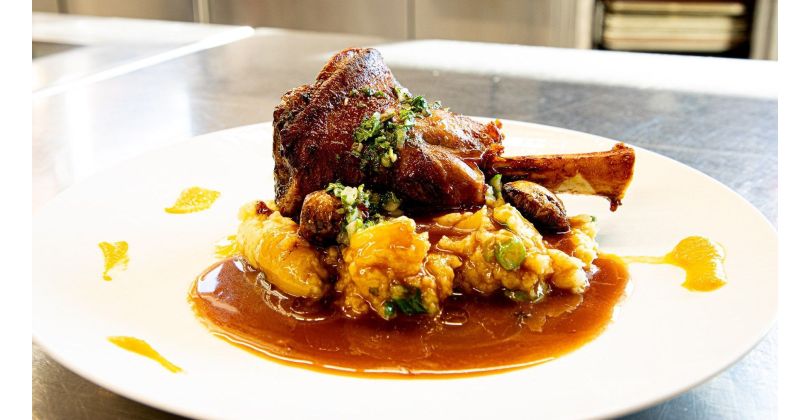
Oven-grilled Lamb Hammer on Mashed Potatoes with Green Asparagus, Jus, and Arugula-Mint Pesto
Loading...
84 view(s) 6 min read

Oven-grilled Lamb Hammer on Mashed Potatoes with Green Asparagus, Jus, and Arugula-Mint Pesto

Nice to know: Lamb is one of the oldest types of meat known to humankind. Sheep were domesticated in the Near East over 10,000 years ago. Because they provided milk, wool, and meat, they were perfect farm animals.

Culinary role in the past, Ancient times (Greeks, Romans): Lamb was both a sacrificial offering and a festive meal. At religious festivals, an animal was sacrificed and then eaten together. This was not just food, but a social event. It was seasoned with herbs, garlic, vinegar, and honey.

Middle ages in Europe: Lamb was particularly important in spring because young animals were available then. After Lent, lamb was often the first "real" meat to reappear on the table.

The shank (from the leg, i.e., the lower leg) was not considered a delicacy for a long time. It contains a lot of connective tissue, tendons, and bones. In the past, this meant work in the kitchen.

Historical background: Peasant and working-class cuisine: The whole animal was used. Prime cuts went to the wealthy, while pork knuckle remained with the common people.

Long cooking made it tender → the perfect base for stews, broths, and braised dishes.

Technology shapes flavor: It wasn't until the 18th and 19th centuries, with improved ovens and roasting techniques, that the crispy roasted pork knuckle became popular, especially in southern Germany and Austria.

Pub culture: With beer culture and urban taverns, pork knuckle became a hearty classic: high in calories, inexpensive, and filling. What was once a "leftover" became a cult dish.

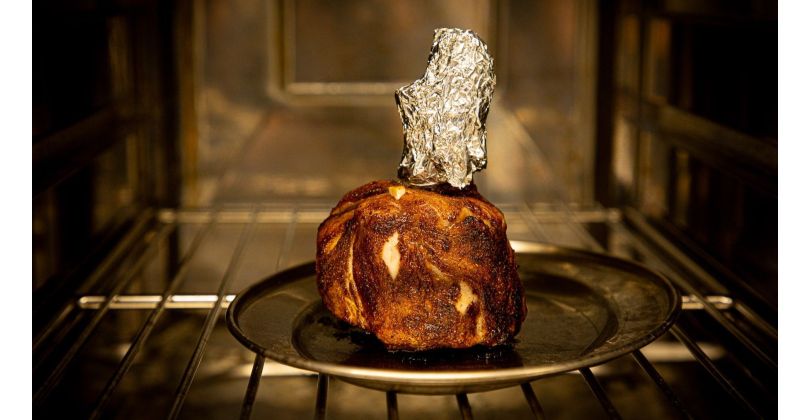
Oven-grilled pork hammer on potato-leek mash, caramelized balsamic onions, steamed pepper vegetables with spring onions, olives, sun-dried tomatoes, seeds and mint, served with a strong demi-glace
Loading...
619 view(s) 7 min read

Oven-grilled pork hammer on potato-leek mash, caramelized balsamic onions, steamed pepper vegetables with spring onions, olives, sun-dried tomatoes, seeds and mint, served with a strong demi-glace

Nice to Know:

Nice to know: The pork knuckle is rich in protein and contains a certain amount of fat, which gives it a juicy and tasty touch. However, it is recommended to enjoy it in moderation, as it can also be high in calories. The pork knuckle has made a name for itself beyond its borders and is popular in many other countries.

It is usually appreciated for its hearty crust and juicy meat, and many chefs experiment with different marinades and side dishes to make the dish even more varied. Overall, the pork knuckle is not only a gastronomic highlight, but also a piece of culinary tradition that has developed over centuries and continues to be appreciated.

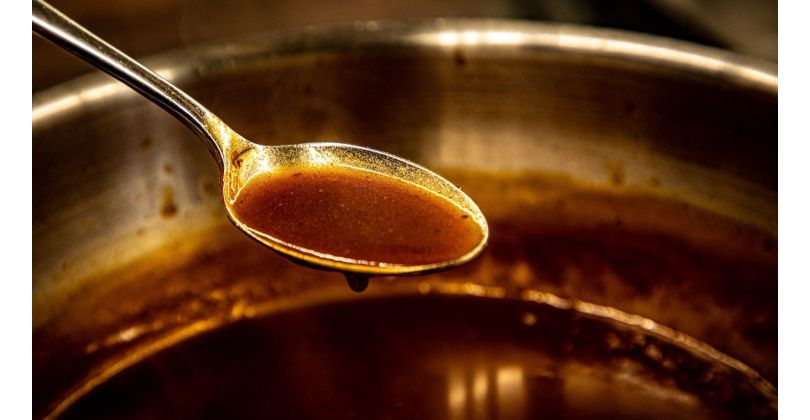
A freshly made Demi-glace / glazy sauce is the foundation of a good sauce
Loading...
1698 view(s) 9 min read

A freshly made Demi-glace / glazy sauce is the foundation of a good sauce

Nice to know:

Gravy has a long and varied history that is closely linked to the development of cooking and food culture in Europe. Its origins can be traced back to ancient times, when simple sauces made from stocks, fats and herbs were used to intensify the flavour of meat dishes.

In the Middle Ages, sauces often became more complex and included various ingredients such as wine, spices and vinegar. These sauces were not only used to enhance flavour, but also to preserve food. This period also saw the first recipes for sauces written down in cookbooks. 

Over the centuries, especially during the Renaissance, European cooking flourished, introducing new techniques and ingredients that expanded the variety of sauces. French cuisine, which is particularly famous for its sauces, developed a variety of gravies in the 17th and 18th centuries that served as the basis for many dishes.

One of the most popular is demi-glace, a rich sauce made from beef stock and a reduced brown sauce.

Copyright © 2026 meat4you. All rights reserved.