Posts tagged 'hirsch'
Pan-Fried Venison Picanha with Butter, Lemon and Thyme, White Asparagus and Green-White Asparagus Salad with Parsley-Spinach Vinaigrette
Nice to know: Venison has a long tradition in European cuisine and has been considered a noble game meat for centuries. During the Middle Ages, venison was highly valued at royal and aristocratic banquets, as hunting rights were often reserved for nobility. Today, venison remains one of the most popular game meats, especially during the autumn and winter seasons.
Culinarily, venison is known for its delicate and aromatic game flavor. Compared to other game meats such as roe deer or chamois, its taste is generally milder and more balanced. It is also very lean, high in protein, and contains very little intramuscular fat, making gentle cooking methods especially important.
Popular cuts:
Venison loin → exceptionally tender, ideal for quick cooking
Venison entrecôte or picanha → flavorful and juicy
Venison rump → fine texture and versatile
Venison stew meat or shoulder → perfect for slow cooking and braising
Traditional pairings in game cuisine include cranberries, red wine, mushrooms, chestnuts, Brussels sprouts, and seasonal sides such as asparagus. Herbs like thyme, rosemary, juniper berries, and mint also complement venison exceptionally well.
Interesting fact: A deer’s natural diet directly influences the flavor of its meat. Since deer feed on herbs, grasses, young shoots, buds, and forest fruits, the meat often develops subtle herbal and woodland notes that are rarely found in farm-raised meat.
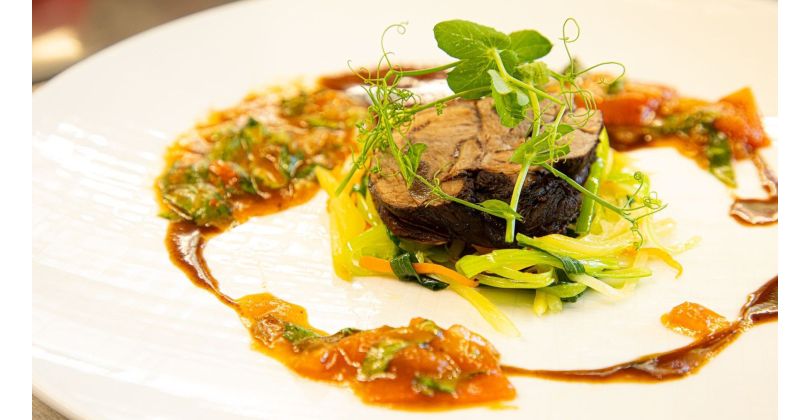
Roasted Lamb Shoulder on Potato, Carrot, and Leek Straws with Lamb Jus and Tomato and Basil Salsa
Lamb shoulder is a particularly tasty and succulent cut of meat that is often used in cooking. It comes from the shoulder area of the lamb and is known for its intense flavor and tender texture, which is perfectly enhanced by slow cooking or braising.
Characteristics of lamb shoulder: Tenderness and flavor: Lamb shoulder has a balanced fat distribution that melts during cooking, giving the meat a wonderfully juicy texture. The flavor is robust and aromatic, making it an excellent choice for savory dishes.
Versatility: It can be prepared in a variety of ways: braised, grilled, roasted, or even in a slow cooker.
Zebra sirloin with grilled pepperoni and tomatoes, served with cooked rice with mulberries and raisins
The zebra meat comes from plains zebras (Equus quagga) living in controlled game reserves in South Africa. These reserves provide the animals with ample natural habitat and species-appropriate conditions – no factory farming. Zebras are considered wild animals, but are deliberately kept in sustainably managed protected areas under wildlife standards and hunted under controlled conditions.
Natural rearing: The animals grow up in their natural habitat without the use of hormones or artificial feed. They feed on what the African savannah provides – primarily grasses and herbs. This makes the meat particularly pure, low in fat, and unique in its flavor.
Sustainability and ethics: Hunting and processing are strictly controlled by government-licensed programs in South Africa.