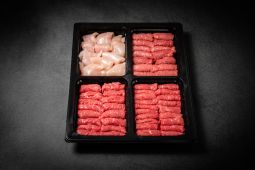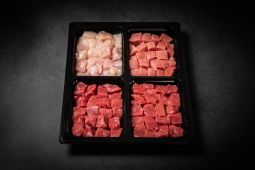
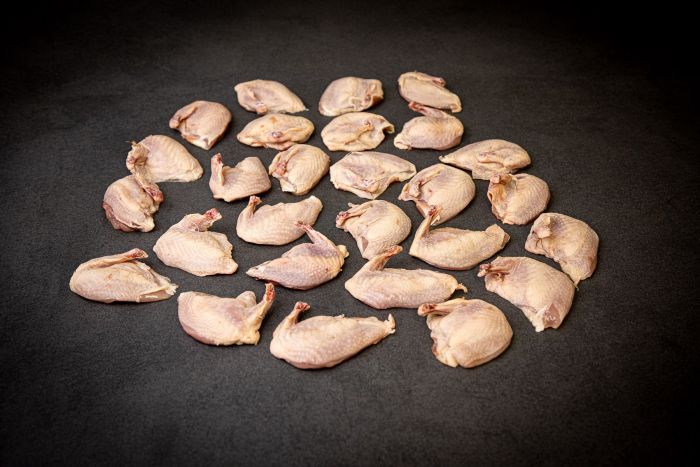



Nice to know: Les pigeonneaux Fermier du poitou – From egg to chef's kitchen.
Comprehensive quality: Genetically selected breeding stock.
Animal welfare: The well-being of the poultry is paramount: high-quality feed in sufficient quantity,
clean premises, constant ventilation, plenty of fresh water. Rearing in perfect harmony with the natural rhythms of the young pigeons.
Natural growth: For the first few days, the young are fed exclusively with the crop milk of their parents. This very rich milk allows the chick to double its weight within 48 hours. Human intervention is impossible; industrial pigeon farming is not an option.
Feeding with flaxseed, which is very rich in Omega-3 fatty acids: In accordance with the guidelines of BLEU BLANC COEUR (a French association whose goal is to promote healthier breeding methods), the young pigeons are fed grains (flaxseed, lupins, broad beans, etc.) and plants (grass, alfalfa, etc.) that are excellent for their health and the environment.
Flaxseed is the oilseed with the highest content of Omega-3 fatty acids: Thanks to this diet, the meat of our young pigeons is flavorful, tender, juicy, and of high nutritional quality.
From the pharaohs of ancient Egypt to our kings… who alone had the privilege of enjoying pigeons, to the French revolutionaries who feasted on them, the tradition is carried on today by the most renowned Michelin-starred chefs, who prepare them according to the most innovative recipes.