

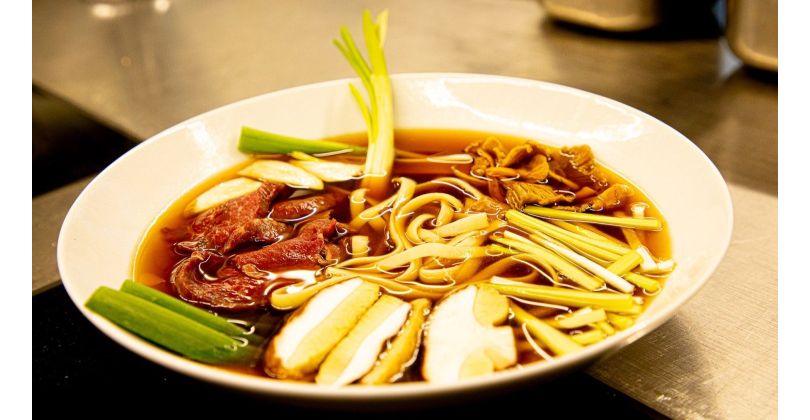
Beef Broth with Kobe Beef Shabu Shabu
Origin and term: The word bouillon comes from French and literally means "boil" or "that which boils." It originally referred to a clear broth made by boiling meat, bones, vegetables, and spices. Even in the Middle Ages, it was common practice in Europe to boil leftover meat and bones in water to produce nutrient-rich soups.
Development in France: In 17th and 18th-century France, bouillon became a staple in haute cuisine. Chefs developed systematic methods for making meat stocks and clear soups.
Bouillon as a popular dish: In the 19th century, so-called bouillons emerged in Paris – simple restaurants where workers received inexpensive meals, often a bowl of bouillon with bread or meat.
Industrial production: With industrialization, people began to preserve bouillon:
• 1840s: First attempts to produce concentrated meat extracts.
• 1850s: German chemist Justus von Liebig developed "meat extract," which was later marketed in cube form (bouillon cubes).
• 20th century: Brands like Maggi and Knorr made bouillon cubes and powder popular worldwide. This made bouillon a quick base for soups and sauces in almost every household.