Facebook Pixel

Posts tagged 'geflügel'

grillfleisch
Which meat cuts are suitable for grilling?
Why Organic?
Why Organic?
dry aged beef
Why Dry Aged Beef?
The Chianina beef
Small tree or big cattle?
The world of truffles, the passion of Giuliano Tartufi
The caviar
The black gold
weisswurst
Oktoberfest in Switzerland, what does it actually include?
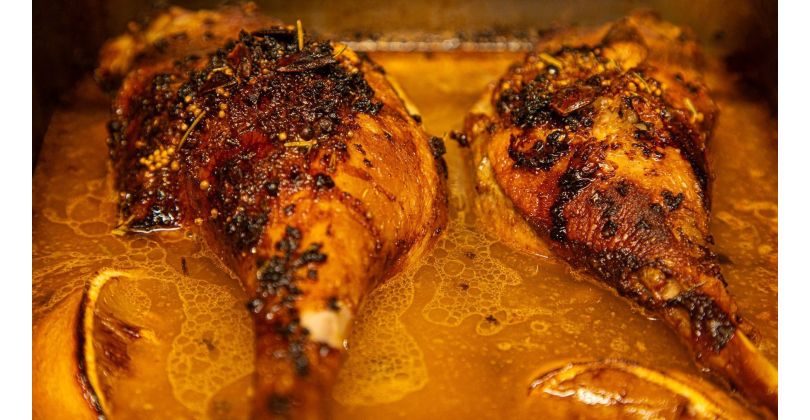
Braised goose leg marinated with white wine, spices, and citrus, served with pickled pumpkin, reduced marinade, and steamed endive with radishes
Loading...
236 view(s) 5 min read

Braised goose leg marinated with white wine, spices, and citrus, served with pickled pumpkin, reduced marinade, and steamed endive with radishes

Nice to know:  The Goose in Culinary History – A Historical Journey.

Antiquity: Egyptians, Greeks, and Romans kept geese as domestic animals. The Romans, in particular, valued geese both as guard animals (famous for the "cackling geese of the Capitol") and as food. Goose liver was considered a delicacy even in antiquity – the roots of modern foie gras lie in ancient Egypt and Rome.

Middle Ages: In medieval Europe, the goose became a typical holiday roast. This was because many farmers kept geese – they are hardy and provide meat, fat, and down. With the Catholic Lent and St. Martin's Day (November 11), the goose acquired strong cultural significance:

The "St. Martin's goose" symbolically marked the end of the agricultural season and the beginning of winter.

Modern Era: Especially in German-speaking countries, Austria, and Eastern Europe, the goose became a Christmas roast.

The reason: Wealthier households could more easily afford geese than other animals during the winter. Goose fat was used as an important cooking fat for centuries.
It was a staple product of peasant cuisine for a long time.

Jewish cuisine: In Ashkenazi cuisine, the goose played a central role, as goose fat (schmalz) is kosher and was used as a butter substitute.
Dishes such as roast goose, goose giblets, or stuffed neck (helzel) have a long tradition there.

Modern times: Today, roast goose is considered a classic holiday dish in parts of Europe – especially at Christmas and St. Martin's Day.

Raising geese is more expensive and labor-intensive than raising chickens, so goose meat is often considered a high-quality delicacy.

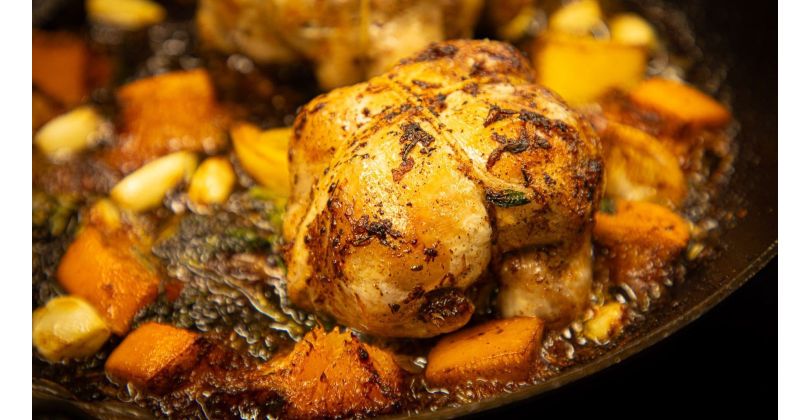
Stuffed Quail with Endive, Spinach, and Candied Oranges
Loading...
271 view(s) 5 min read

Stuffed Quail with Endive, Spinach, and Candied Oranges

Nice to know: Quail in Culinary Art – A Historical Overview.

Antiquity: Quail were already prized in Egyptian, Greek, and Roman cuisine. In Egypt, depictions of quail catching and preparation are over 4,000 years old.The Japanese quail was domesticated early on – both for its eggs and its tender meat. In Greek and Roman cuisine, quail were considered a delicacy; they were grilled, roasted, or used in pies.

Biblical Significance: Quail play a remarkable role in the Judeo-Christian tradition: The Old Testament states that the Israelites in the desert were fed by "quail flying down." As a result, quail were often regarded as a divine gift in the Middle Ages.

Middle Ages: In Europe, quail were reserved for aristocratic tables. They were considered a fine game bird, served primarily at banquets. Quail hunting was strictly regulated, sometimes even reserved for nobility or monasteries.

Renaissance and Baroque: With the flourishing of courtly cuisine in France, Italy, and Germany, quail experienced a culinary golden age. It was served in elaborately stuffed dishes, pies, ragouts, or in combination with truffles. In France, it became a symbol of haute cuisine, from which many classic recipes originate.

19th & early 20th centuries: With the advent of modern agriculture and the spread of the Japanese quail, breeding became easier. Quail appeared more frequently on middle-class tables but remained a premium product compared to chicken or duck.

Modern cuisine: Today, quail is considered a delicate, refined poultry, used primarily in fine dining. Particularly popular:

Quail breast/quail legs in haute cuisine
Quail eggs as a delicacy, e.g. B. as an amuse-bouche or for decorative dishes
Regional focus in Europe: France, Italy, Spain and Eastern Europe.

Copyright © 2026 meat4you. All rights reserved.