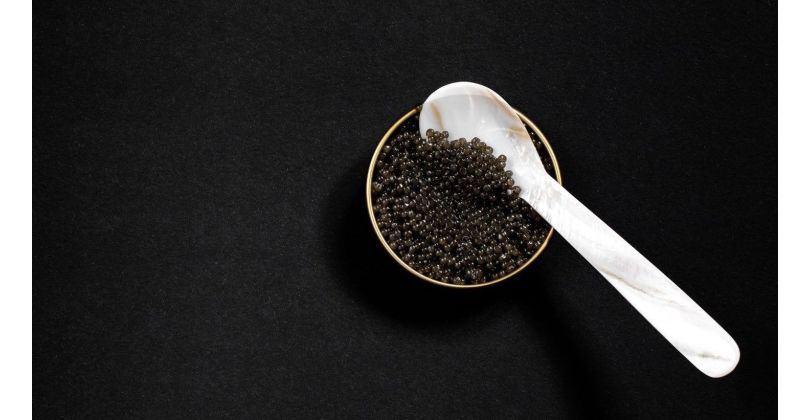
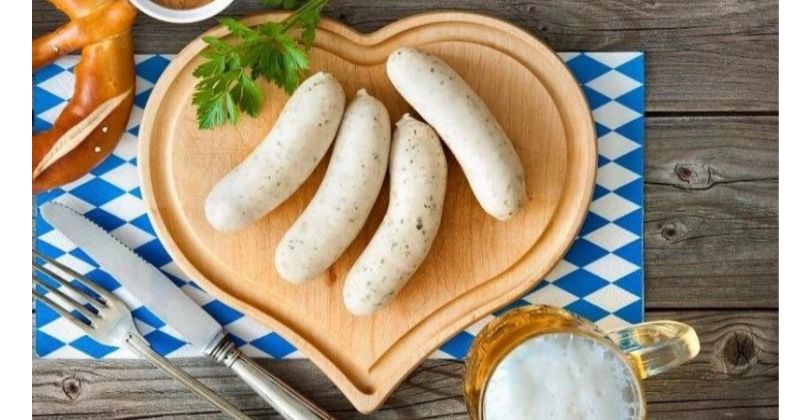
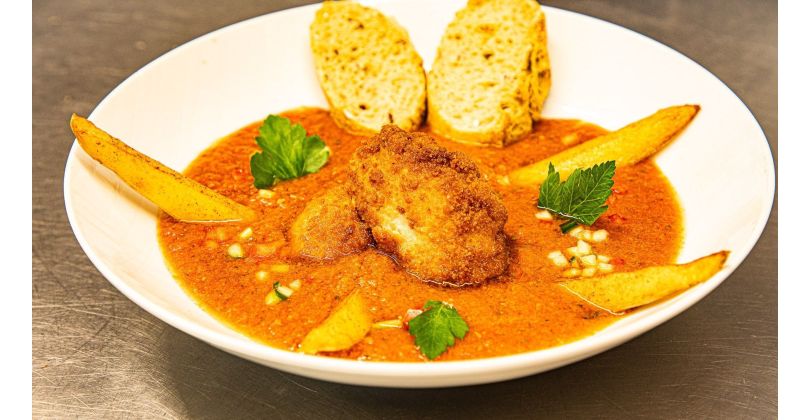
“Bull testicles” or “bull testicles” are a delicacy appreciated in various cuisines around the world.In European cuisine, especially in Mediterranean gastronomy, they are a traditional dish in some regions.They can be prepared in a variety of ways, often fried, grilled or incorporated into egg dishes. The origins of the dish are varied and often linked to the culture and eating habits of each region.In countries such as Spain, they are sometimes served in tapas form, while in France they are included in dishes such as “les ris de veau” (veal testicles).In Italian cuisine, there are also specific recipes that include bull testicles.
The preparation and use of bull testicles in cooking has not only culinary but also cultural significance.In many cultures, eating offal, including testicles, is considered a sign of courage or masculinity.In some countries, they are also served as part of celebrations or special occasions. As with many delicacies, the acceptance of bull testicles as food depends heavily on cultural norms and personal preferences.
Zurich-style veal strips with veal kidneys and röstiIngredients for 4 people For the veal strips:500 g veal (veal kidneys)200 g veal kidneys2 onions200g mushrooms2-3 cloves of garlic200 ml cream100 ml white wine2 tbsp butter2 tbsp olive oil100ml veal stockSalt and pepper For the...
Visiting Thailand - Tom Ka Gai or Tom Khing Kai Tom Kha Gai / Tom Khing Kai with chicken feet Tom Kha Gai or Tom Khing Kai is a Thai coconut soup that is usually made with chicken.In this recipe we use chicken feet, which give the soup an interesting texture and a special taste. Tom Kha...
"meat4you Swiss Beef Selection Dry Aged" by restaurant and bucher shop zum Ochsen from Lupfig Discover the high-quality cuts from selected Swiss cattle - exclusively from female animals - The "meat4you Swiss Beef Selection" The "meat4you Swiss Beef Selection Dry Aged" is an exclusive...