Thawed products can be refrozen. Important information: This product is shipped frozen. Depending on the outside temperature and the type of product, it may arrive partially thawed or fully thawed. No worries – the product has always been kept refrigerated. Important Notice: For legal reasons, we are required to declare this product as thawed. What to do upon receiving the product? Option 1: Let it fully thaw in the refrigerator at 5 °C and enjoy (until the best-before date on the small label on the product). Option 2: Place it directly in the freezer at -18 °C upon arrival and enjoy it later. A slightly thawed product can be stored in the freezer for another 2 months without any loss of quality. |
Wagyū is probably the most expensive domestic cattle in the world. Its name translates as “Japanese cattle”. The exact translation is Wa = Japanese and Gyu = cow.
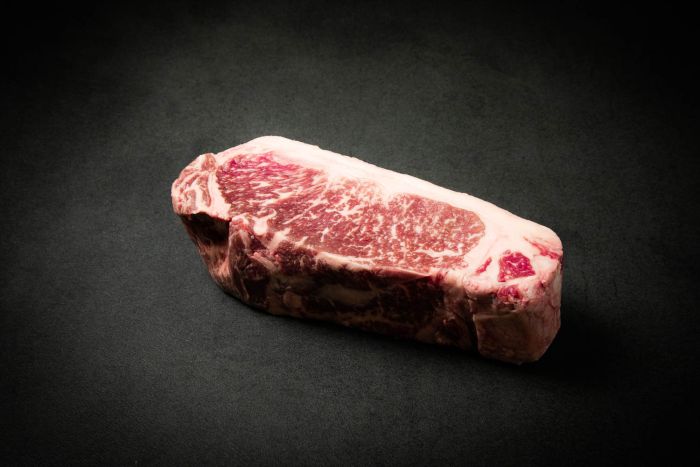
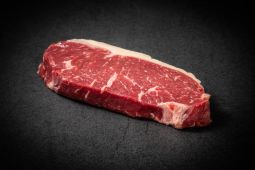
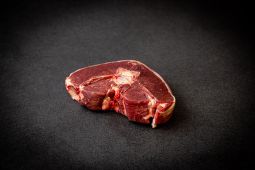
US Wagyu sirloin steak SRF BMS 9+
Thawed products can be refrozen. Important information: This product is shipped frozen. Depending on the outside temperature and the type of product, it may arrive partially thawed or fully thawed. No worries – the product has always been kept refrigerated. Important Notice: For legal reasons, we are required to declare this product as thawed. What to do upon receiving the product? Option 1: Let it fully thaw in the refrigerator at 5 °C and enjoy (until the best-before date on the small label on the product). Option 2: Place it directly in the freezer at -18 °C upon arrival and enjoy it later. A slightly thawed product can be stored in the freezer for another 2 months without any loss of quality. |
- Order placed before 15:00h, earliest availability:
- pick-up in Lupfig on Thursday, June 4, 2026
- delivery on Friday, June 5, 2026
Wagyū is probably the most expensive domestic cattle in the world. Its name translates as “Japanese cattle”. The exact translation is Wa = Japanese and Gyu = cow.
A special feature of these indigenous cattle is, that they have hardly been crossbred during their long history. For centuries, they have been used mainly as working animals. According to the law of Buddhism, meat consumption was forbidden in Japan. After the opening of Japan in 1868, the meat yield of this breed was optimised for their use as beef cattle.Today, there are three main Japanese breeds known as Wagyū: Japanese Black (Kuroge Wagyū), Japanese Shorthorn (Tankaku Wagyū) and Japanese Brown (Akage Wagyū). Japanese Black make up 90% of all fattened cattle in Japan.Wagyū cattle is mostly black, but there are also red cattle. They are mid-sized (bulls: 800–1000kg, cows: 450–600kg) with a well-developed shoulder and strong, clearly tilted hind quarters.At slaughtering, the Wagyū is almost double the age of conventional cattle.
| Season Category | Christmas |
|---|---|
| Storage | Frozen food: store at -18 ° C or colder. In the refrigerator at a maximum of 5 ° C |
| Cuts | Sirloin |
| Origin | Amerika |
| Ageing | Wet aged |
| Breeding | Pasture farming and feedlots / finishing |
| Breed | Wagyū / Black Angus |
| Feeding | Grass-corn silage and grain mixture |
| Label | Gold/BMS 9+ |
| Declaration | Can be produced with hormonal growth promotors. Can be produced with non-hormonal growth promotors such as antibiotics. |
Energy value:
Main nutrients:
Nutrient content per 100 g edible portion
Energy in kcal 210
Energy in kJ 876
Main nutrients:
Fat 13.7g
Protein 21.7g
Water 63.2g
Others 1.4g
Nutrient content per 100 g edible portion
Customer Reviews
Customer Questions
Ratings & Reviews
Be the first to review this product
More from Snake River Farms