
Degrees of doneness
The degrees of doneness Rare, Medium Rare, Medium, Medium Well and Well Done provide in-depth knowledge about the cooking point of meat and its influence on flavour, juiciness and texture.
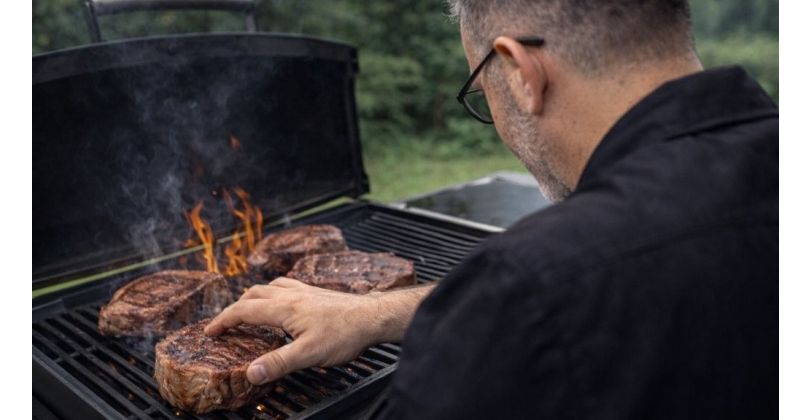
In this thematic section, meat sommelier Chris clearly explains how the individual degrees of doneness differ and how temperature, cooking time and heat impact shape the final result on the plate.
The focus is not on preparing a specific dish, but on developing an understanding of the correct doneness and its culinary significance.
The typical characteristics of each degree of doneness are highlighted, from the tender, juicy texture of Rare to the fully cooked consistency of Well Done.
This expertise is complemented by practical guidance, sensory indicators and background information that help tailor meat preparation to personal preferences.
The result is an informative knowledge section that builds confidence in handling high-quality cuts of meat and contributes to a deeper understanding of quality, craftsmanship and enjoyment.
Degrees of doneness are thus not viewed merely as stages of cooking, but as a decisive factor for conscious meat enjoyment.
Nice to know: Meat from raw to well-done Even in antiquity and the Middle Ages, cooking levels played a role, although they weren't yet systematically named. Meat was usually prepared over an open fire or on a spit. The cooking time depended heavily on the heat of the fire and the cook's experience. Nobles often preferred succulent, less cooked meat, while in ordinary households, meat was frequently cooked longer to make it more durable and easier to digest.
France and the birth of classic cooking levels: Today's cooking level terms originate primarily from 18th- and 19th-century French cuisine. With the development of haute cuisine, cooking techniques became more precise and standardized. French terms like bleu, saignant, à point, and bien cuit emerged to describe the precise degree of cooking of meat. This differentiation was important because high-quality cuts of meat develop different aromas and textures depending on the degree of cooking.