Ingredients for 2-3 people
For the crocodile eye fillet:
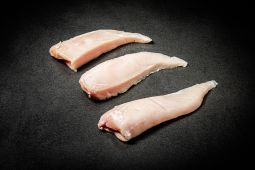
400 g crocodile eye fillet
1 orange (juice and zest)
1 lemon
1 lime
1 spring onion
1 bunch fresh coriander
2 cloves garlic
2 tbsp olive oil
1 tbsp honey or maple syrup
1 tsp soy sauce
1 star anise
1 clove
Salt and black peppercorns
Chili flakes or chili sauce
For the yams or cassava:
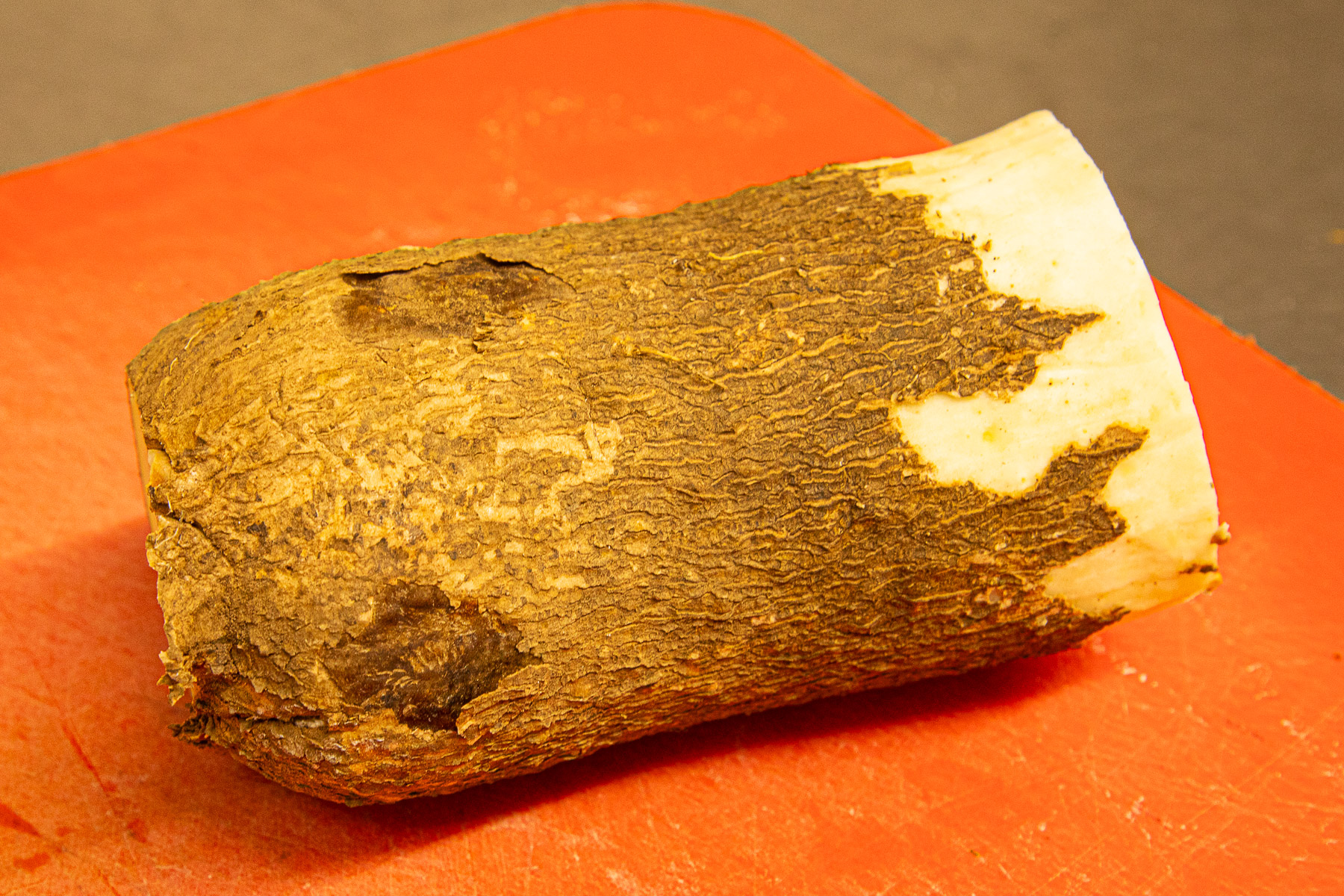
500 g yams or cassava (peeled and cut into pieces)
Salt
Water for boiling
For the okra:
300 g fresh okra
1 tbsp olive oil or butter
1 small onion, finely chopped
1 clove garlic, finely chopped
Salt and pepper
A little lemon juice or chili for Seasoning
Preparation:
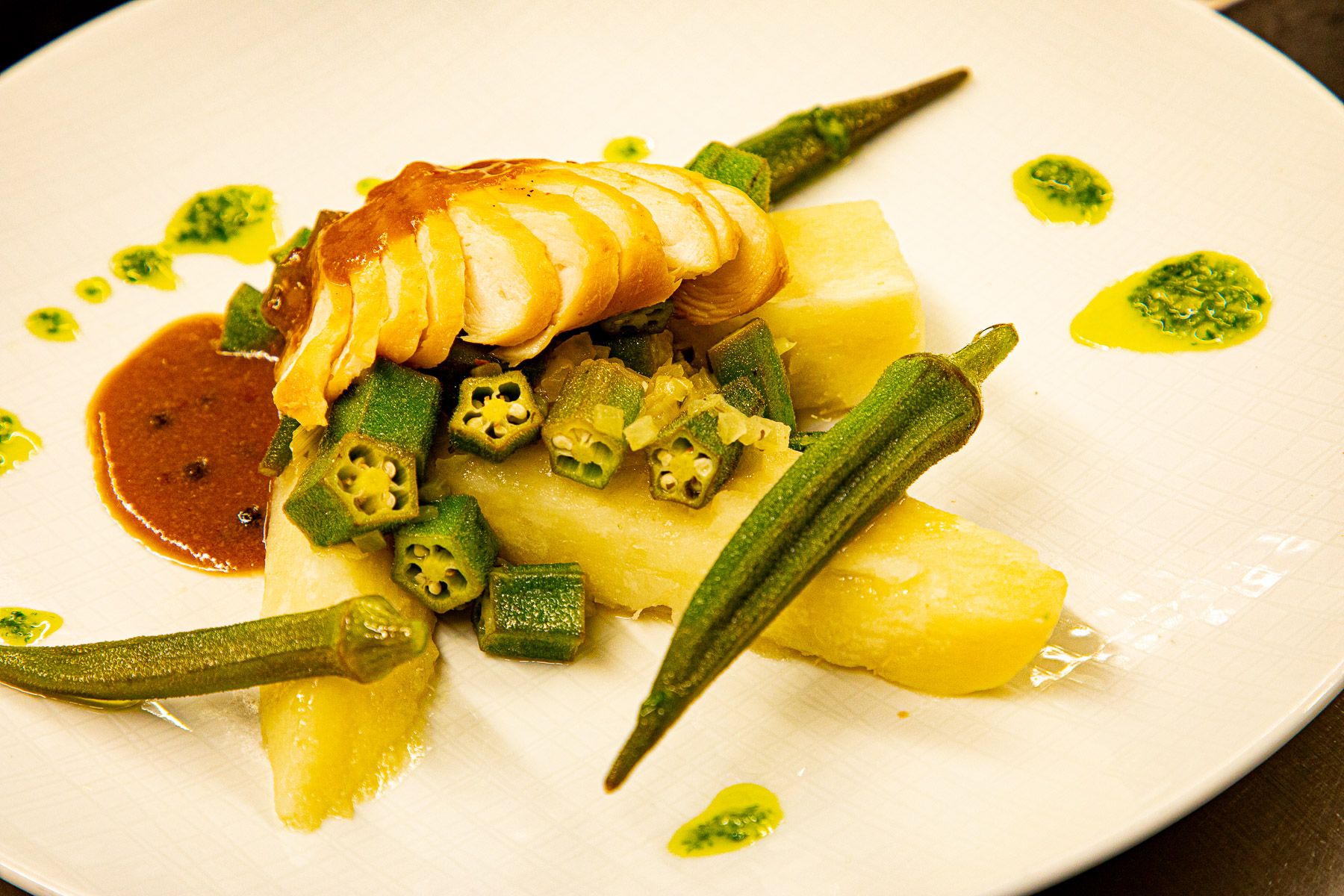
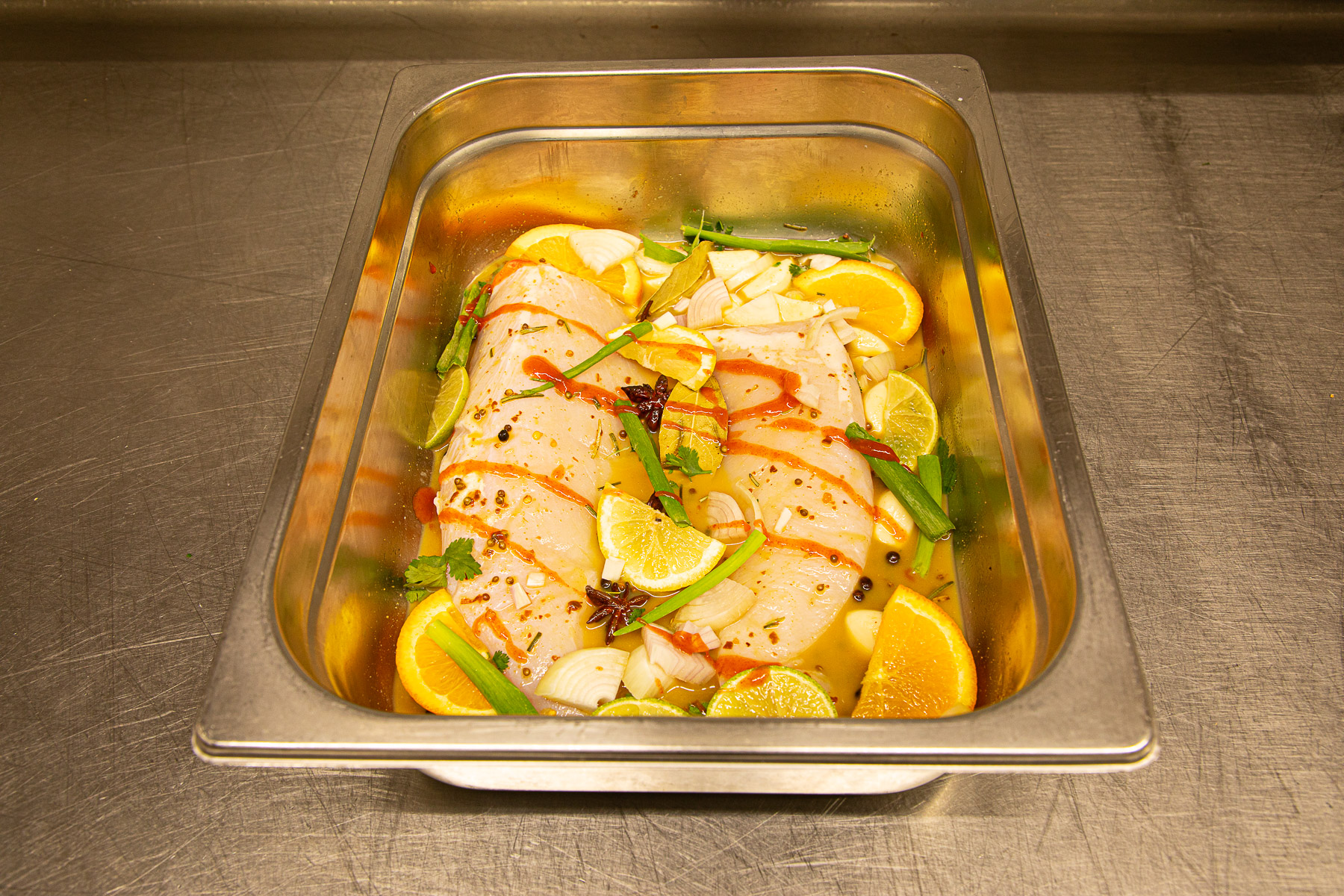
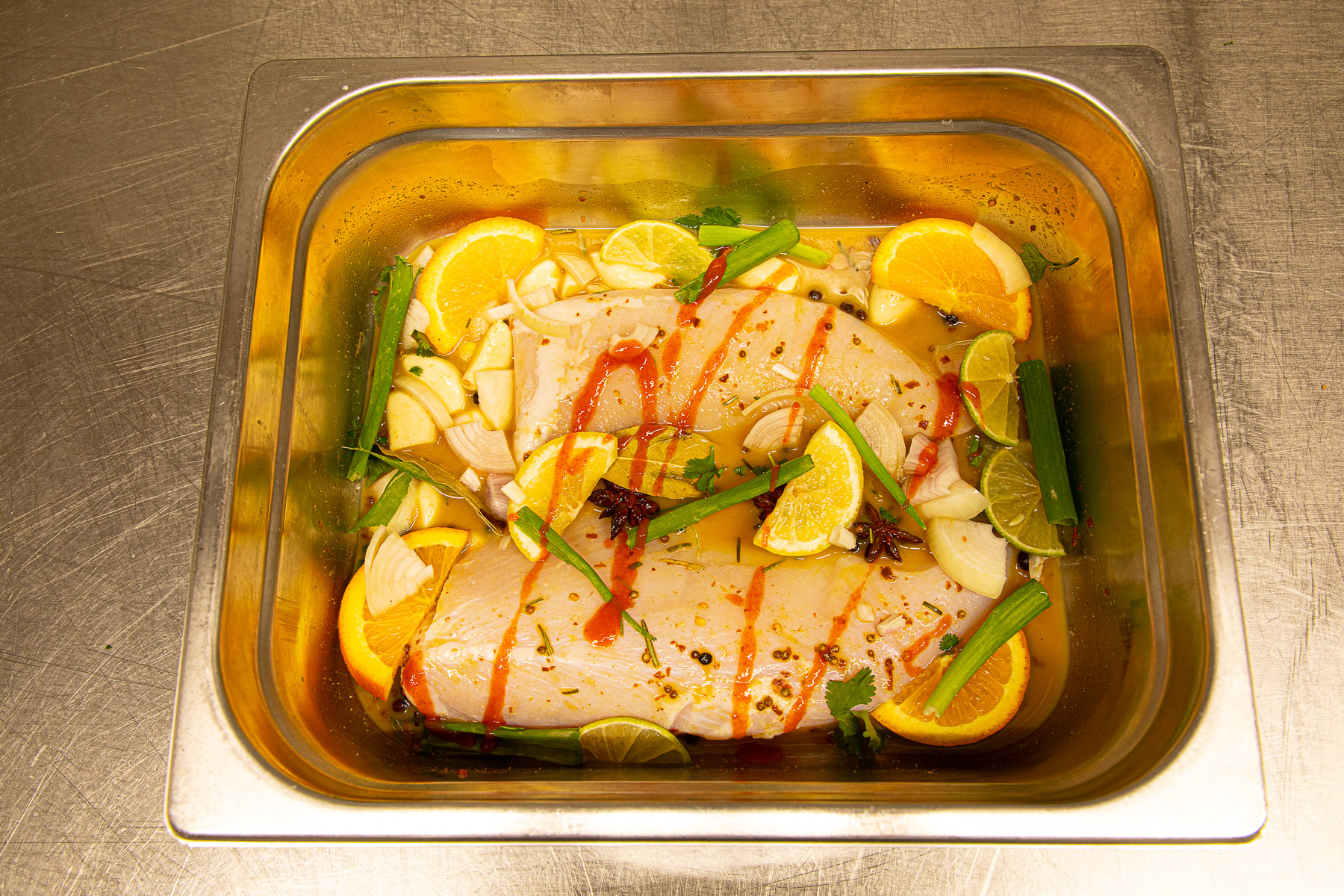
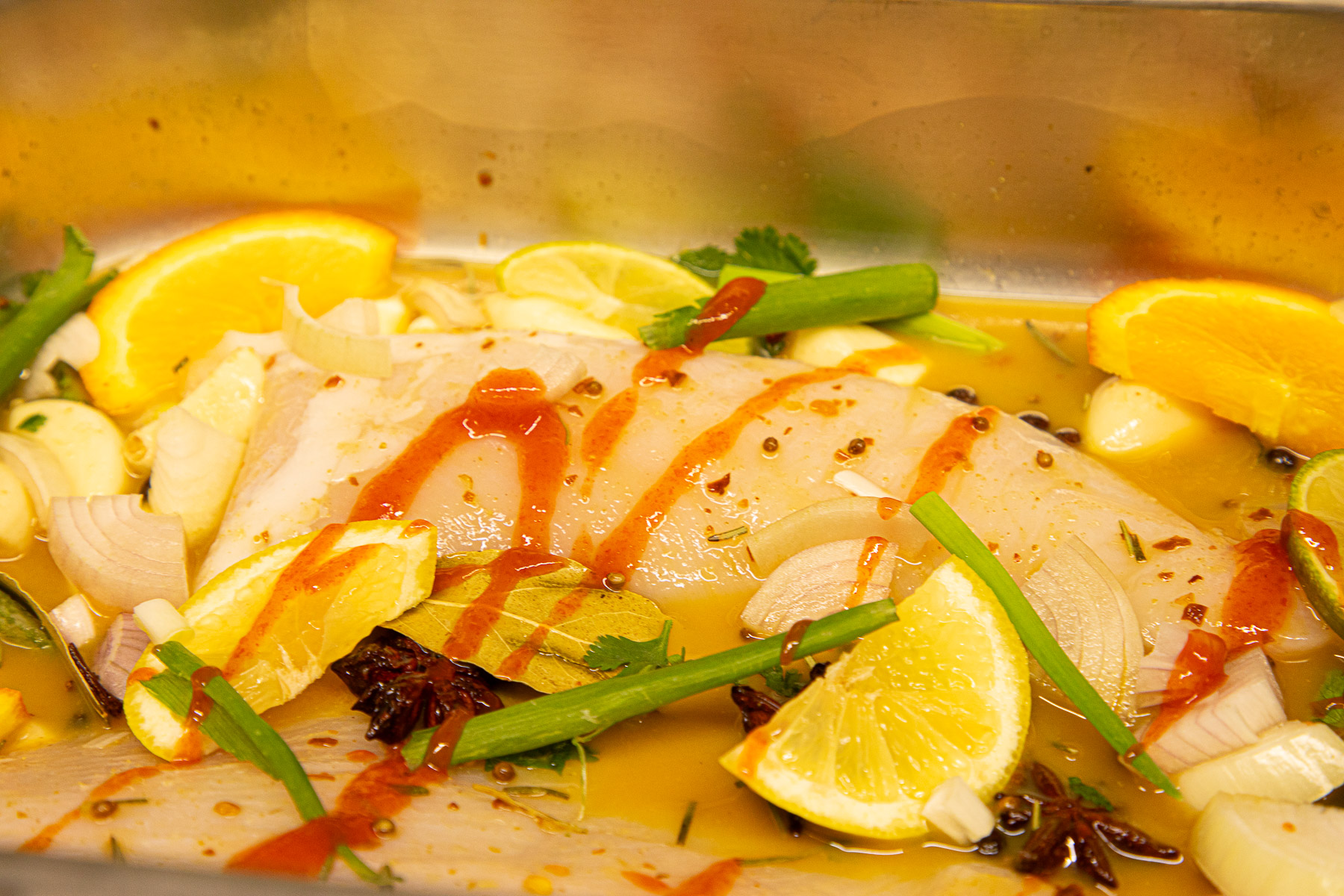
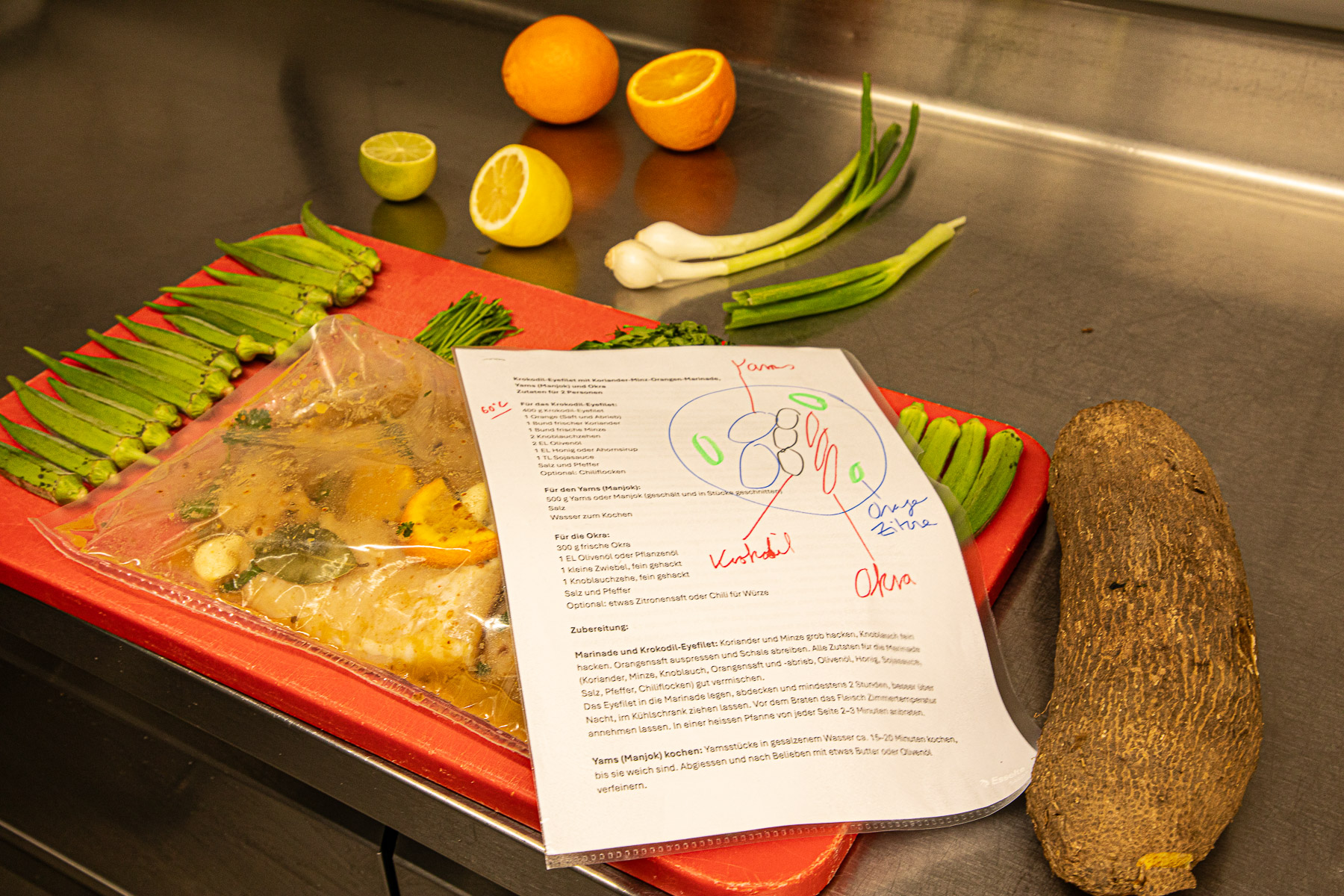
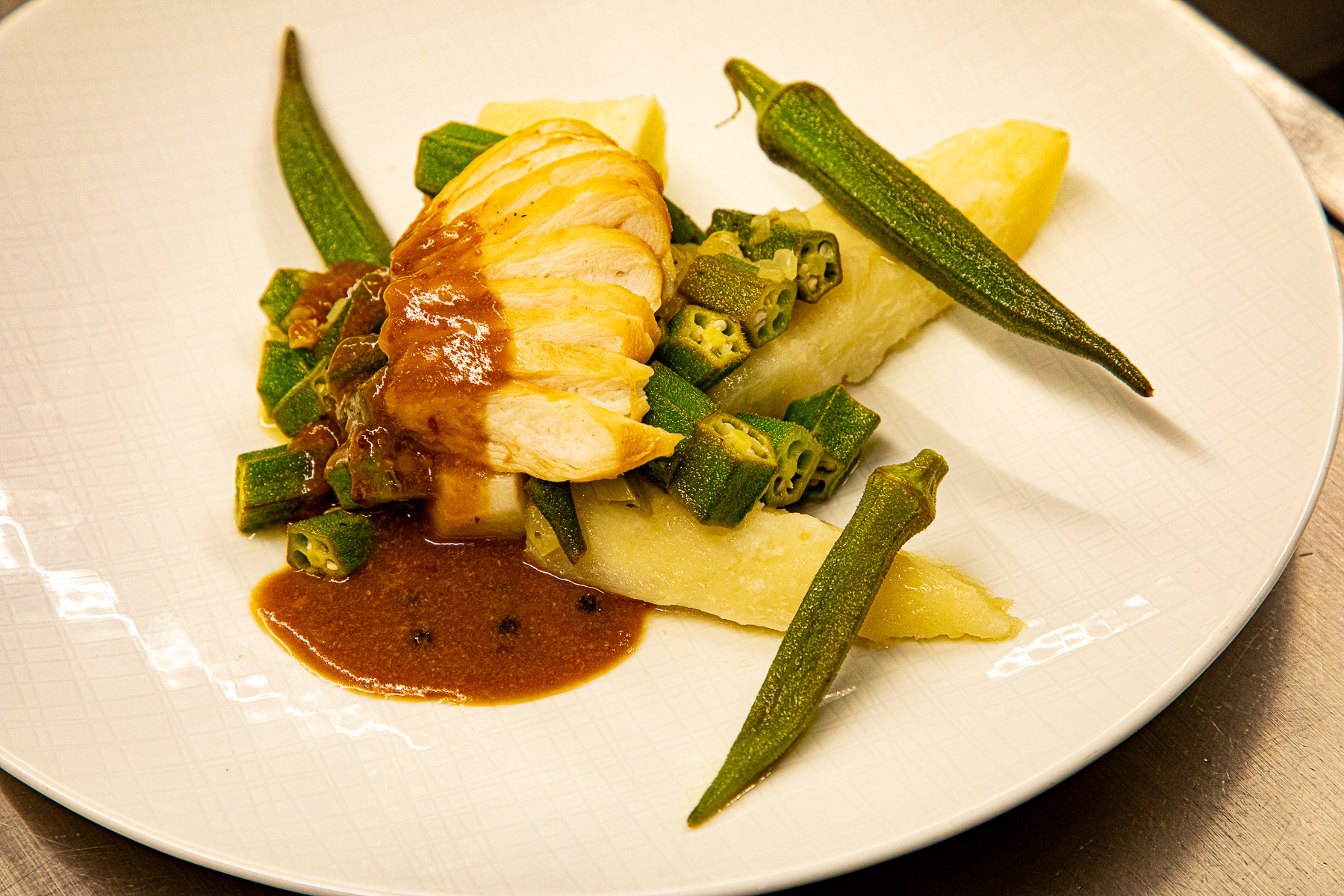
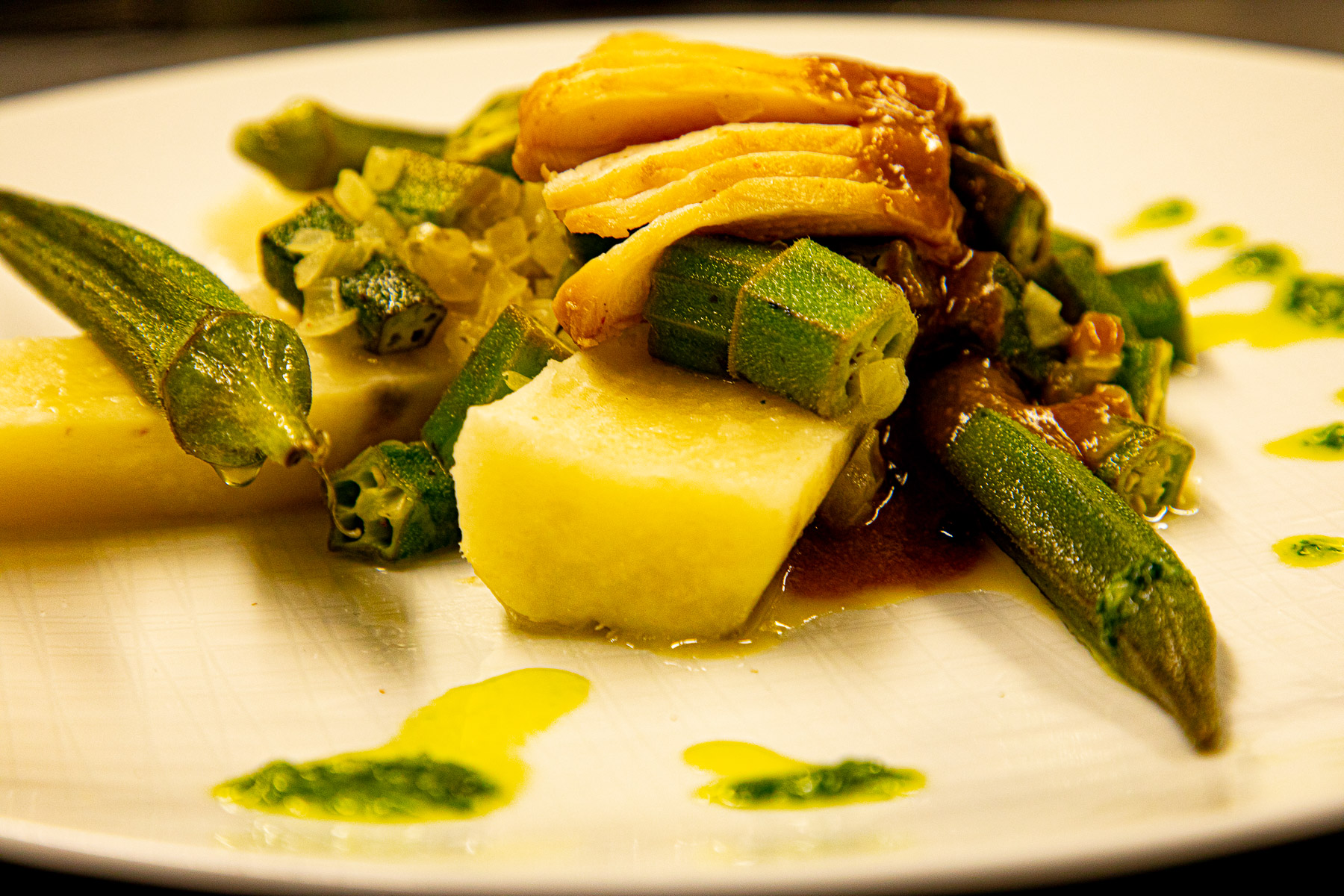
Marinade and Crocodile Eye Fillet: Roughly chop the coriander and finely chop the garlic. Squeeze the orange juice and zest the orange. Thoroughly mix all the marinade ingredients (coriander, star anise, cloves, garlic, orange juice and zest, orange and lemon slices, lime slices, olive oil, honey, soy sauce, salt, black peppercorns, and chili flakes).
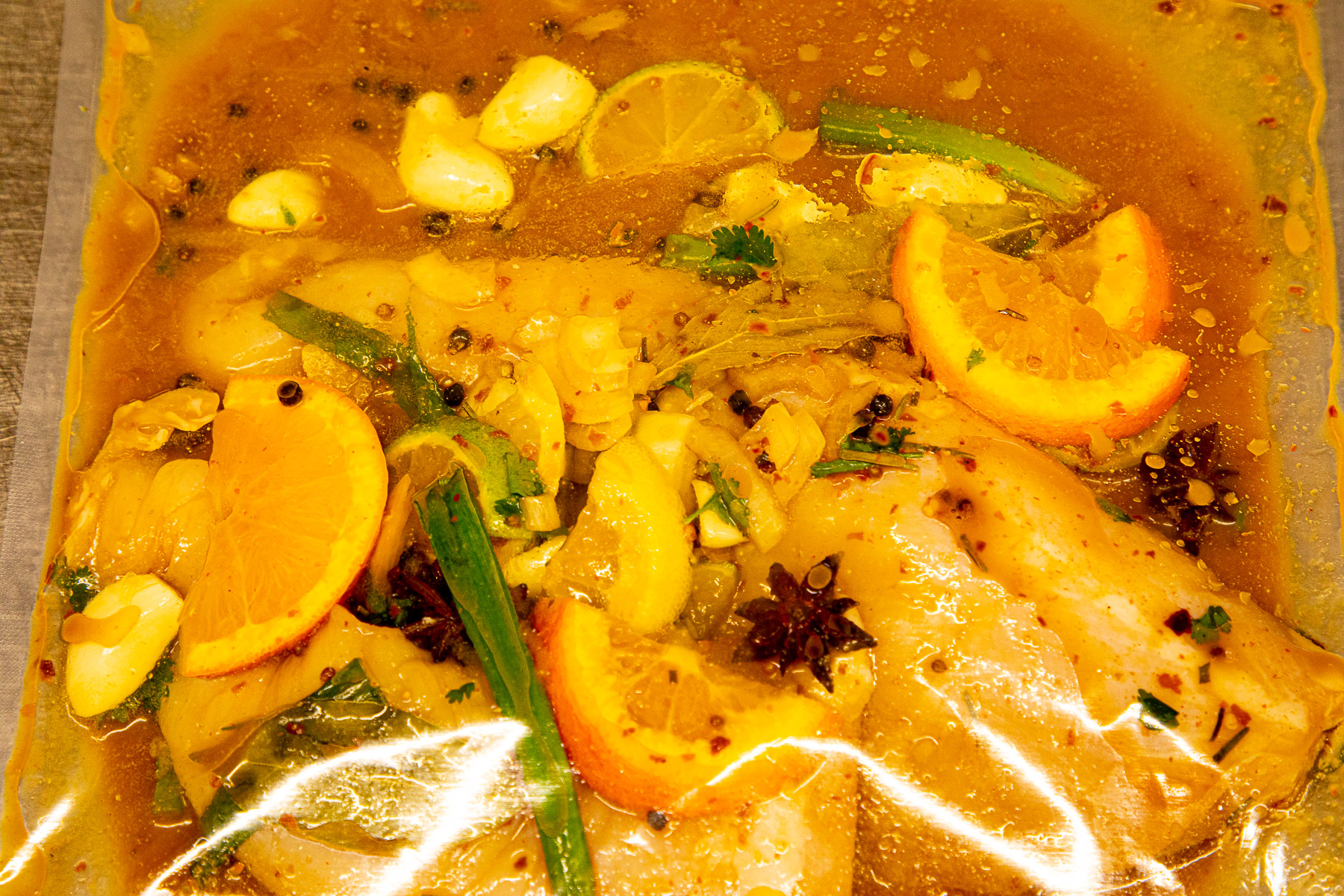
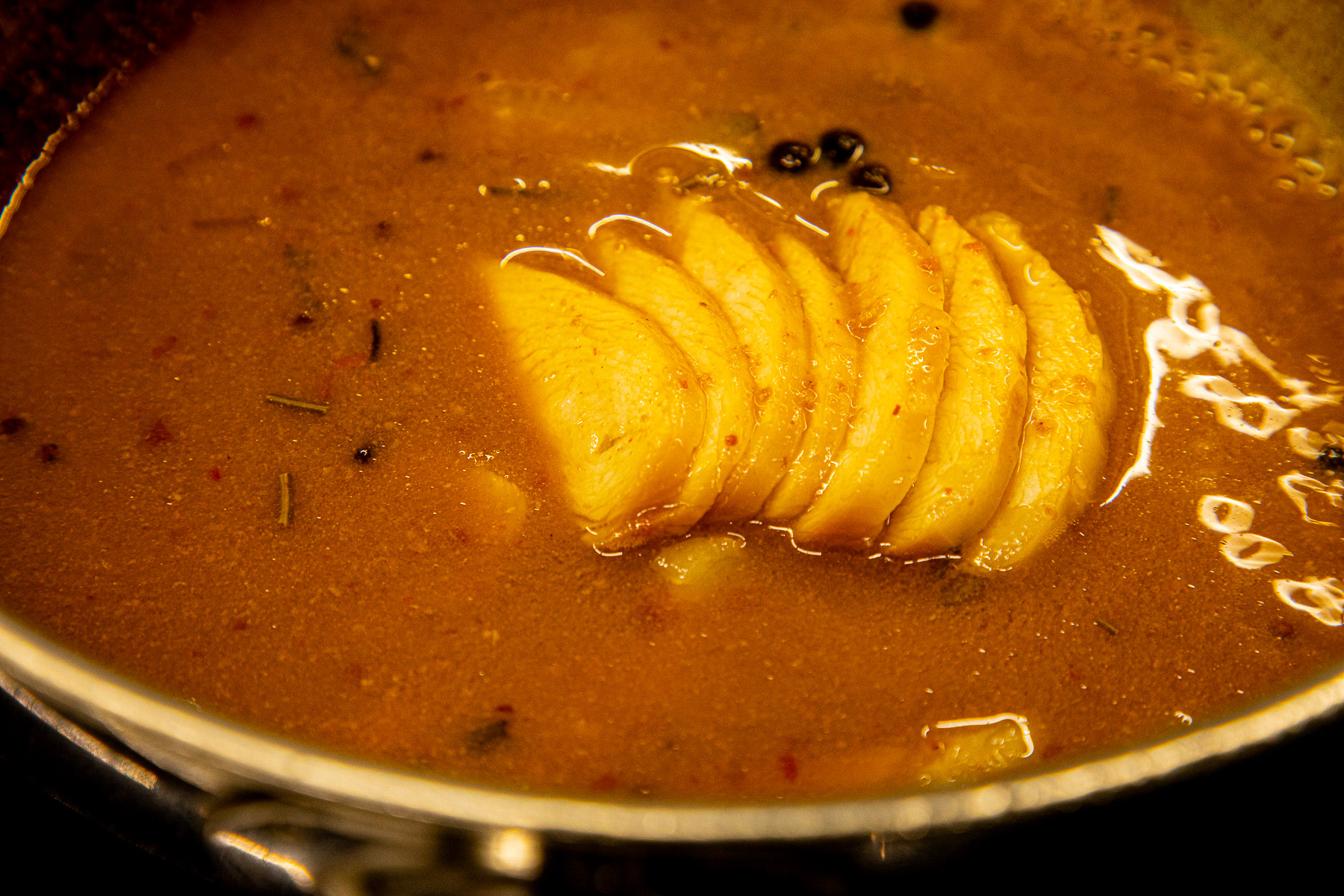
Place the eye fillet in the marinade, cover, and let it marinate in the refrigerator for at least 2 hours, or preferably overnight. Steam for 10 minutes. Then remove it from the bag and slice it thinly. Let the slices marinate in the reduced marinade. Of course, you can also simply sear them briefly, slowly bringing the internal temperature up to about 60°C (140°F).
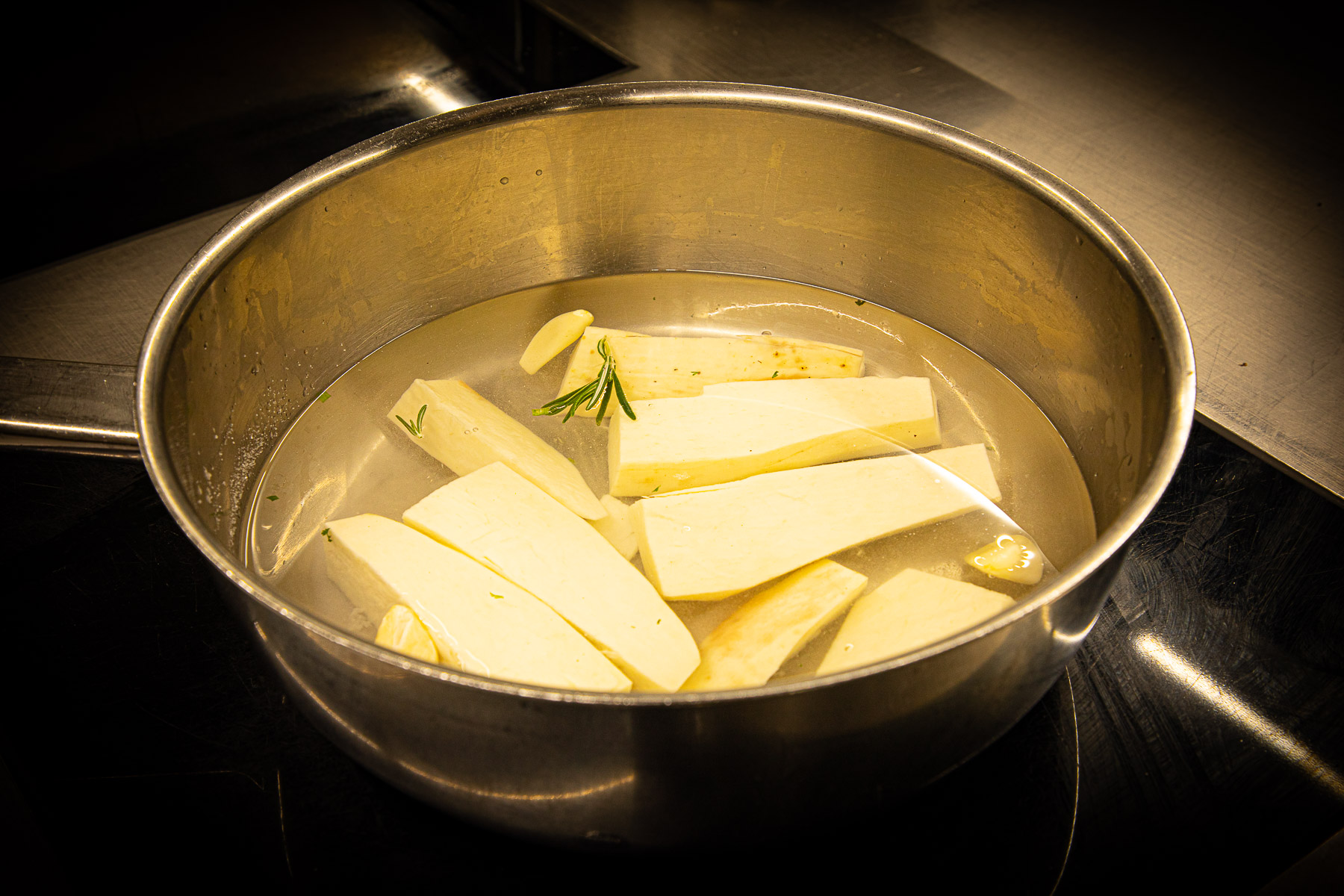
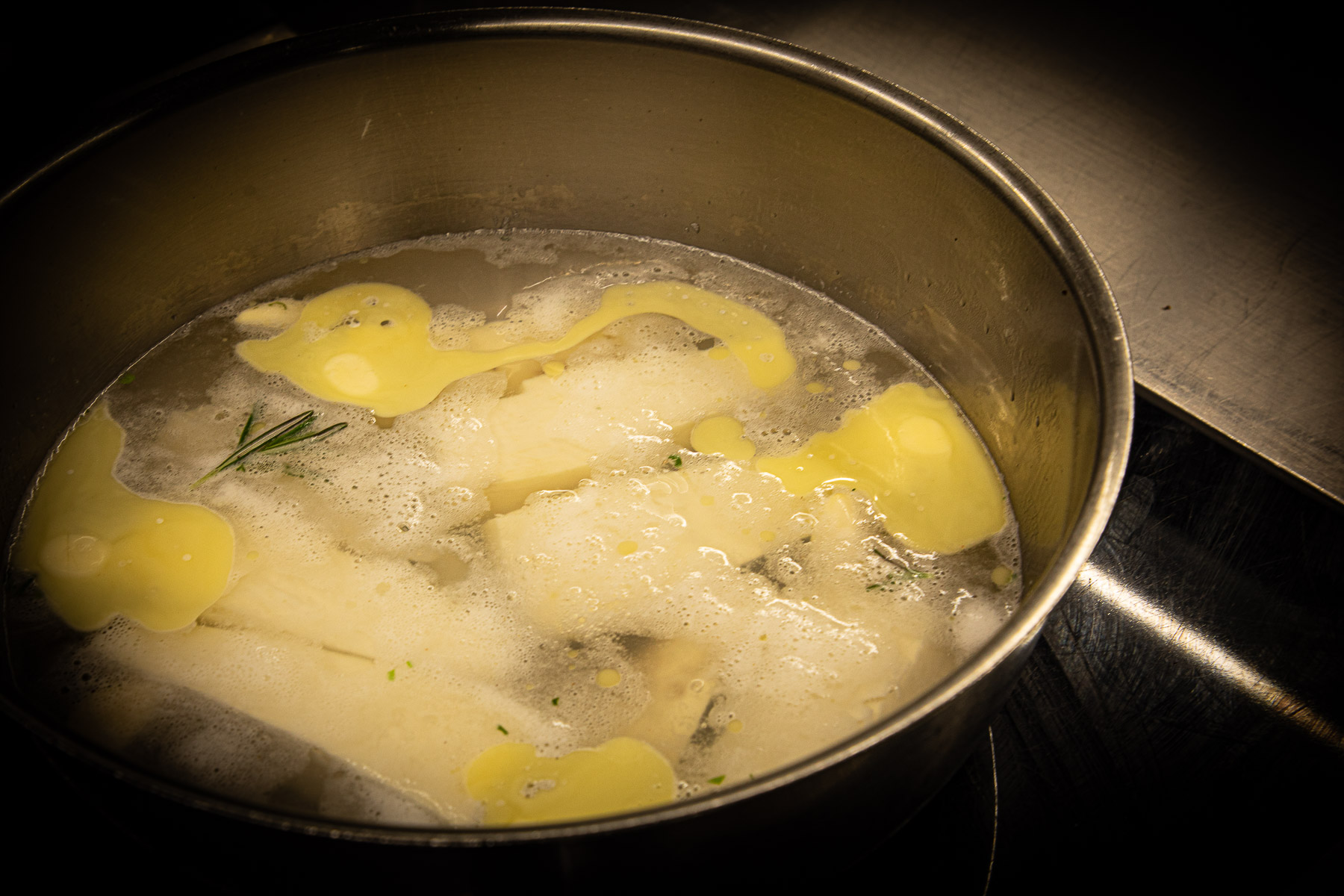
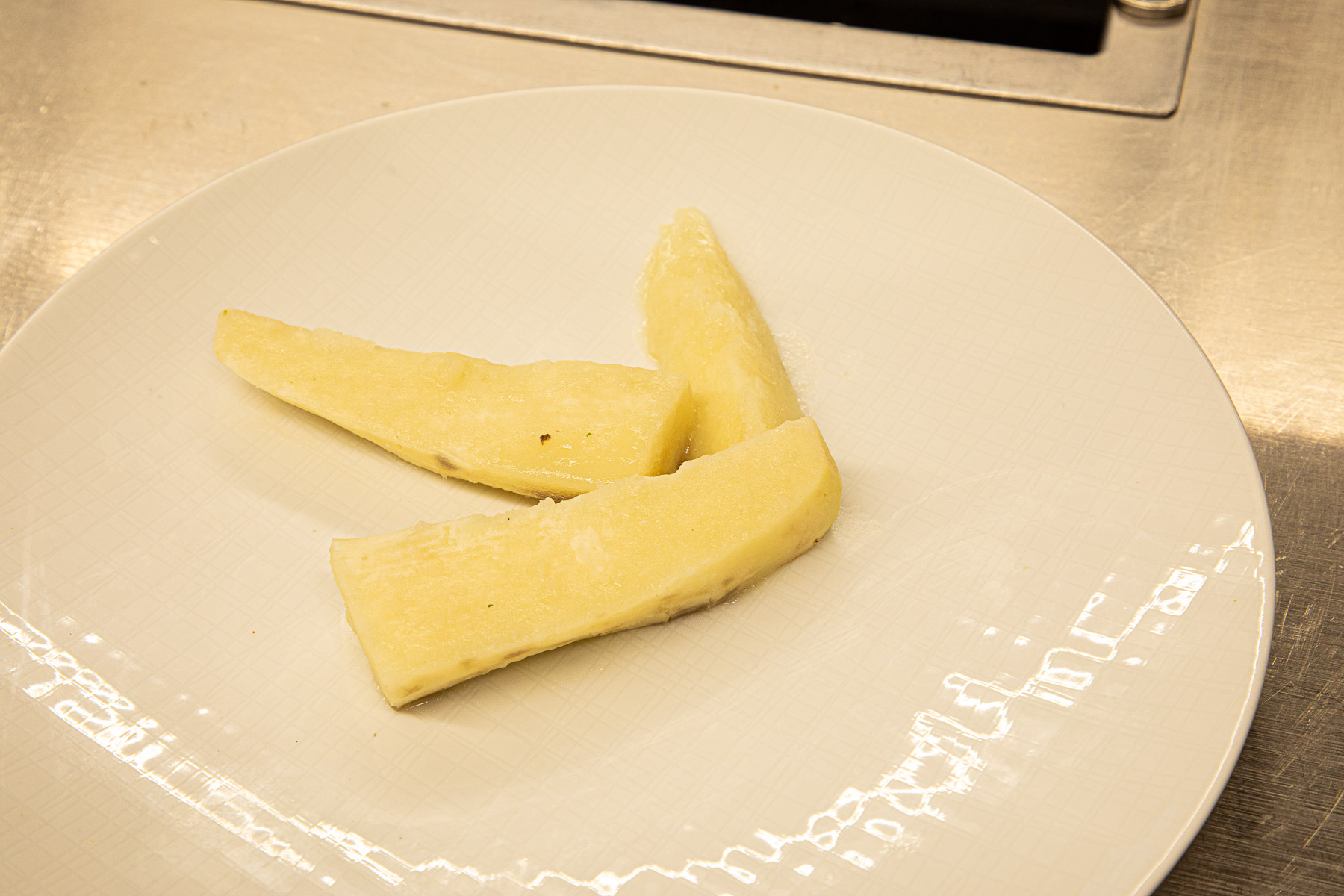
Cook the Yams (Cassava): Boil the yam pieces in salted water for about 15–20 minutes, until tender. Drain and, if desired, drizzle with a little butter or olive oil.
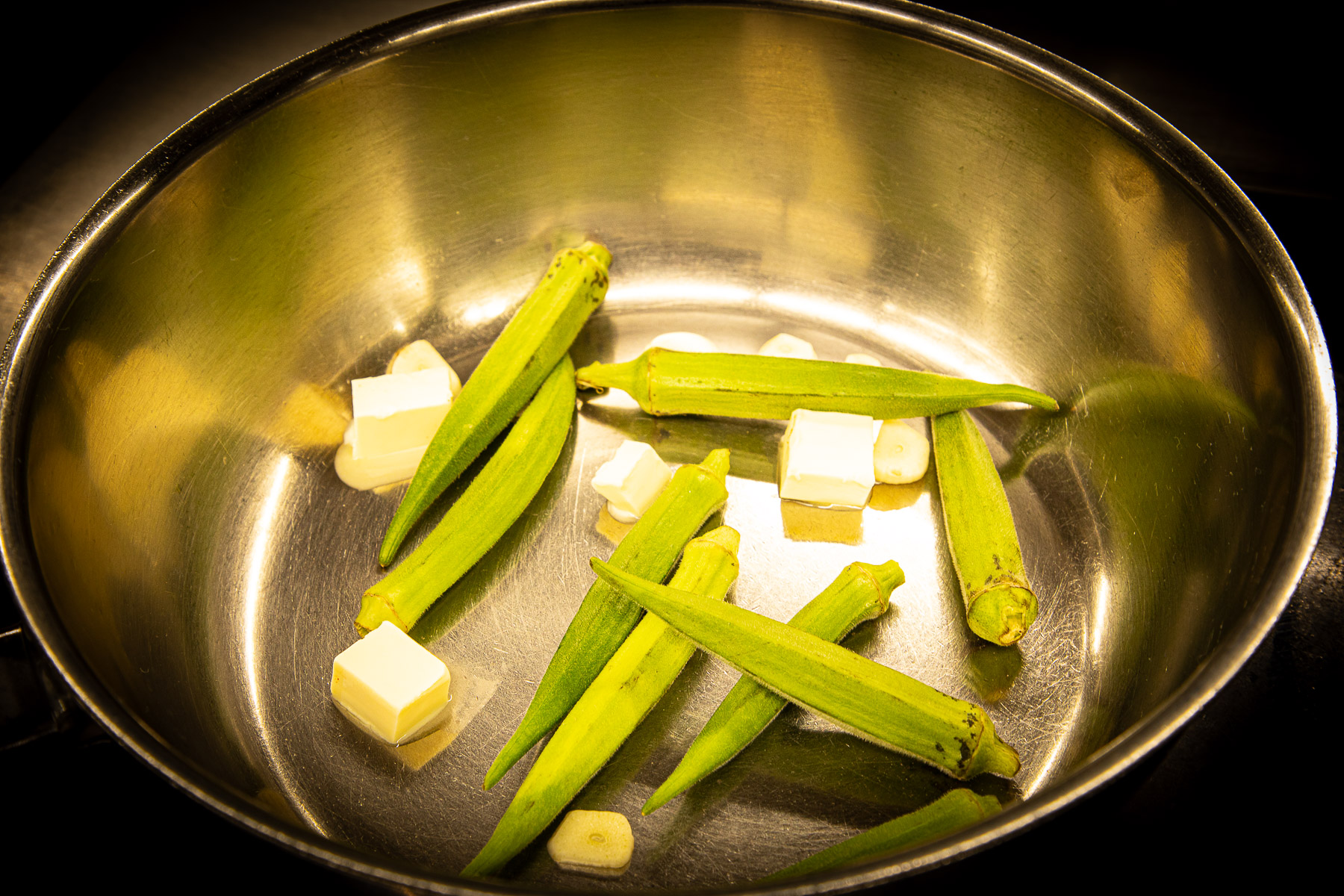
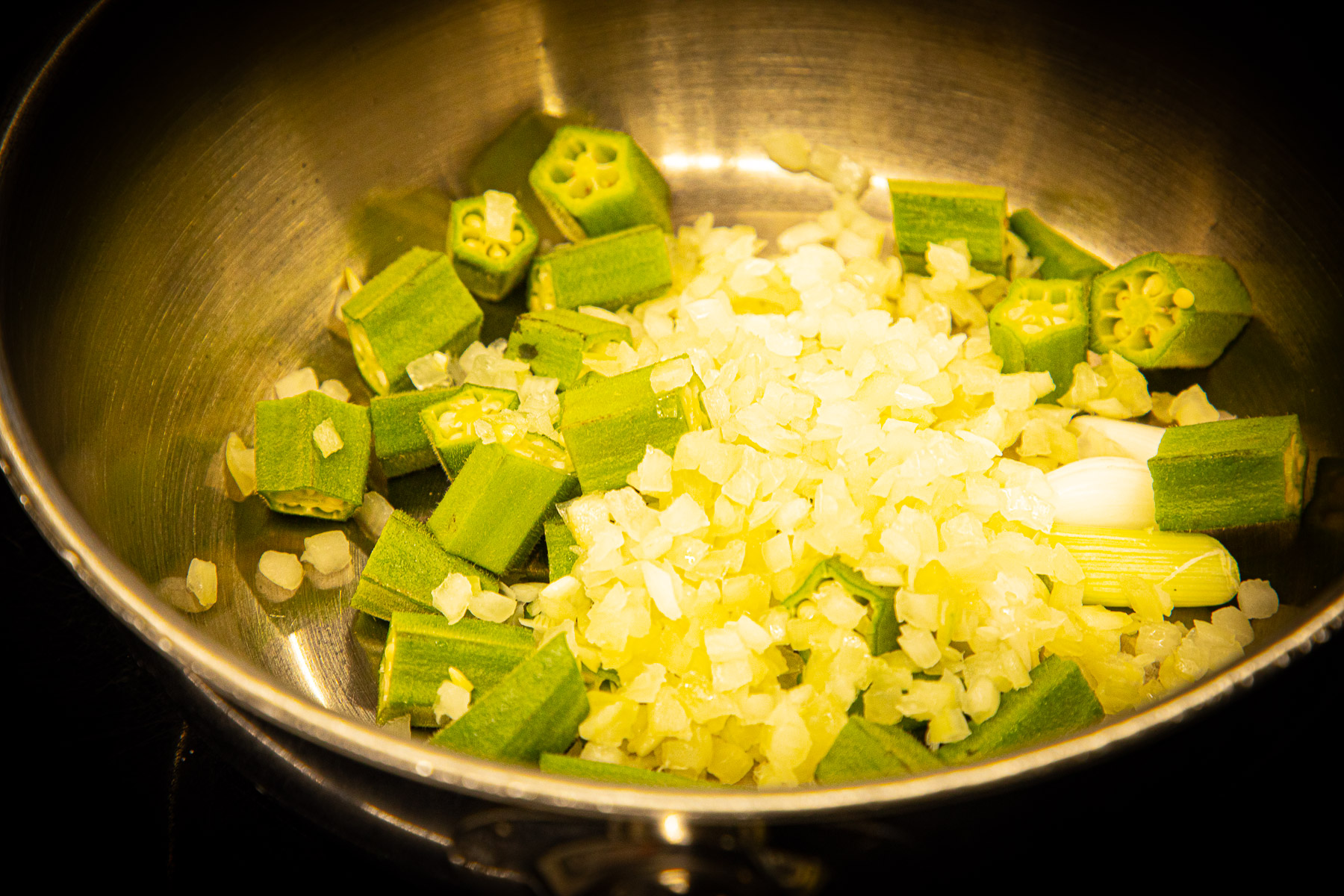
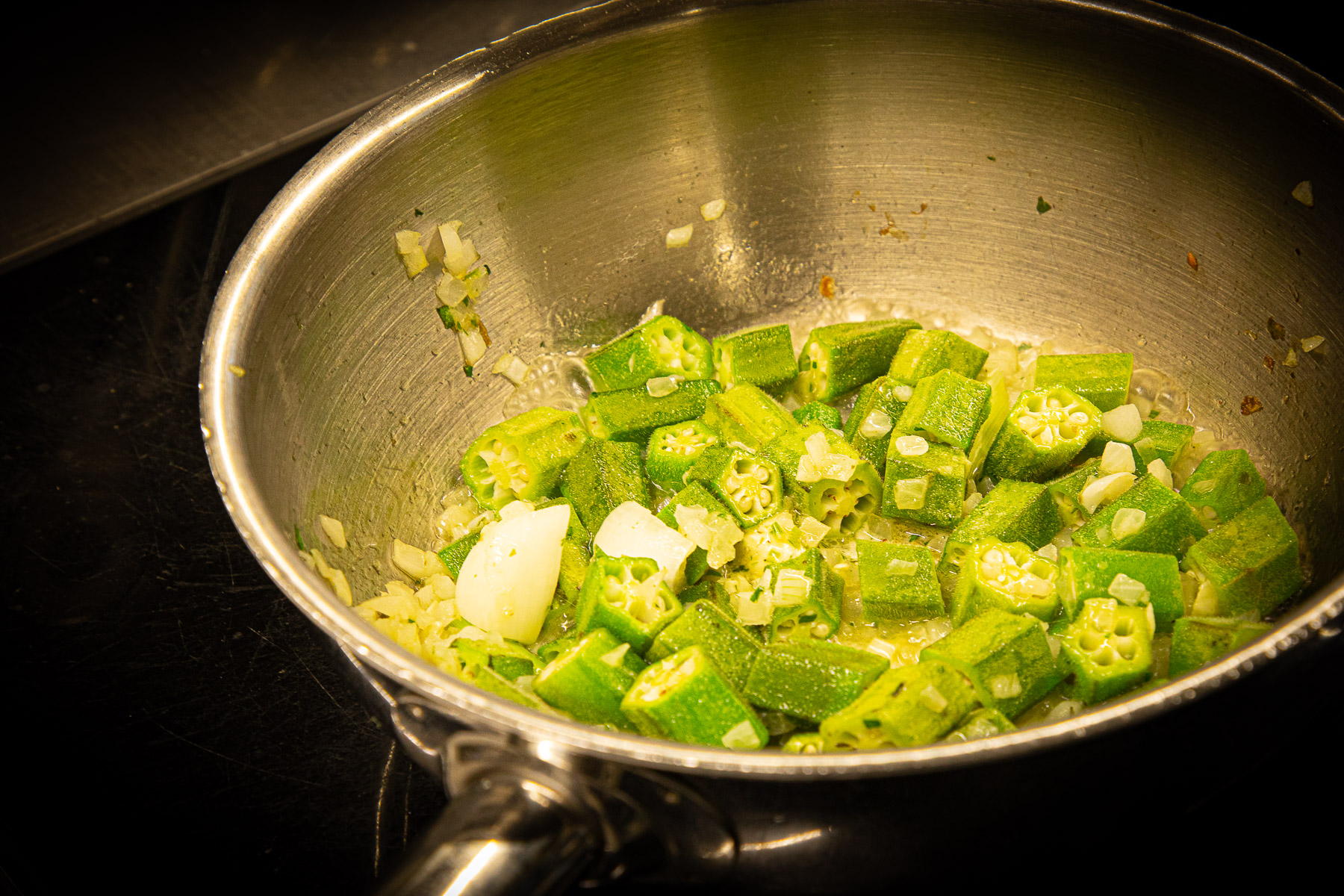
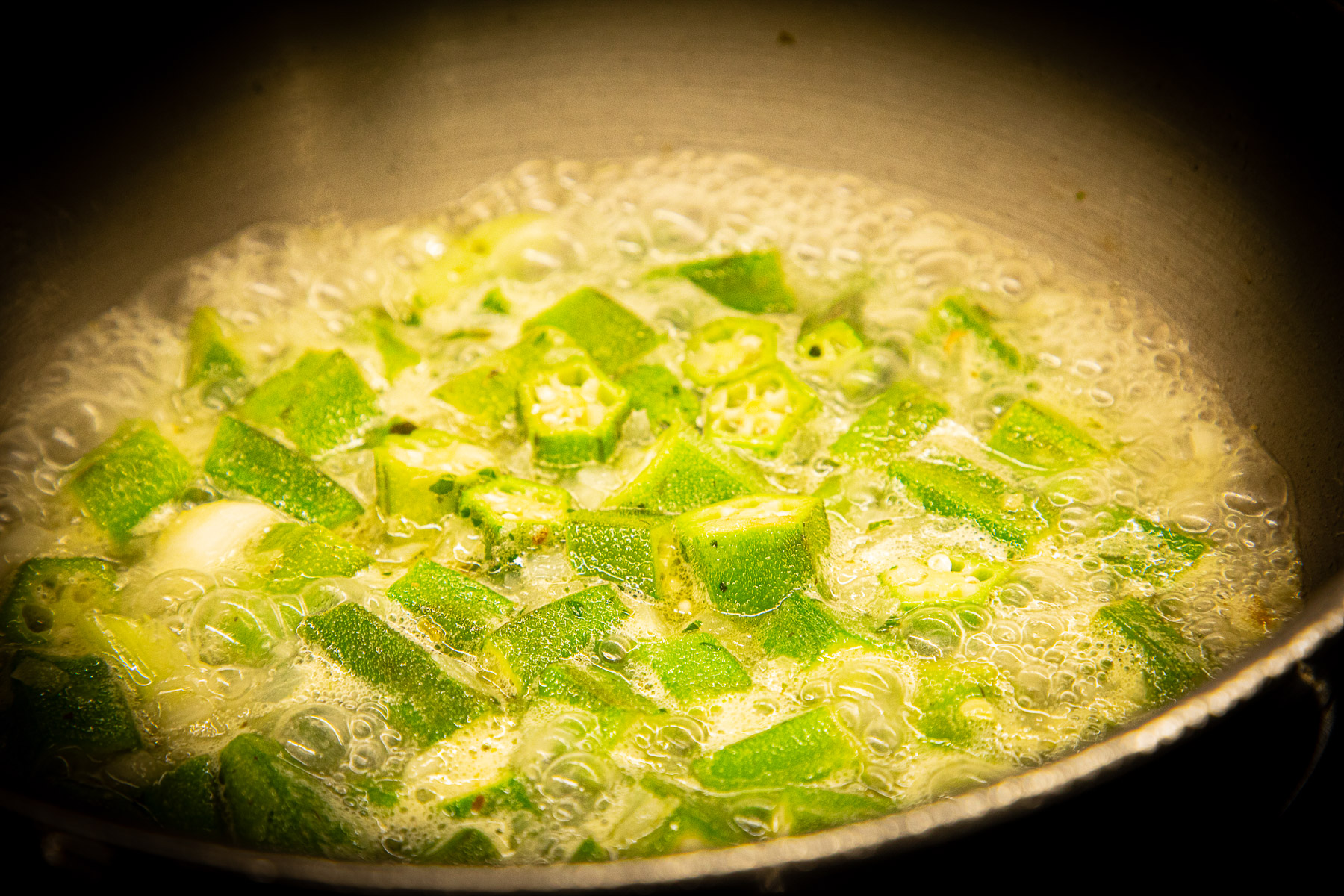
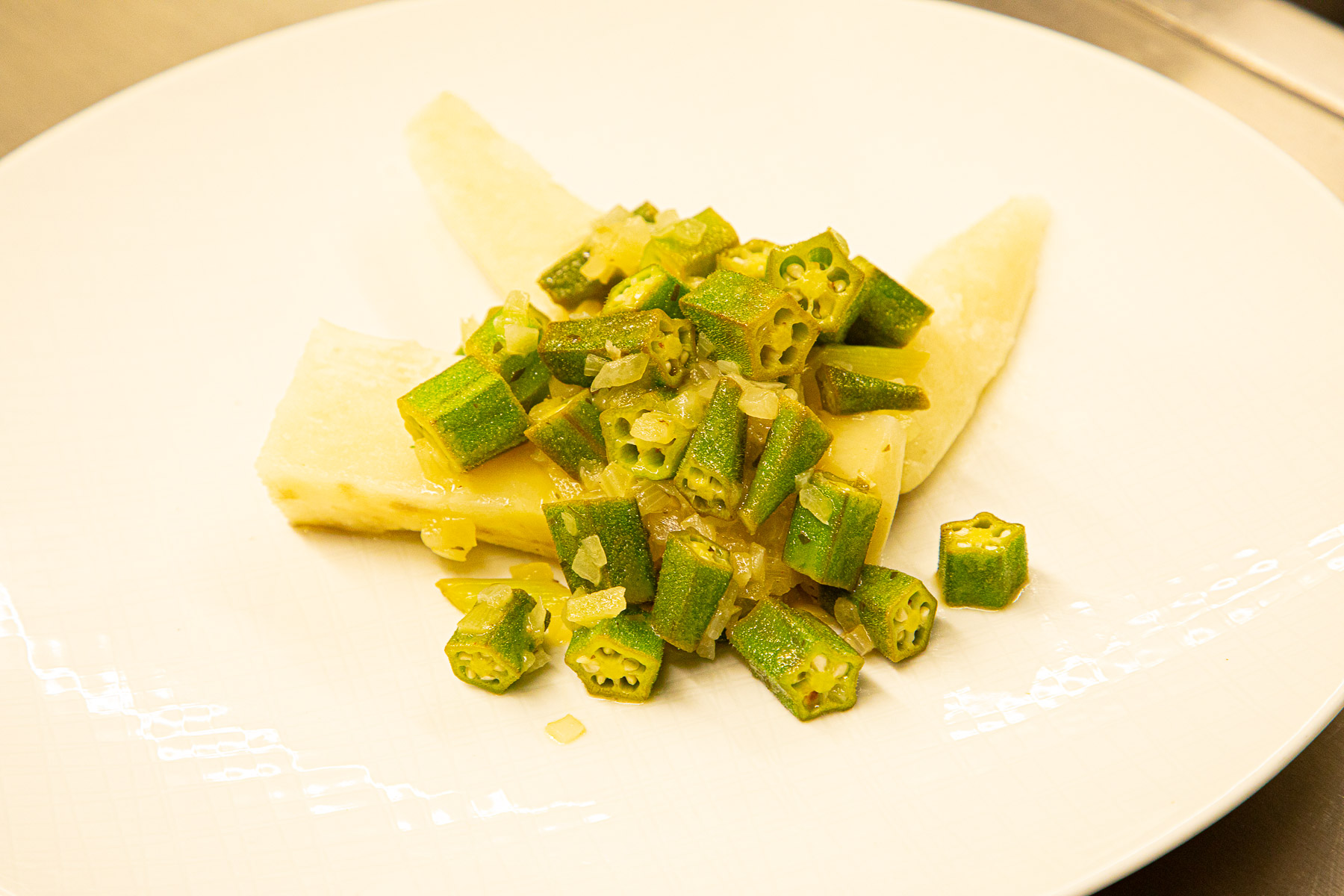
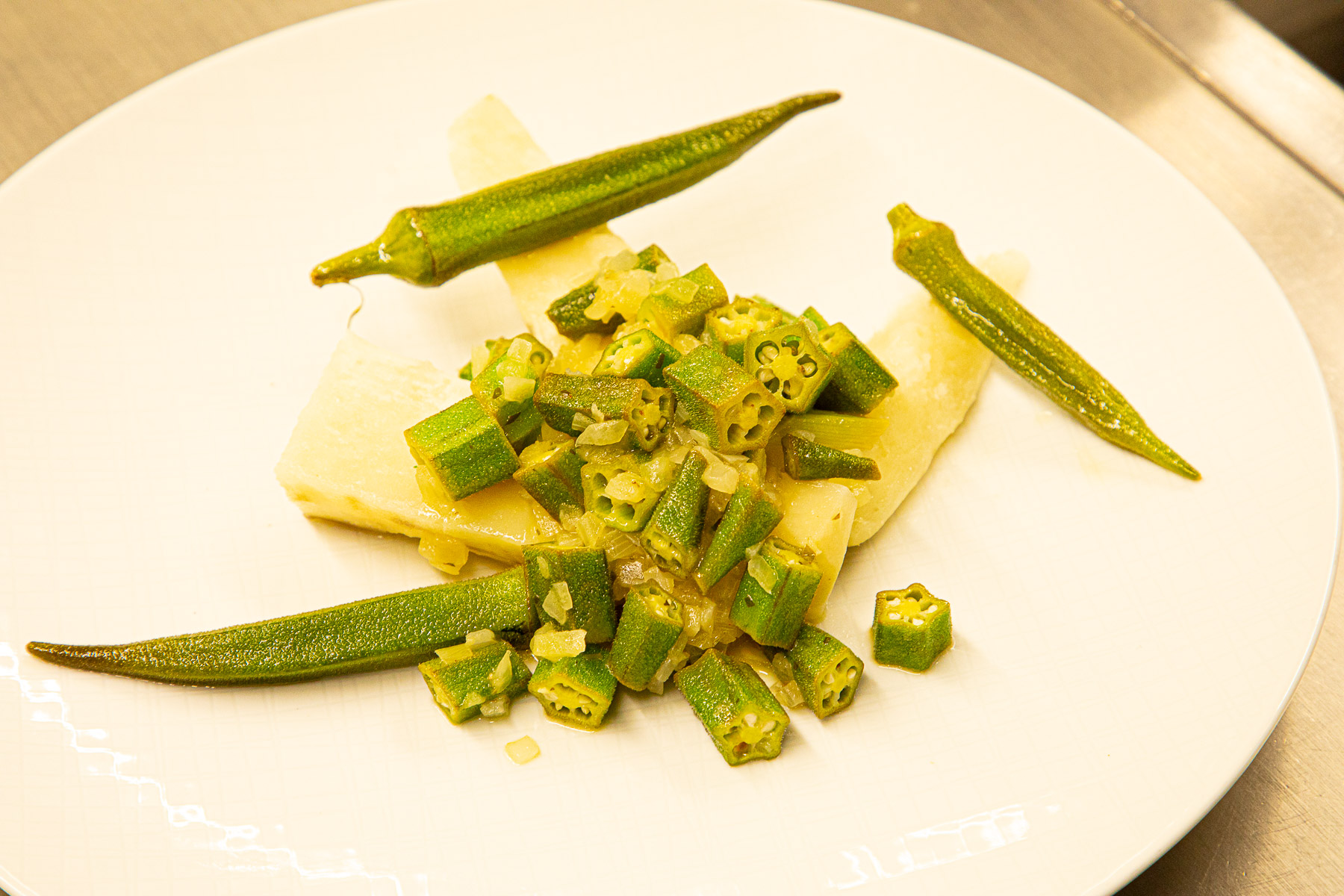
To prepare the okra: Wash the okra, trim the ends, and cut into pieces. Heat oil in a pan and sauté the onion and garlic until translucent. Add the okra and season with salt, pepper, and, if desired, lemon juice or chili. Sauté over medium heat for about 8–10 minutes, until the okra is tender but still has a slight bite.
Nice to know: Crocodile meat has a long, rather quiet culinary history in South Africa, closely linked to the environment, hunting, and regional traditions. Long before European settlers arrived, indigenous communities along rivers and wetlands used crocodiles as an occasional food source. The meat was not considered an everyday food, but rather a rare treat, consumed primarily on special occasions or after successful hunts. The focus was less on culinary enjoyment and more on respecting the animal and fully utilizing its resources.
With the colonial era, the way crocodiles were treated changed significantly. European influences brought new cooking techniques and flavor profiles, while at the same time the crocodile increasingly came into focus as a source of raw material for leather. During this period, the meat was treated as a secondary commodity, but occasionally found its way into the kitchens of hunters, farmers, and adventurers, who prepared it as an exotic alternative to beef or game. Nineteenth-century descriptions mention crocodile meat as light in color, firm, and tasting somewhere between fish and poultry.
It wasn't until the late 20th century that a new phase began in the culinary history of crocodile meat in South Africa. Stricter conservation laws and the establishment of crocodile farms transformed the animal from an endangered wild animal into a controlled, farmed animal. In this context, fine dining also rediscovered the meat. Chefs experimented with crocodile fillets, curries, and grilled steaks, presenting them as a sustainable, protein-rich delicacy with a regional connection.
Today, crocodile meat in South Africa symbolizes the balancing act between tradition and modernity. It evokes pre-colonial hunting practices and colonial eating habits, while simultaneously showcasing a contemporary cuisine that consciously works with local, unusual ingredients. In restaurants and at food festivals, it is often served as a culinary narrative, a piece of history on a plate that tells of landscape, change, and cultural diversity.