Be the first to review this product


Thawed products can be refrozen. Important information: This product is shipped frozen. Depending on the outside temperature and the type of product, it may arrive partially thawed or fully thawed. No worries – the product has always been kept refrigerated. Important Notice: For legal reasons, we are required to declare this product as thawed. What to do upon receiving the product? Option 1: Let it fully thaw in the refrigerator at 5 °C and enjoy (until the best-before date on the small label on the product). Option 2: Place it directly in the freezer at -18 °C upon arrival and enjoy it later. A slightly thawed product can be stored in the freezer for another 2 months without any loss of quality. |
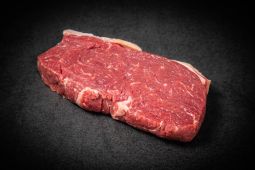
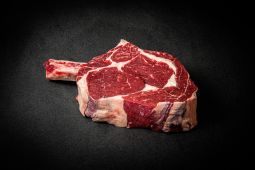
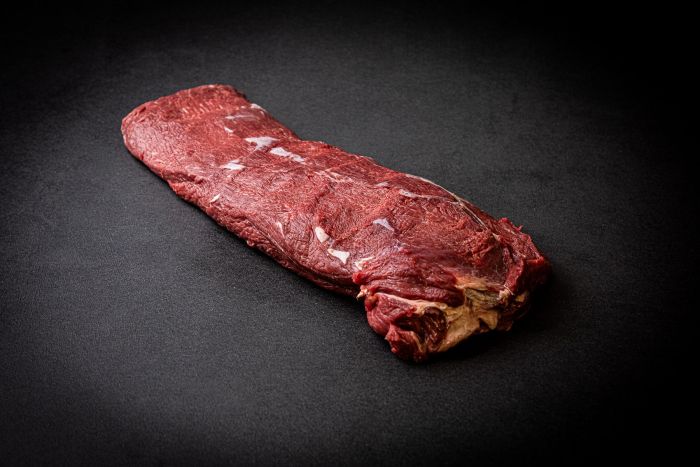
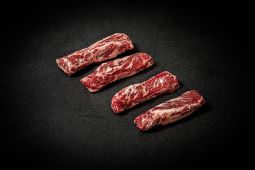
The flat iron steak, also known as shoulder cut, is a particularly tender and juicy piece of meat, perfect for grilling. It belongs to the so-called "second cuts," which are often underestimated but absolutely delicious. For best results, cook it to a rare or medium-rare level to ensure the meat retains its juiciness.
Preparation tip: First, sear the steak on both sides until a nice crust forms. Then, finish cooking it in the oven at approximately 120 to 180 °C (250 to 350 °F) until it reaches an internal temperature of 52 to 55 °C (125 to 130 °F). Afterward, let the meat rest for 5 to 10 minutes to allow the juices to redistribute. Alternatively, the flat iron steak can be cooked sous-vide at 52 to 55 °C (125 to 130 °F) and then seared briefly and intensely. Let it rest for about 2 minutes before serving.
Bison Flat Iron Steak

|
Thawed products can be refrozen. Important information: This product is shipped frozen. Depending on the outside temperature and the type of product, it may arrive partially thawed or fully thawed. No worries – the product has always been kept refrigerated. Important Notice: For legal reasons, we are required to declare this product as thawed. What to do upon receiving the product? Option 1: Let it fully thaw in the refrigerator at 5 °C and enjoy (until the best-before date on the small label on the product). Option 2: Place it directly in the freezer at -18 °C upon arrival and enjoy it later. A slightly thawed product can be stored in the freezer for another 2 months without any loss of quality. |
- If you order this item by 3:00 PM on Monday, it will be available at the earliest as follows:
- Pickup in Lupfig on Monday, September 21, 2026 | 17:30-22h
- Delivery on Tuesday, September 22, 2026
The flat iron steak, also known as shoulder cut, is a particularly tender and juicy piece of meat, perfect for grilling. It belongs to the so-called "second cuts," which are often underestimated but absolutely delicious. For best results, cook it to a rare or medium-rare level to ensure the meat retains its juiciness.
Preparation tip: First, sear the steak on both sides until a nice crust forms. Then, finish cooking it in the oven at approximately 120 to 180 °C (250 to 350 °F) until it reaches an internal temperature of 52 to 55 °C (125 to 130 °F). Afterward, let the meat rest for 5 to 10 minutes to allow the juices to redistribute. Alternatively, the flat iron steak can be cooked sous-vide at 52 to 55 °C (125 to 130 °F) and then seared briefly and intensely. Let it rest for about 2 minutes before serving.
Bison are not just an impressive sight, they also provide fine meat with a distinctive taste. Bison meat is extremely lean and itself a flavour carrier, in contrast to beef, which gets its distinctive taste from the marbling.
Because bison is lean, it will cook more quickly so it is important not to overcook bison.
Good to know
They originally come from Eurasia and emigrated over the Bering Land Bridge between Siberia and Alaska to America during the ice age. 6000 years ago, today’s bison or buffalo developed from the original bison. According to estimates, 25 to 30 million bison lived in North America during the 16th century.
They became nearly extinct by a combination of commercial hunting and slaughter in the 19th century and introduction of bovine diseases from domestic cattle, before reserves were established. At this time, the meat of the slaughtered buffalo was not used; it was left to rotten in the prairie. Today, there are about 500’000 bison in North America. Two subspecies or ecotypes have been described: the plains bison, smaller in size and with a more rounded hump, and the wood bison – the larger of the two and having a taller, square hump.
With its length of 3.8 metres and a weight of 900kg, the bison bull is the biggest land mammal in North America. The female reaches a length of 2.40 metres and a weight of 500kg. Bison are herbivores, grazing on the grasses and sedges of the North American prairies. Their daily schedule involves two-hour periods of grazing, resting, and cud chewing, then moving to a new location to graze again. Thanks to their dark-brown, thick winter coat, they can endure temperatures of up to -40° C. The females give birth to a calf weighing 30kg after nine months, guarding and protecting it against enemies after birth.
Because bison is lean, it will cook more quickly so it is important not to overcook bison.
Good to know
They originally come from Eurasia and emigrated over the Bering Land Bridge between Siberia and Alaska to America during the ice age. 6000 years ago, today’s bison or buffalo developed from the original bison. According to estimates, 25 to 30 million bison lived in North America during the 16th century.
They became nearly extinct by a combination of commercial hunting and slaughter in the 19th century and introduction of bovine diseases from domestic cattle, before reserves were established. At this time, the meat of the slaughtered buffalo was not used; it was left to rotten in the prairie. Today, there are about 500’000 bison in North America. Two subspecies or ecotypes have been described: the plains bison, smaller in size and with a more rounded hump, and the wood bison – the larger of the two and having a taller, square hump.
With its length of 3.8 metres and a weight of 900kg, the bison bull is the biggest land mammal in North America. The female reaches a length of 2.40 metres and a weight of 500kg. Bison are herbivores, grazing on the grasses and sedges of the North American prairies. Their daily schedule involves two-hour periods of grazing, resting, and cud chewing, then moving to a new location to graze again. Thanks to their dark-brown, thick winter coat, they can endure temperatures of up to -40° C. The females give birth to a calf weighing 30kg after nine months, guarding and protecting it against enemies after birth.
| Storage | Frozen food: store at -18 ° C or colder. In the refrigerator at a maximum of 5 ° C |
|---|---|
| Cuts | Shoulder |
| Origin | America / Canada |
| Ageing | Wet aged |
| Breeding | Pasture farming and feedlots / finishing |
| Breed | American Bison |
| Feeding | Grass-corn silage and grain mixture |
| Declaration | Can be produced with non-hormonal growth promotors such as antibiotics. |
Energy value:
Main nutrients:
Nutrient content per 100 g edible portion
Energy in kcal 132
Energy in kJ 555
Main nutrients:
Fat 5g
Carbohydrate 12g
Protein 20g
Water 74g
Nutrient content per 100 g edible portion
Customer Reviews
Customer Questions
Ratings & Reviews
More from meat4you
Write your review
About the Bison Flat Iron Steak
Also viewed by other customers