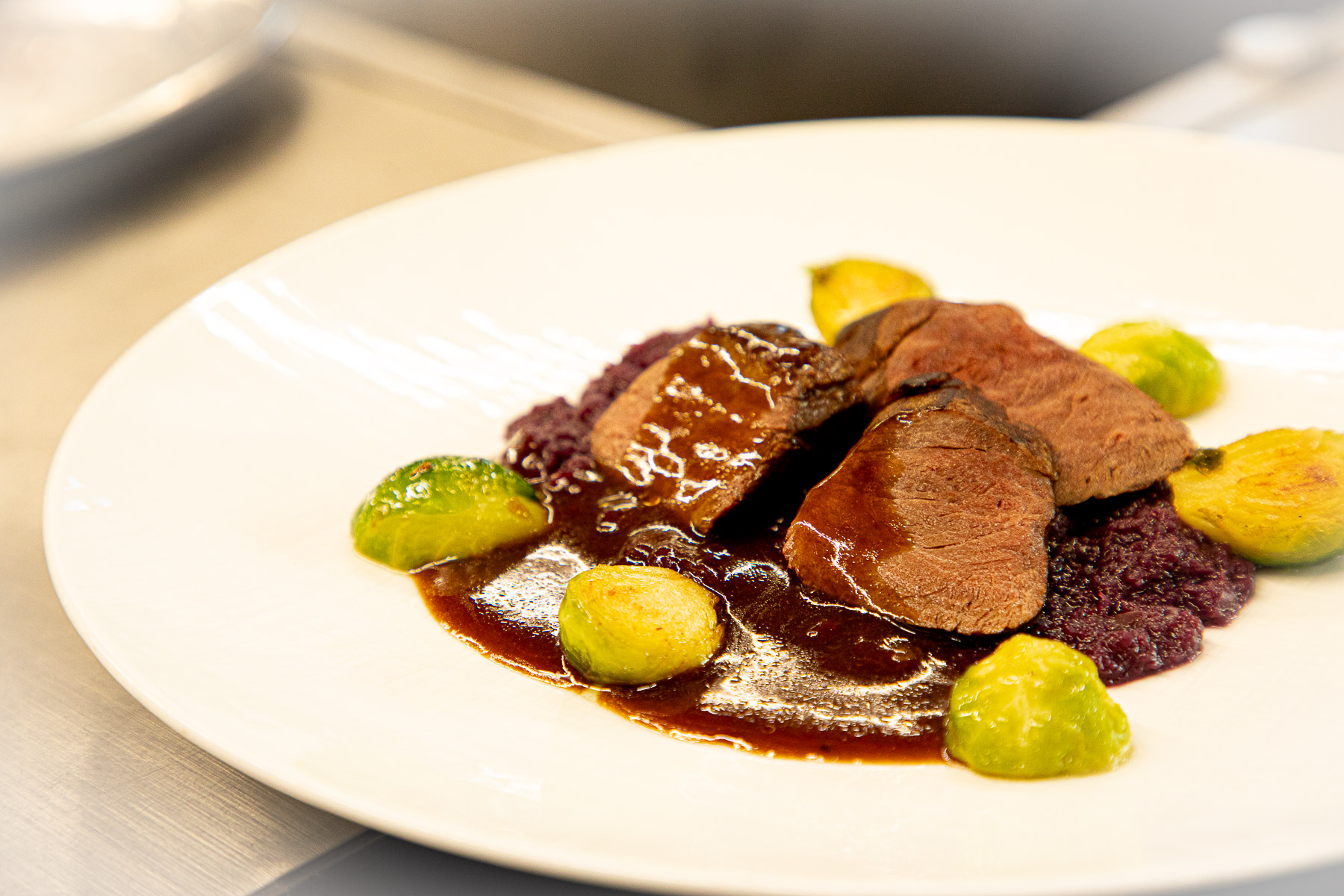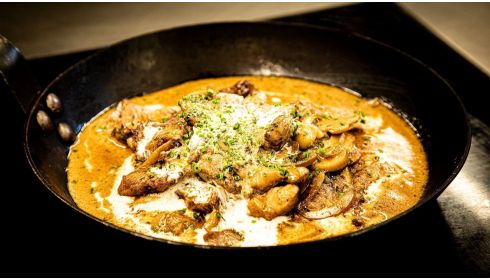
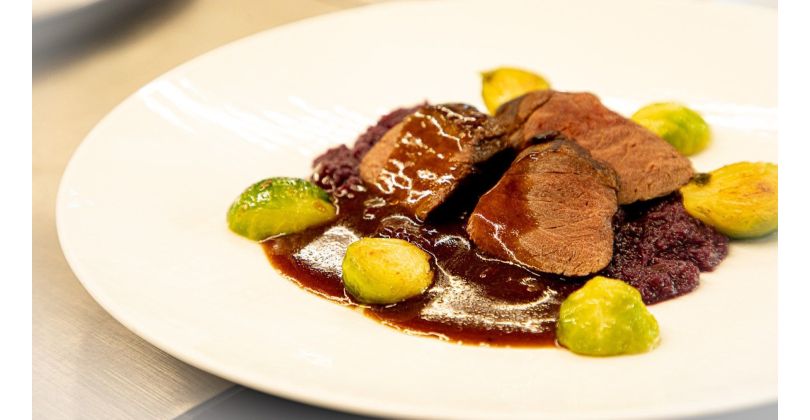
Ingredients for 2 people
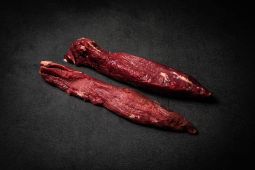
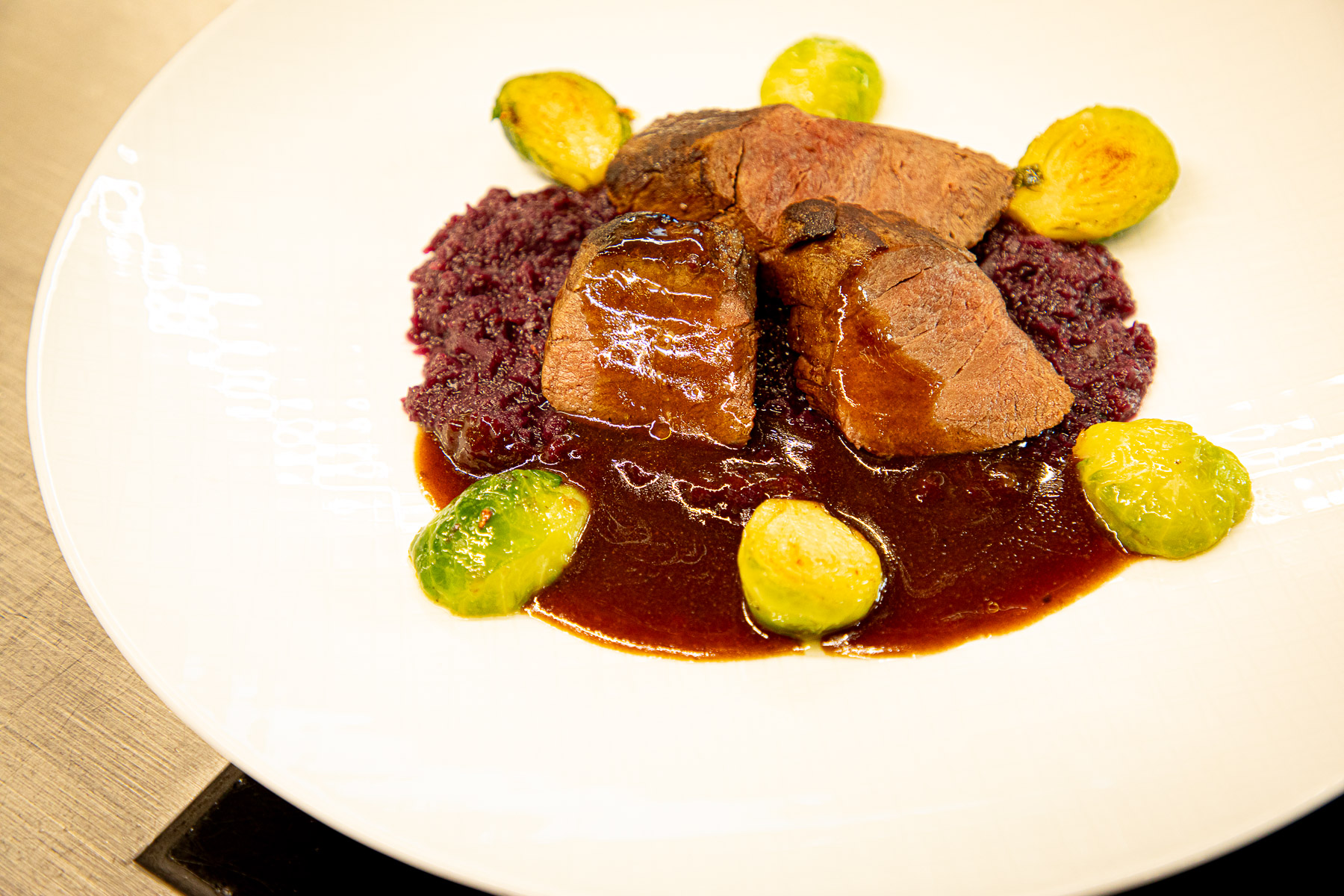
For the wild boar fillet:
2 wild boar fillets (approx. 150-180 g each)
Salt and pepper
1 tbsp oil (e.g., rapeseed oil or clarified butter)
1 sprig of fresh rosemary
1 garlic clove, crushed
For the red cabbage purée:
300 g red cabbage, finely chopped
1 small onion, finely chopped
1 apple, peeled and diced
1 tbsp butter
100 ml vegetable stock
2 tbsp apple cider vinegar or red wine vinegar
1 tsp sugar or honey
Salt and pepper
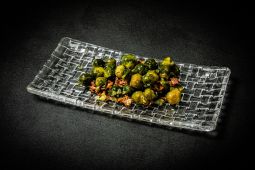
For the steamed Brussels sprouts:
300 g Brussels sprouts, trimmed and halved
1 tbsp butter
Salt and pepper
A little lemon juice or toasted almond flakes for garnish
Preparation:
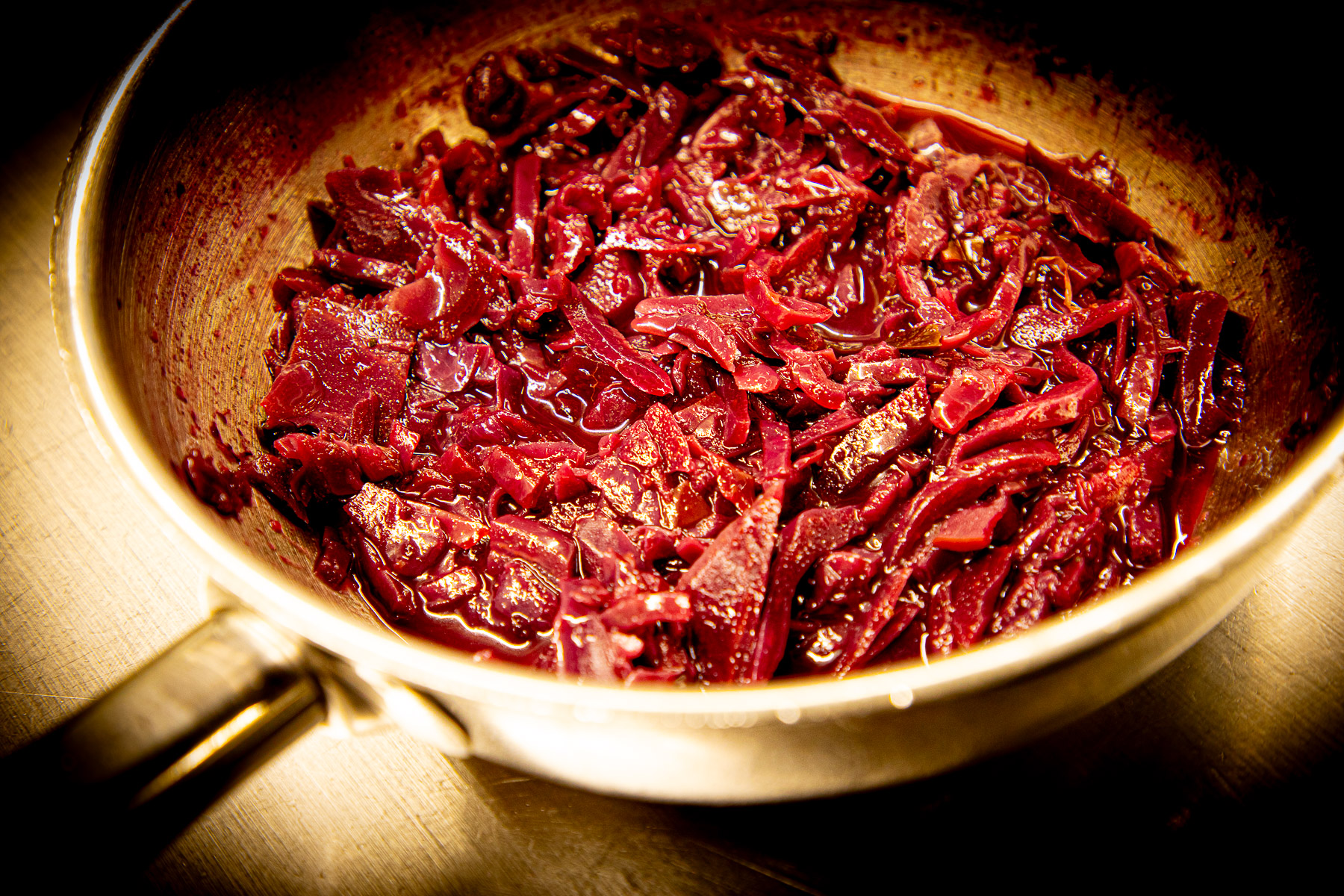
Prepare the red cabbage purée: Melt butter in a saucepan Heat the pan, sauté the onion until translucent.
Add the diced apple and red cabbage, and sauté briefly.
Deglaze with vegetable stock, add vinegar and sugar.
Cover and sauté over medium heat for about 20-25 minutes until softened.
Then puree thoroughly using an immersion blender or in a blender. Season with salt and pepper.
Sauté the Brussels sprouts: Cook the Brussels sprouts in boiling salted water for about 5-7 minutes until al dente. Drain and briefly toss in a pan with butter. Season with salt, pepper, and, if desired, a little lemon juice.
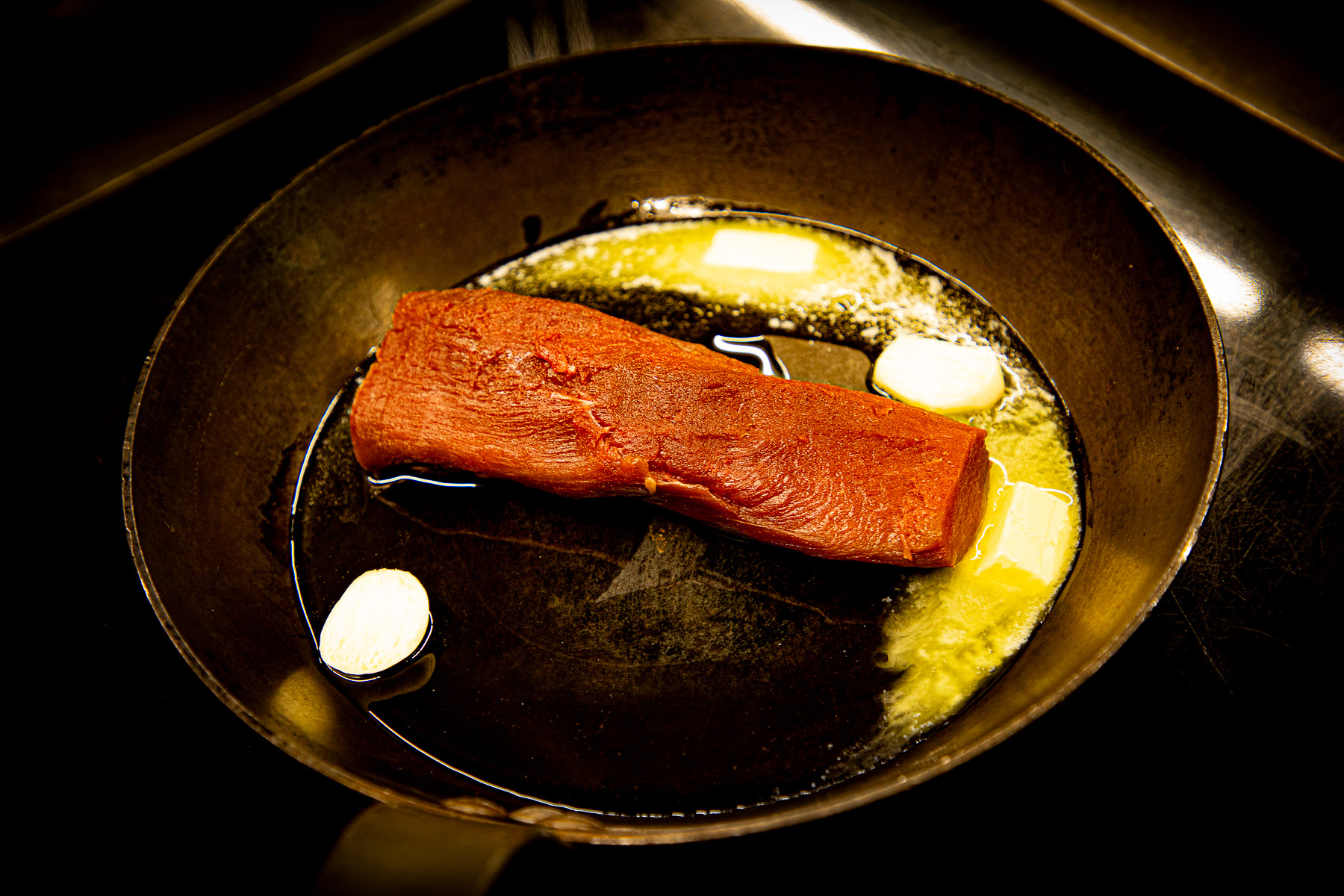
Fry the wild boar fillet: Pat the wild boar fillet dry and season with salt and pepper.
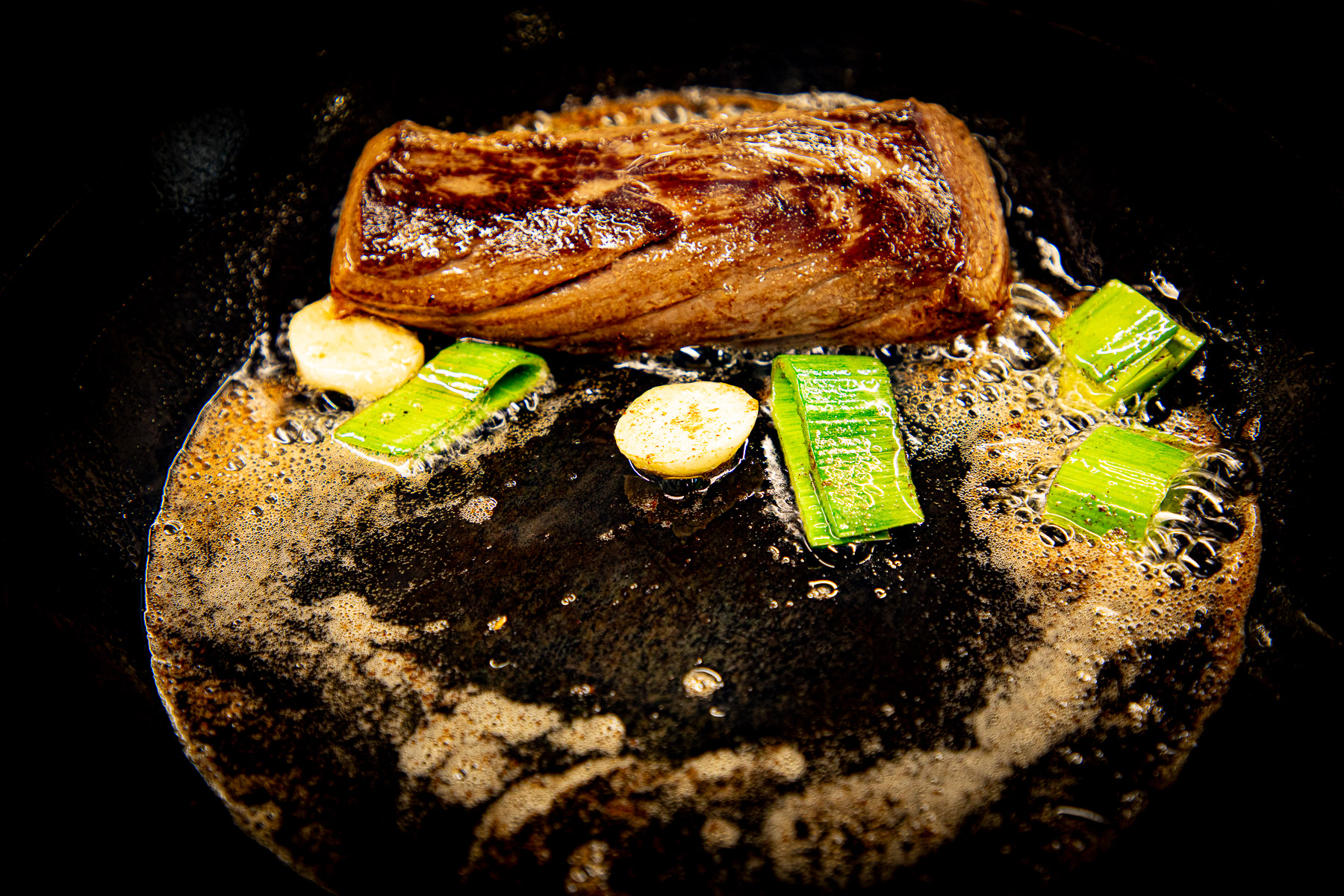
Heat the oil in a pan, add the rosemary and garlic.
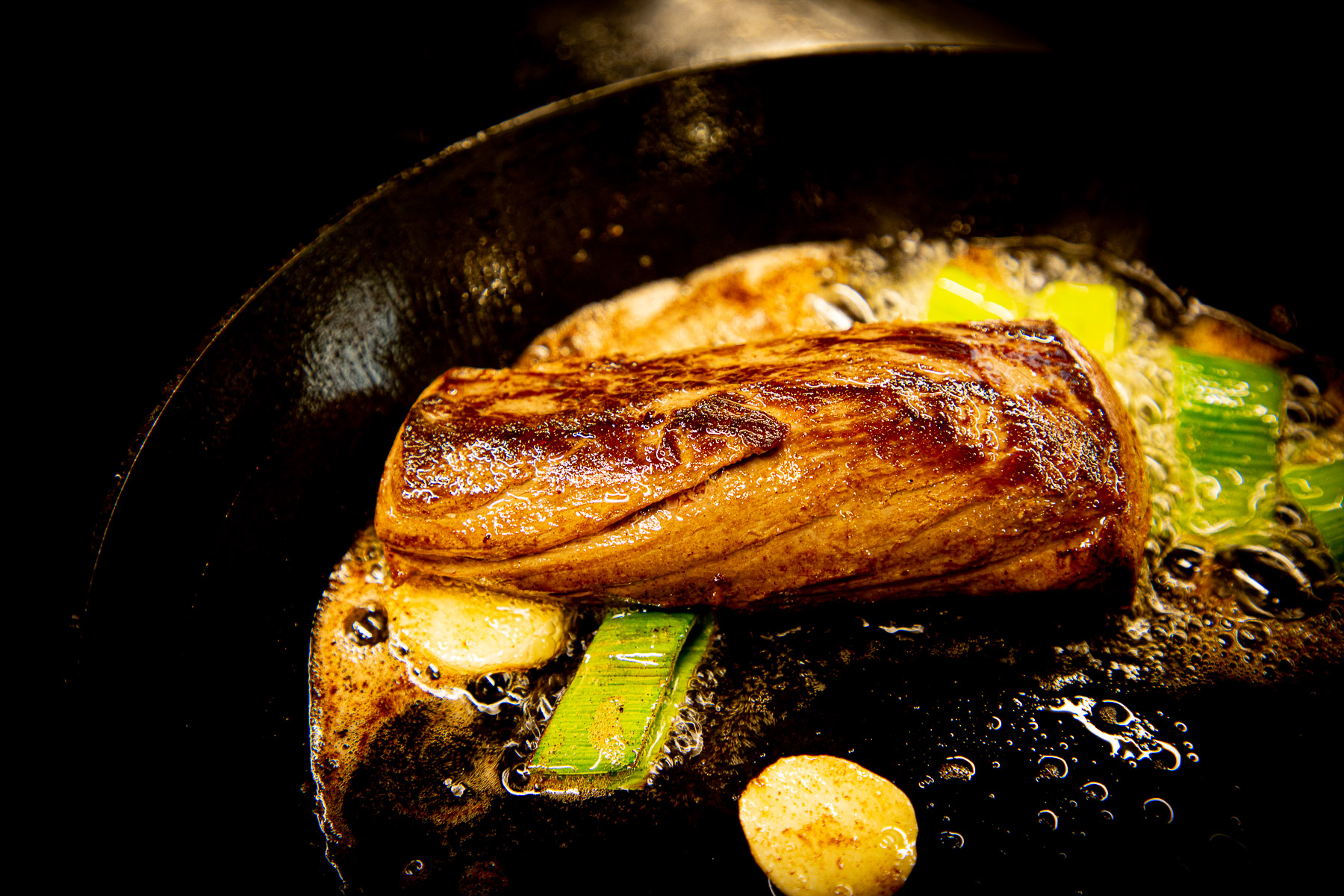
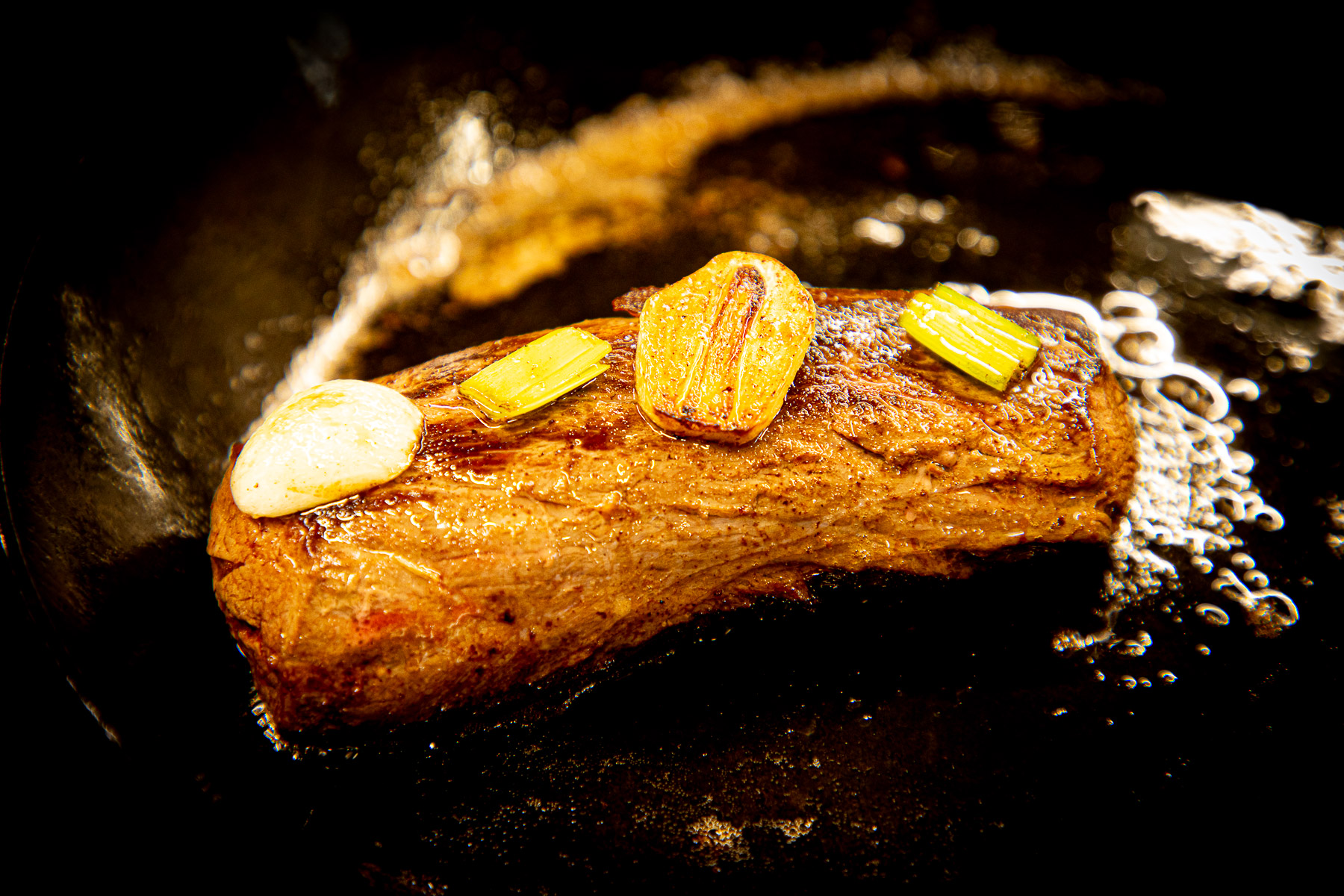
Fry the fillets over medium-high heat for about 3-4 minutes on each side (depending on thickness and desired doneness). Remove the meat from the pan and let it rest briefly.
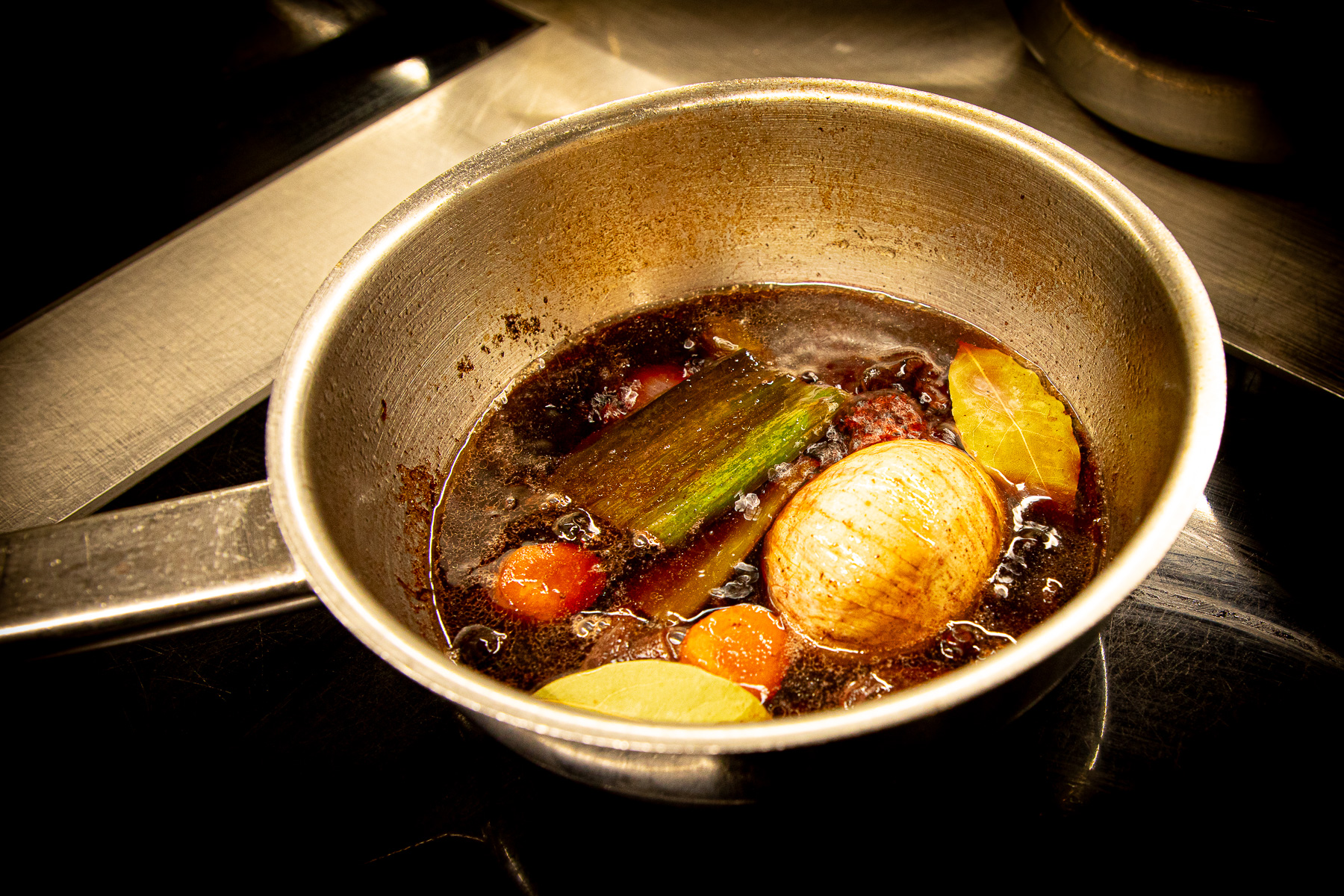

Nice to know: Wild boars (Sus scrofa) are among the oldest and most adaptable animal species in Europe. Even in the Paleolithic period, they played an important role for humans – both as game and as a source of food. In ancient times, they were considered symbols of strength and ferocity, and Roman soldiers even hunted them to train their fighting skills.
In the Middle Ages, wild boars were widespread throughout Europe, but later suffered severe declines due to excessive hunting and habitat loss. Their populations were only able to recover in the 20th century – aided by milder winters, increased corn cultivation, and climate change. Today, wild boars are found in large parts of Europe, Asia, and North America, where they are sometimes spreading rapidly and are considered an invasive species.